


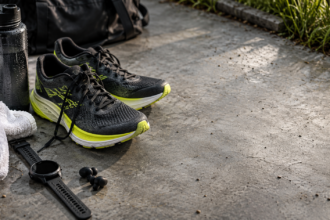




The best running shoes 2026 buyers should shortlist are not the same for every runner: pick a daily trainer for 70 to 80 percent of miles, a faster trainer for workouts, and a carbon racer only if you race often enough to justify the cost. Current 2026 data points matter: RTINGS says it has bought and tested 216 running shoes, RunRepeat measures 20 plus lab metrics per shoe, and a 2025 Frontiers meta-analysis of 14 trials found carbon-plated shoes lowered metabolic demand by about 2 to 3 percent during submaximal running.
Best Running Shoes 2026: The Short Coach Answer
If you want one pair for most runners, choose a neutral daily trainer with a stable base, 28 to 38 mm of heel cushioning, and a price near $140 to $165. That profile covers easy runs, long runs, and the first 400 miles of training better than a narrow race shoe.
What is a daily trainer? A daily trainer is a running shoe built for most weekly miles, usually easy runs, long runs, and steady aerobic work. It favors comfort, stable landings, and outsole life over peak race speed, which is why many runners use it for 70 to 80 percent of training.
For the best running shoes 2026 search, my coaching rule is simple: buy the shoe for the workout you repeat most, not the workout you imagine doing. A runner logging 20 miles a week at 10 minute pace needs stable comfort, not a 39 mm plated racer with a narrow heel.
Here is the buying split I use with athletes. If you run fewer than 15 miles a week, get one daily trainer. If you run 15 to 35 miles, rotate two daily trainers with different foam feel. If you run 35 plus miles or race 5K to marathon, add a speed shoe after the daily trainer is solved.
The 2026 Shoe Categories That Matter
The best running shoes 2026 lists often mix daily trainers, tempo shoes, stability shoes, and carbon racers. That creates bad purchases because each type solves a different problem.
What is a super trainer? A super trainer is a high-cushion running shoe that uses premium foam and sometimes a nylon or carbon plate, but is meant for training rather than race day only. It usually costs $170 to $220 and feels faster than a classic daily trainer.
Daily trainers are the safe first buy. Brooks Ghost 17 is a useful benchmark because Doctors of Running listed it at $149.95, 10.2 oz for men’s size 9, 8.8 oz for women’s size 8, and 36 mm heel by 26 mm forefoot stack in June 2025.
Tempo trainers make sense when you already run two or more quality sessions per week. Saucony Endorphin Speed 5 is a clear example: Saucony lists it as an 8.4 oz racer-trainer with PWRRUN PB foam and a winged nylon plate, while Doctors of Running reported a $174.99 price and 36 mm heel by 28 mm forefoot stack in May 2025.
Carbon racers are tools, not magic. The Frontiers in Sports and Active Living systematic review published in 2025 pooled 14 studies and found plated footwear reduced metabolic demand by a mean 2.75 percent, with a range from 0.99 to 4.47 percent. That is real, but it does not fix poor pacing, weak calves, or a shoe that rubs at mile 6.
Comparison Table: Best Running Shoes 2026 by Runner Need
The table below is not a trophy list. It is a coach’s match chart for the best running shoes 2026 buyers can use without getting buried in model hype.
| Runner need | Best shoe type | Example model | Key numbers to check | Coach note |
|---|---|---|---|---|
| One pair for all easy miles | Neutral daily trainer | Brooks Ghost 17 | $149.95, 10.2 oz men, 36/26 mm stack | Safe for new and steady runners who want comfort first. |
| Soft max cushion without a plate | High-stack trainer | ASICS Megablast | Runner’s World noted a 46 mm stack and FF Turbo² foam | Great for cushioned cruising, but not a legal racing stack under World Athletics road limits. |
| Workouts plus long runs | Nylon-plated trainer | Saucony Endorphin Speed 5 | $174.99, 8.4 oz men, 36/28 mm stack | Faster feel without the harsh cost of a carbon racer. |
| Flat feet or heavy inward roll | Stability trainer | Brooks Adrenaline or similar | Look for wide base, guided heel, and medial support | Choose by pain history and store treadmill check, not by wet-foot print alone. |
| Goal race performance | Carbon racer | Brand race-day model | Usually $260 to $300, lower lifespan, 2 to 3 percent economy gain | Worth it for race day, poor value for daily mileage. |
Quotable data point: “A $150 daily trainer used for 400 miles costs about $0.38 per mile, while a $285 carbon racer used for 250 miles costs about $1.14 per mile before socks, entry fees, or replacement insoles.”
How to Pick the Best Running Shoes 2026 for Your Feet
Start with your last 30 days of running, not with a shoe wall. Write down weekly mileage, longest run, usual pace, injury notes, and the surface you use most.
Next, sort yourself into one of four runner profiles. This prevents the common mistake of buying a shoe that performs well in a lab but feels wrong under your own stride.
- Beginner under 15 miles per week: choose a daily trainer with a forgiving upper and no aggressive plate.
- Consistent runner at 15 to 35 miles: rotate two shoes so foam recovery and tissue load vary between runs.
- Workout-focused runner: pair a daily trainer with a lighter tempo shoe for intervals, hills, and progression runs.
- Race-focused runner: test a carbon racer only after you can run the goal pace workout without foot or calf pain.
What is shoe rotation? Shoe rotation means using two or more running shoe models across a training week instead of wearing the same pair every run. The goal is to change tissue loading, let midsoles recover between sessions, and reserve faster shoes for faster work.
A 2013 Luxembourg study by Malisoux and colleagues followed recreational runners and found those using more than one running shoe had a 39 percent lower risk of running-related injury than single-shoe users. That does not prove rotation alone protects everyone, but it is enough for me to recommend a second shoe once weekly volume passes 20 miles.
Fit Rules That Beat Most Online Rankings
The best running shoes 2026 choice still fails if the fit is wrong. Leave a thumbnail of space in front of the longest toe, check that the heel does not slide during a 20-second jog, and test downhill pressure if the store has a ramp.
Toe box shape matters more than many reviews admit. A runner with a square forefoot can lose toenails in a high-scoring tapered shoe, while a narrow-foot runner may swim inside a wide comfort trainer.
Try shoes late in the day because feet often swell after standing, heat, and training. For marathon builds, fit the shoe for mile 18, not mile 1.
Quotable data point: “The right running shoe should feel boring during the first 10 minutes: no arch jab, no heel bite, no toe squeeze, and no need to talk yourself into keeping it.”
Do Carbon Shoes Belong in a Best Running Shoes 2026 List?
Should recreational runners buy carbon-plated shoes?
Yes, recreational runners can buy carbon-plated shoes if they race or do controlled speed work, but they should not use them as their only pair. The 2025 Frontiers review found about a 2 to 3 percent metabolic benefit, yet it also noted that foam, plate shape, mass, and geometry interact, so the plate alone is not the whole story.
I treat carbon racers like spikes for road runners. Wear them for tune-up workouts, goal races, and a few pace sessions, then put them away.
There is also a body-readiness issue. Carbon shoes can shift load toward the calves, forefoot, and small foot bones for some runners. If you have recent Achilles pain, metatarsal stress history, or calf strains, build with short sessions first.
Quotable data point: “A 2.75 percent economy change is about 49 seconds over a 30-minute 5K effort if the runner can turn the metabolic saving into pace, but it is worth zero seconds when the shoe causes blisters or calf tightness.”
The Cost per Mile Test
This is the information increment most shoppers miss: shoe value is not the sticker price. It is price divided by useful miles, then adjusted by the number of workouts the shoe handles well.
Use these coach estimates before buying. A classic daily trainer at $150 and 400 useful miles costs $0.38 per mile. A max cushion trainer at $180 and 350 useful miles costs $0.51 per mile. A carbon racer at $285 and 250 useful miles costs $1.14 per mile.
That math changes the best running shoes 2026 decision. A $175 tempo trainer that covers workouts and long runs may be a better second shoe than a $285 racer that you are afraid to wear.
Runify’s 2026 running shoe statistics page reported that the average pair lasts 300 to 500 miles, average prices climbed 4 percent in the first half of 2025, and elite super shoes now retail near $260 to $300. Those three numbers should push buyers toward durable daily trainers first.
When Stability Shoes Help and When They Do Not
Stability shoes help when a runner’s foot, ankle, or knee control breaks down under fatigue and the added guidance reduces symptoms. They do not help just because a wet footprint looks flat.
Look for repeat signs. If the inside heel of every shoe collapses by 250 miles, if shin pain appears after downhills, or if knee pain worsens late in long runs, test a stability trainer next to a neutral shoe.
RunRepeat’s daily trainer guide explains that stability features often include guide rails, higher sidewalls, heel bevels, wider platforms, and stiffer heel counters. Those design details matter more than the word stability printed on the box.
My 20-Minute Store Test
Use this test with any best running shoes 2026 candidate. It takes less time than reading ten comment threads and gives better feedback.
- Walk 2 minutes and check for arch pressure, toe rub, or heel lift.
- Jog 5 minutes at easy pace and listen for slapping or unstable landings.
- Run 4 strides of 15 seconds if you plan to use the shoe for workouts.
- Stand on one leg for 20 seconds per side and check whether the platform feels steady.
- Compare the final two shoes back to back, one on each foot, for 60 seconds.
If a shoe needs a long sales pitch, skip it. Good fit is obvious faster than most runners expect.
Final Recommendation
The best running shoes 2026 choice is the pair that matches your weekly miles, keeps your feet quiet, and costs a sane amount per mile. For most runners, that means a dependable daily trainer first, a tempo shoe second, and a carbon racer only for race-specific work.
If you are stuck between two models, choose the one that feels more stable at easy pace. Most runners spend more minutes tired than fast, and tired form is where the wrong shoe gets exposed.
One final coach note: do not retire a shoe by calendar alone. Track miles, outsole wear, midsole creasing, new aches, and how your legs feel the morning after a normal run. The best running shoes 2026 list can point you in the right direction, but your training log tells you when the shoe has stopped doing its job.