







Why Runners Get Knee Injuries in the First Place
About 50% of all running injuries hit the knee. That’s not a coincidence. The knee absorbs 3 to 4.5 times your body weight with every stride, and at a cadence of 170 steps per minute, that’s over 500 tons of cumulative force per mile for a 160-pound runner. The joint itself isn’t weak. The problem is almost always what’s happening above and below it.
The most common culprits are patellofemoral pain syndrome (runner’s knee), IT band friction syndrome, and patellar tendinopathy. A 2022 meta-analysis in the British Journal of Sports Medicine found that 19.4% of recreational runners develop a knee-related injury each year. But here’s what matters: the majority of these injuries are preventable with targeted training and smart programming.
Strengthen Your Hips to Protect Your Knees
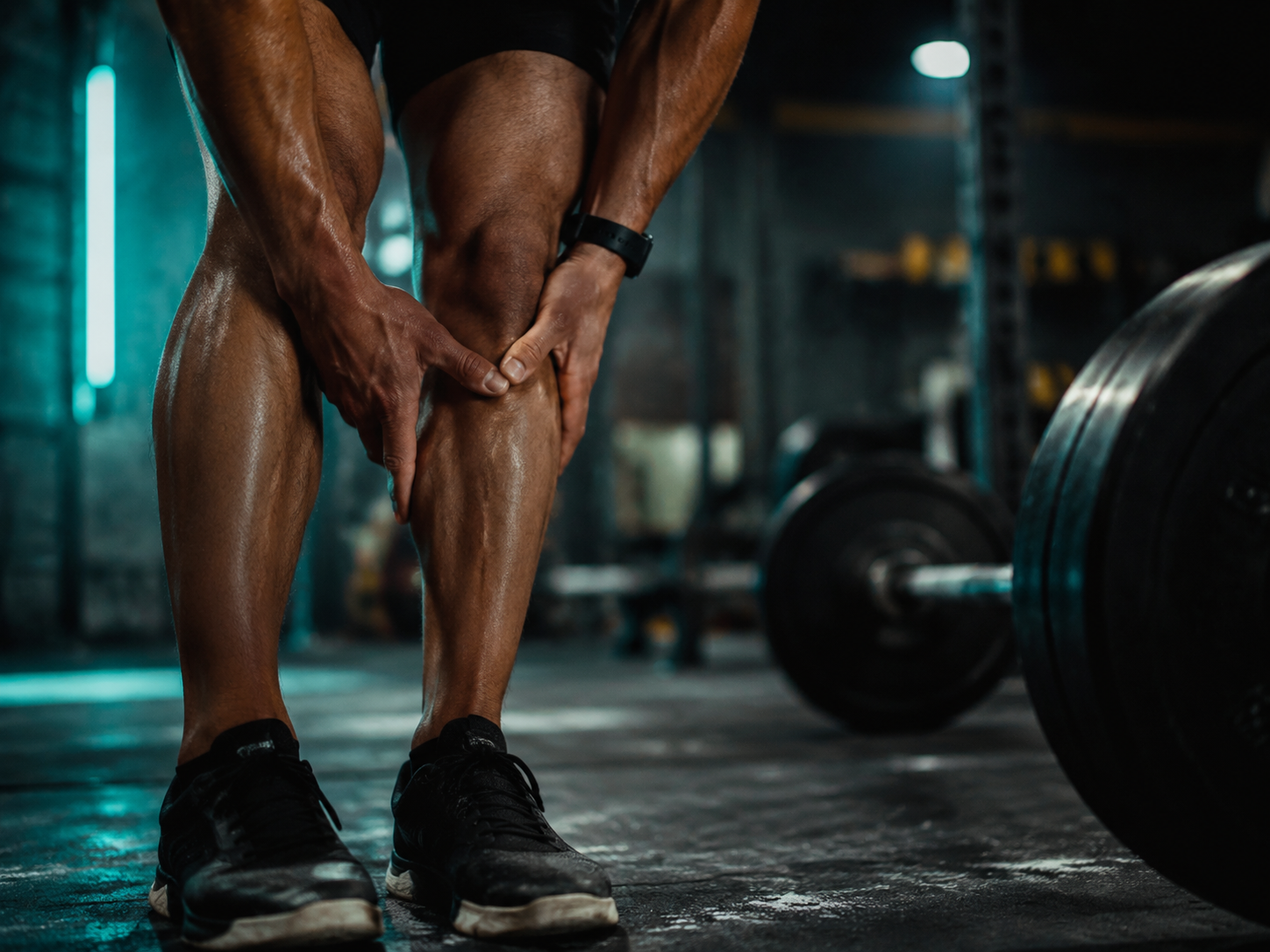
Weak hip abductors and external rotators are the number one predictor of knee pain in runners. When your gluteus medius can’t stabilize the pelvis during single-leg stance (which is what running is, over and over), the knee collapses inward. This valgus movement puts shearing force on the patella and overloads the IT band.
A 2019 study from the University of Calgary tracked 502 novice runners over 12 months. Those who performed hip strengthening exercises three times per week had a 72% lower incidence of knee injuries compared to the control group. That’s not a marginal improvement. That’s a different outcome entirely.
The Four Exercises That Matter Most
You don’t need 20 exercises. You need four done consistently:
- Side-lying hip abduction: 3 sets of 15 reps per side. Keep your hips stacked and don’t roll backward. Add a 2-second hold at the top once bodyweight becomes easy.
- Clamshells with band: 3 sets of 20 reps. Place the band just above your knees. Focus on the squeeze, not the range.
- Single-leg Romanian deadlift: 3 sets of 10 per side. This trains hip stability under load while building hamstring and glute strength simultaneously.
- Copenhagen plank (modified): 3 sets of 20 seconds per side. This targets the adductors, which research from 2021 shows are equally important for knee stability as the abductors.
Do these before your run as activation, or on separate days as a strength session. Either approach works. What doesn’t work is skipping them.
Fix Your Running Form Before It Breaks Your Knees
Overstriding is the single most correctable biomechanical fault that leads to knee injuries while running. When your foot lands ahead of your center of mass, it creates a braking force that travels directly up through the tibia and into the knee joint. A 2020 gait analysis study at the University of Wisconsin found that reducing overstride by just 10% decreased patellofemoral joint stress by 14%.
Here’s how to prevent knee injuries while running by fixing your stride:
Increase Your Cadence by 5-10%
If you currently run at 160 steps per minute, aim for 168-176. Higher cadence naturally shortens your stride and moves your foot strike closer to your center of gravity. Use a metronome app or a playlist matched to your target cadence. Don’t jump straight to 180. A gradual increase of 5% every two weeks gives your neuromuscular system time to adapt.
Land With a Slight Knee Bend
A locked-out knee at ground contact is a shock absorber that’s been turned off. Think about landing with a “soft” knee. You don’t need to exaggerate it. Even 5 degrees more flexion at initial contact distributes force across the quadriceps and reduces peak stress on the patellar tendon by up to 20%.
Lean Forward From the Ankles
A 2-3 degree forward lean (from the ankles, not the waist) shifts your landing point underneath you rather than in front. This isn’t about bending over. Stand tall, then let gravity pull you forward slightly. Your feet will naturally land closer to your center of mass.
The Training Load Problem: Too Much, Too Soon
The 10% rule (don’t increase weekly mileage by more than 10%) has been around for decades, and while it’s a reasonable starting point, newer research suggests it’s not the full picture. What actually predicts injury is the acute-to-chronic workload ratio (ACWR).
Your acute workload is what you’ve done in the past 7 days. Your chronic workload is your 4-week rolling average. When the ratio exceeds 1.5, your injury risk spikes dramatically. A 2016 study by Tim Gabbett published in the British Journal of Sports Medicine found that athletes with an ACWR above 1.5 were 2 to 3 times more likely to sustain an injury than those who stayed between 0.8 and 1.3.
In practical terms: if you’ve been running 20 miles per week for a month, jumping to 30 miles in a single week puts your ACWR at 1.5. That’s the danger zone. Instead, build to 22-23 miles, hold for two weeks, then push to 25.
Weekly Structure That Protects Your Knees
| Day | Session Type | Intensity | Knee Load |
|---|---|---|---|
| Monday | Easy run + hip strength | Low | Moderate |
| Tuesday | Tempo or intervals | High | High |
| Wednesday | Cross-train (swim/bike) | Moderate | Low |
| Thursday | Easy run + mobility | Low | Moderate |
| Friday | Rest or yoga | None | None |
| Saturday | Long run | Moderate | High |
| Sunday | Recovery walk + foam roll | Low | Low |
Notice the pattern: never stack two high knee-load days back to back. This gives the cartilage, tendons, and surrounding tissues 48 hours to adapt before the next significant stress.
Surface Selection and Shoe Rotation
Running exclusively on concrete increases ground reaction forces by 12-15% compared to asphalt, and by 25-30% compared to packed trails. If you’re logging more than 25 miles per week entirely on sidewalks, your knees are absorbing significantly more cumulative impact than they need to.
The fix isn’t to avoid roads entirely. It’s to mix surfaces. Aim for at least 30% of your weekly mileage on softer ground: grass, packed dirt trails, rubberized tracks, or even treadmill. Your long run is the best candidate for trail or park running since it’s the session where cumulative load is highest.
Why Shoe Rotation Matters
A 2015 study in the Scandinavian Journal of Medicine and Science in Sports followed 264 runners for 22 weeks. Those who rotated between at least two pairs of running shoes had a 39% lower injury rate than single-shoe runners. The theory: different shoes alter your biomechanics slightly, distributing stress across different tissues rather than hammering the same structures identically every run.
You don’t need five pairs. Two is enough. Use a more cushioned shoe for easy and long runs, and a lighter, more responsive shoe for speed work. Replace each pair every 400-500 miles, and track mileage in an app like Strava or Garmin Connect.
Mobility Work That Actually Prevents Knee Injuries
Most runners stretch their quads and hamstrings and call it a day. But the tissues that most directly affect knee tracking are the IT band, the lateral quad (vastus lateralis), and the calf complex. Tightness in any of these pulls the patella off its groove or increases compression forces.
A 10-Minute Post-Run Routine
- Foam roll the IT band and lateral quad: 60 seconds per side. Roll slowly, pausing on tender spots for 5-10 seconds. Don’t just blast through it.
- Half-kneeling hip flexor stretch: 45 seconds per side. Squeeze the glute of the back leg to get a true stretch on the hip flexor, which when tight, alters knee mechanics during push-off.
- Calf stretch (straight and bent knee): 30 seconds each position per side. The straight-knee version targets the gastrocnemius; the bent-knee version hits the soleus. Both matter for ankle dorsiflexion, which directly affects how your knee absorbs force.
- 90/90 hip rotation: 8 reps per side. This improves internal and external hip rotation, reducing compensatory movement at the knee.
Consistency beats duration. Ten minutes daily outperforms 30 minutes twice a week for maintaining tissue quality.
Early Warning Signs You Shouldn’t Ignore
Knee injuries rarely appear overnight. They build. Learning to recognize the early signals gives you a window to intervene before a minor irritation becomes a 6-week layoff.
Watch for these progression stages:
- Stage 1: Mild stiffness or ache that appears only after runs longer than your usual distance. Disappears within an hour. Action: reduce next run by 20%, add hip strengthening.
- Stage 2: Pain that appears during the run but doesn’t alter your gait. Goes away within 24 hours. Action: take 2-3 days of cross-training only, then return at 70% volume.
- Stage 3: Pain that changes how you run (limping, shortening stride). Persists the next day. Action: stop running. See a sports physiotherapist. This is not a “push through it” situation.
The runners who stay healthy long-term aren’t the ones who never feel anything. They’re the ones who respond to Stage 1 signals instead of waiting for Stage 3.
Putting It All Together: Your Knee Injury Prevention Checklist
Preventing knee injuries while running isn’t about one magic exercise or the perfect shoe. It’s a system. Here’s what that system looks like in practice:
- Perform hip strengthening exercises 3 times per week (takes 12-15 minutes)
- Maintain a cadence of 170+ steps per minute on easy runs
- Keep your acute-to-chronic workload ratio between 0.8 and 1.3
- Run on varied surfaces, with 30%+ on softer ground
- Rotate between at least 2 pairs of running shoes
- Complete a 10-minute mobility routine after every run
- Respond to Stage 1 warning signs immediately
- Never increase weekly mileage and intensity in the same week
None of this is complicated. The hard part is doing it consistently when your knees feel fine. But that’s exactly when prevention works best. The time to reinforce the roof is before the storm, not during it.
Start with the hip strengthening. It has the highest return on investment of anything on this list. Add the mobility work next. Then audit your training load. Within 4-6 weeks, you’ll have built a foundation that keeps your knees healthy for years of running ahead.