




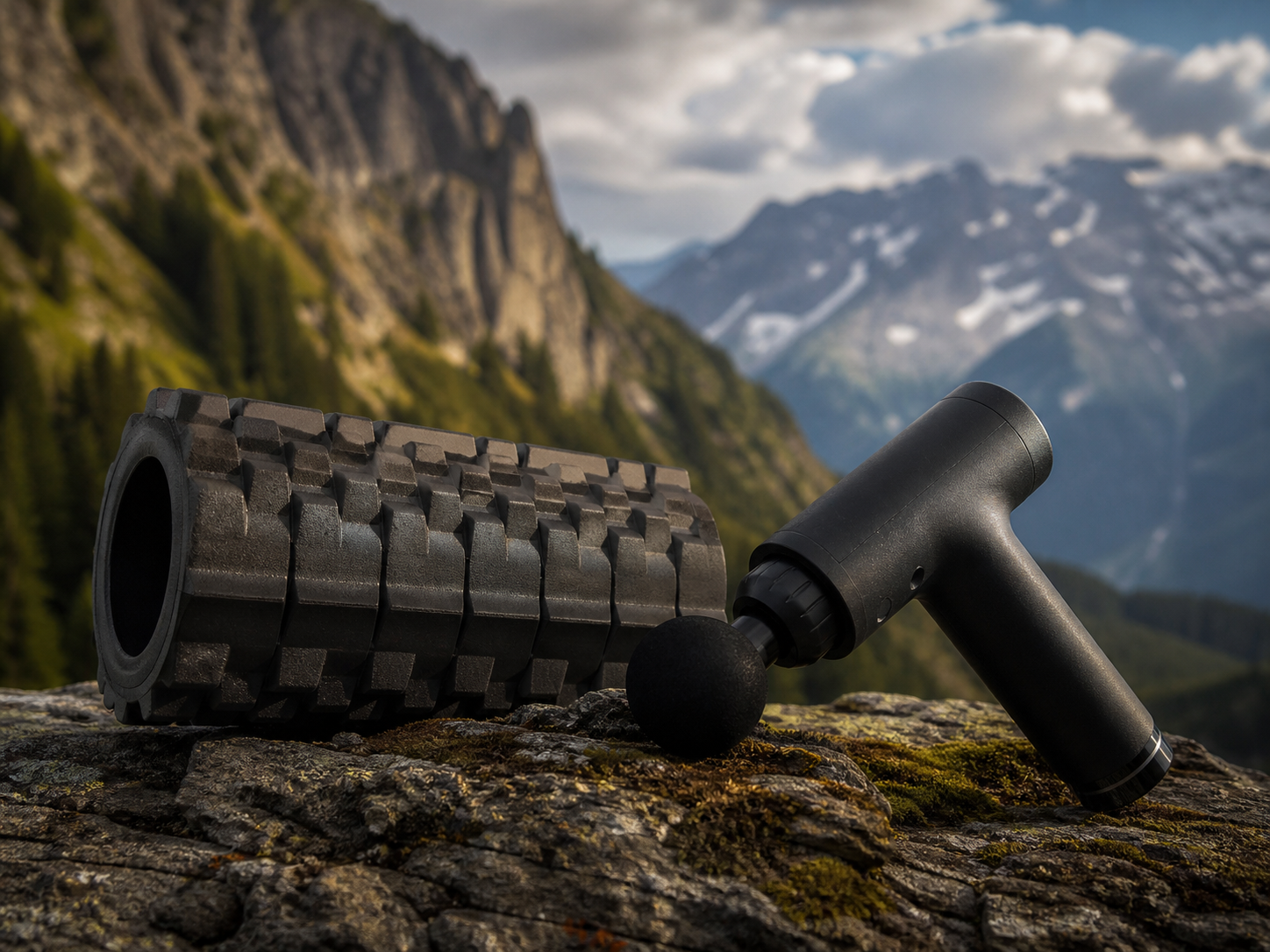
As an athletic coach, I am constantly asked about the best ways to speed up recovery after grueling workouts. The fitness industry is flooded with products claiming to erase soreness, but two tools have emerged as the absolute favorites in weight rooms and training clinics: the classic foam roller and the high-tech percussive massage gun. If you are trying to find the best recovery tools for sore muscles foam roller vs massage gun, you must understand that these tools operate on different physiological mechanisms. Each has unique strengths, limitations, and specific applications. This guide will provide an unbiased, science-based comparison to help you choose the right tool for your athletic needs.
Front-Loaded Muscle Recovery Facts and Key Metrics
To optimize muscle recovery and avoid injuring sensitive soft tissues, you must understand the key operating metrics of both tools:
- Soreness Reduction: Utilizing either tool for 10 to 15 minutes post-workout can reduce self-reported delayed onset muscle soreness (DOMS) by up to 30%.
- Massage Gun Speed Baseline: Most percussive massage guns operate between 1,750 and 3,200 percussions per minute (PPM). Lower speeds are ideal for recovery, while higher speeds work best for pre-workout muscle activation.
- Foam Rolling Duration: Spend 30 to 60 seconds rolling each specific muscle group. Rolling a single muscle group for longer than two minutes does not provide additional benefits and can cause localized bruising.
- Cost Comparison: Foam rollers are highly cost-efficient, ranging from $15 to $40. High-quality percussive massage guns require a larger investment, typically ranging from $60 to $250.
Two Crucial Recovery Definitions
Core Definition: Self-Myofascial Release (SMR)
SMR is a manual therapy technique focused on applying sustained, broad pressure to myofascial connective tissues to eliminate pain, release muscular tension, and restore joint range of motion. Foam rolling is the most common form of SMR used by competitive athletes.
Core Definition: Percussive Therapy
Percussive therapy is a recovery method that delivers rapid, concentrated pulses of pressure deep into muscle fibers. This rapid hammering effect increases local blood flow, desensitizes local pain receptors, and releases stubborn muscular knots.
Coach’s Quote: “A foam roller is like a steamroller for your muscles, while a massage gun is like a jackhammer. Both have their place, but you must know when to roll and when to drill.”
Step 1: Understand the Biomechanical Differences
The primary difference between a foam roller and a massage gun lies in how they apply pressure to your body. A foam roller uses your own body weight to apply broad, sustained compression across a large muscle sheet. When you roll over a muscle, you compress the tissue, forcing old blood and metabolic waste out of the area. Once the pressure is released, fresh, nutrient-rich blood rushes back into the tissue, accelerating the healing process. This broad compression is highly effective for lengthening tight fascia and improving overall joint mobility.
A percussive massage gun, on the other hand, uses a motorized attachment to deliver rapid, vertical pulses of pressure deep into the muscle belly. This high-frequency percussion stimulates the sensory receptors in your muscles, which effectively overrides pain signals traveling to your brain. This mechanism is based on the gate control theory of pain, which states that non-painful sensory input can close the neurological gates to painful stimuli. Consequently, a massage gun is incredibly effective for desensitizing sore spots and releasing localized trigger points without the intense discomfort often associated with foam rolling.
Step 2: Assess Your Specific Soreness and Athletic Goals
Before choosing a tool, evaluate your current physical state. Are you suffering from broad, generalized tightness across large muscle groups, or do you have a specific, sharp knot in a highly localized area? If your entire hamstring or quadriceps sheet feels stiff after a long run, the broad surface area of a foam roller is the superior choice. It allows you to address the entire muscle group efficiently and encourages the broad sliding movement of facial sheets.
If you have a localized knot in your glute, shoulder blade, or calves, a foam roller is often too broad to target the issue effectively. This is where the massage gun excels. By utilizing different attachments, such as a bullet or cone head, you can target a space the size of a coin, delivering focused percussion directly into the trigger point to force the muscle fibers to relax. Matching the tool to the specific type of soreness ensures a faster return to training.
Coach’s Quote: “Tools are only as good as the hands that hold them. More pressure is not better; smart, controlled pressure is better.”
Direct Head-to-Head Comparison Matrix
To help you visualize how these recovery tools compare across key performance and practical metrics, study the coach’s comparison matrix below:
| Performance Metric | Foam Roller (SMR) | Percussive Massage Gun | The Coach’s Verdict |
|---|---|---|---|
| Targeted Treatment | Broad and generalized pressure | Highly localized trigger points | Massage Gun wins for specific knots |
| Portability and Travel | Bulky, difficult to pack in luggage | Compact, usually comes with a travel case | Massage Gun wins for traveling athletes |
| Cost and Accessibility | Very low cost ($15 to $40) | Moderate to high cost ($60 to $250) | Foam Roller wins for budget efficiency |
| Ease of Use on Sore Muscles | Requires physical effort and core strength | Effortless, hold the device and let it work | Massage Gun wins for ease of application |
| Range of Motion Improvement | Excellent for broad myofascial sheets | Great for localized joint restriction | It is a tie; both improve range of motion |
Step 3: Master the Correct Foam Rolling Protocol
To use a foam roller safely, you must avoid simply rolling back and forth rapidly. This fast rolling accomplishes very little and can irritate the connective tissues. Instead, follow a slow, deliberate system:
Begin by placing the target muscle group on top of the roller. Support your body weight with your hands and opposing leg to control the pressure. Slowly roll down the muscle at a pace of about one inch per second. When you find a tender spot or “hot spot,” stop. Keep the roller directly on that spot and hold for 20 to 30 seconds. Breathe deeply. You will feel the muscle gradually relax under the sustained pressure. Once the tension dissolves, continue moving down the muscle. Never roll directly over bones, joints, or your lower back, as this can cause joint damage and spinal irritation.
Step 4: Master the Correct Massage Gun Protocol
Using a massage gun requires a light touch. Many athletes make the mistake of pushing the gun hard into their sore muscles, thinking that deeper pressure is better. This aggressive approach can cause muscle contusions and worsen tissue inflammation. Let the motor do the work for you:
Turn the device on before placing it on your skin. Select a low or moderate speed setting to begin. Gently float the attachment head along the muscle belly. Do not press down hard; let the rapid percussions penetrate the tissue naturally. Spend 15 to 30 seconds sweeping along the length of the muscle. If you find a particularly sore spot, hold the gun still on that area for 10 to 15 seconds without pushing down. Move the gun in circular motions around the tender area to encourage local blood flow. Never use a massage gun on your neck, face, chest, or directly over bones and major joints.
Step 5: Integrate Both Tools into a Weekly Recovery System
You do not have to choose just one of these tools; they can be integrated into a single, highly effective weekly recovery routine. By combining the broad myofascial release of the foam roller with the targeted percussive stimulation of the massage gun, you create a powerful defense against training fatigue.
- Pre-Workout Activation: Use the massage gun on a high-speed setting for 15 to 20 seconds per muscle group before your dynamic warm-up. This rapid percussion stimulates blood flow and wakes up the nervous system without fatiguing the muscle.
- Immediate Post-Workout Recovery: Within two hours of finishing a hard training session, spend 10 minutes foam rolling the primary muscle groups used during the workout to encourage blood circulation and clear metabolic byproducts.
- Targeted Trigger Point Maintenance: On your rest and active recovery days, use the massage gun on localized sore spots while watching television or relaxing. Follow this percussive work with light static stretching to lock in the range of motion.
- Track Your Recovery Progress: Keep a record of your muscle soreness levels and joint mobility. If a specific muscle group remains chronically tight or painful despite using these tools, it may indicate a muscle imbalance or an acute strain that requires professional medical assessment.
Coach’s Quote: “Recovery is where the strength gains happen. You do not grow stronger during your training session; you grow stronger when your body heals.”
Common Recovery Tool Questions
Can using a massage gun cause muscle damage?
Yes, if misused. Pushing the device too hard into the muscle, using it on high settings for extended periods on a single spot, or applying it to acute muscle strains or tears can cause bruising, tissue damage, and worsen inflammation. Keep the device floating on the skin, limit use to two minutes per muscle group, and avoid using it on freshly injured or torn muscles.
Is a vibrating foam roller better than a standard foam roller?
Vibrating foam rollers combine the broad pressure of SMR with the neurological desensitization of vibration therapy. While they can make the rolling process more comfortable by dampening pain signals, standard foam rollers are highly effective on their own. If budget is not an issue, a vibrating roller is a useful upgrade, but a standard roller remains a powerful, reliable tool.
Can these recovery tools cure injuries like tendonitis or shin splints?
No, recovery tools are designed for muscle maintenance, soreness reduction, and range of motion improvement. They are not a cure for chronic overuse injuries. In fact, using a massage gun or foam roller directly over an inflamed tendon or a shin splint can aggravate the condition and delay healing. Consult a sports physical therapist for structured rehabilitation programs.
How often should an active athlete roll or use a massage gun?
Consistency is key. Active athletes can safely use a foam roller daily for 10 to 15 minutes as part of their recovery routine. Massage guns can also be used daily for quick pre-workout activation or post-workout targeted work. Listen to your body; if your muscles feel tender or bruised from using the tools, take a day off and focus on passive recovery strategies like sleep and proper hydration.
Your Blueprint for Sore Muscle Relief
Both foam rollers and massage guns are excellent investments in your athletic longevity. If you want a cost-efficient tool to improve broad flexibility across your entire body, the classic foam roller is an unbeatable option. If you want a highly convenient, portable, and effortless tool to target specific knots and desensitize sore muscle spots, a percussive massage gun is worth the investment. Eat well, sleep deeply, use your recovery tools with discipline, and let your body build the foundation for your next physical breakthrough.