







A good strength training program has a clear weekly schedule, six basic movement patterns, planned progression, and recovery days that protect your joints. Most beginners should start with 2 to 3 full-body sessions per week, 2 to 4 sets per exercise, and loads that leave 1 to 3 good reps in reserve. The point is not to copy a professional athlete. The point is to build a plan you can repeat long enough to adapt.
If you are searching for how to strength training program, you probably need more than a random list of exercises. You need a simple system: what to train, when to train, how hard to push, how to add weight, and when to back off.
“A workout is one session. A program is the reason that session fits with the next one.”
Definition: What a Strength Training Program Is
A strength training program is a planned series of resistance workouts designed to improve force production, muscle control, and load tolerance over time. It includes exercises, sets, reps, rest periods, weekly frequency, progression rules, and recovery.
Progressive overload means the training challenge rises gradually. You can add weight, reps, sets, range of motion, tempo, or technical difficulty. Beginners should change one variable at a time.
Training frequency means how often you train a movement or muscle group. For most new lifters, training each major pattern 2 to 3 times weekly works better than smashing one body part once per week.
Start With the Goal
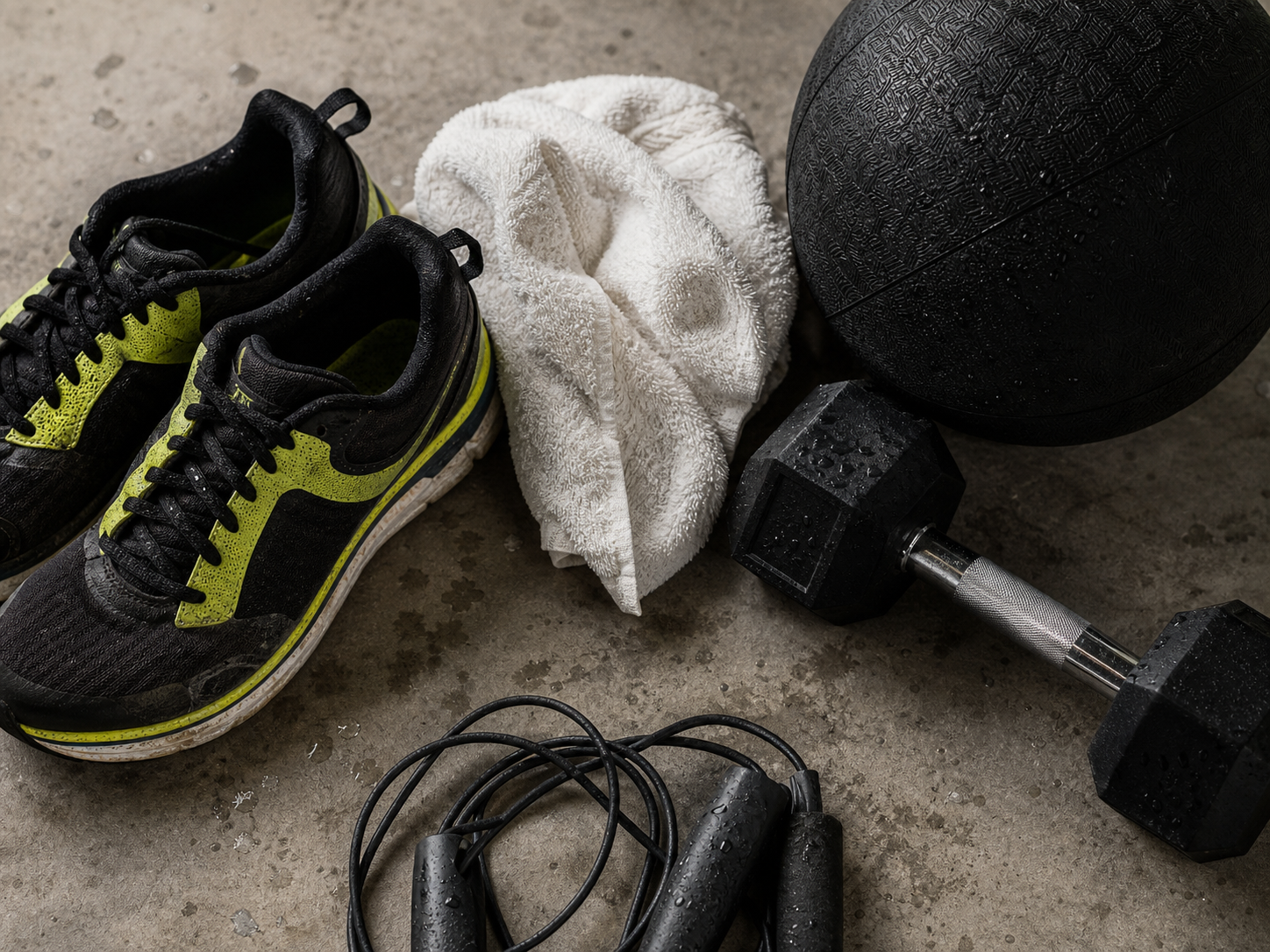
Before choosing exercises, name the goal. A program for general strength does not need the same volume as bodybuilding. A program for running support does not need the same loading as powerlifting. A plan for an older beginner should include balance, carries, and joint-friendly ranges before heavy singles.
Most recreational lifters fit one of four goals: build general strength, gain muscle, lose fat while keeping muscle, or support a sport. The same basic exercises can work for all four, but the weekly volume and effort change.
“The right program is not the hardest plan you can survive. It is the simplest plan that keeps producing progress.”
The Six Movement Patterns
A balanced program should train the body as a system. You do not need twenty exercises. You need repeated practice of the big patterns.
| Pattern | Examples | Why it matters |
|---|---|---|
| Squat | Goblet squat, leg press, front squat | Builds quads, hips, and lower-body control |
| Hinge | Romanian deadlift, hip thrust, kettlebell deadlift | Trains glutes, hamstrings, and hip power |
| Push | Push-up, bench press, overhead press | Builds chest, shoulders, triceps, and trunk stiffness |
| Pull | Row, pulldown, assisted pull-up | Builds back strength and shoulder support |
| Carry | Farmer carry, suitcase carry, rack carry | Trains grip, posture, breathing, and bracing |
| Core | Plank, dead bug, Pallof press | Improves trunk control under movement |
Pick the Weekly Schedule
For beginners, the best schedule is usually three full-body workouts per week. This gives enough practice without forcing long sessions. Monday, Wednesday, and Friday works. Tuesday, Thursday, and Saturday also works. The exact days matter less than spacing the hard sessions.
Two-day option
Train full body twice per week if life is busy, recovery is limited, or you are returning after a long break. Two sessions can maintain strong progress if the workouts are focused.
Three-day option
Use three full-body sessions when you can recover well. This is the sweet spot for many beginners because skills improve faster with repeated exposure.
Four-day option
Use an upper-lower split when sessions need to be shorter or when you have more experience. For example: upper body Monday, lower body Tuesday, upper body Thursday, lower body Friday.
The Coach’s 8-Week Beginner Program
Warm up for 5 to 8 minutes before each workout. Use brisk walking, easy cycling, light mobility, and one low-load practice set for the first two lifts. Keep most working sets at 1 to 3 reps in reserve.
Workout A
- Goblet squat: 3 sets of 8 to 12 reps.
- Dumbbell bench press: 3 sets of 8 to 12 reps.
- Seated cable row: 3 sets of 10 to 12 reps.
- Romanian deadlift: 2 sets of 8 to 10 reps.
- Farmer carry: 3 rounds of 30 to 45 seconds.
- Dead bug: 2 sets of 6 to 10 reps per side.
Workout B
- Split squat: 3 sets of 8 to 10 reps per side.
- Lat pulldown: 3 sets of 8 to 12 reps.
- Incline push-up: 3 sets of 8 to 15 reps.
- Hip thrust: 3 sets of 10 to 12 reps.
- Suitcase carry: 2 rounds of 30 seconds per side.
- Side plank: 2 holds of 20 to 40 seconds per side.
Alternate the workouts across the week. Week one can be A, B, A. Week two can be B, A, B. Continue alternating for eight weeks.
How to Progress Each Week
Use a rep range instead of a fixed number. If the plan says 8 to 12 reps, start with a load you can lift for about 8 clean reps. Over the next sessions, try to add reps while keeping form steady. When you can complete 12 reps for all sets, add a small amount of weight and return to the lower end of the range.
For dumbbell lifts, the next pair may be too large a jump. In that case, add one extra rep per set, slow the lowering phase, or add a set before increasing load. Progress is still progress if the exercise becomes cleaner and more controlled.
“Good programming is boring on paper and productive in the body. Repeat the lifts, record the numbers, and let progress show up.”
How Hard Should Sets Feel?
Most sets should feel like a 7 or 8 out of 10 effort. That means challenging but controlled. You should not need a spotter to rescue every set. You should not finish with your form completely changed.
Training to failure can be useful on safer accessory movements, but it is not needed on every exercise. Heavy squats, hinges, and presses usually work better when you stop with a little room left. This keeps technique repeatable and recovery manageable.
Rest, Recovery, and Deloads
Strength improves between sessions, not only during sessions. Sleep, food, hydration, and stress all affect the next workout. If performance drops for several sessions, joints feel irritated, and motivation crashes, the program may need less volume for a week.
A deload is a planned easier week. For beginners, take one after 6 to 8 weeks or when fatigue is clearly building. Reduce sets by about one-third, keep movements easy, and avoid grinding reps. Then return to normal training refreshed.
Nutrition Basics for a Strength Program
Training creates the signal. Food supports the adaptation. Eat a protein-rich serving at each meal, include carbohydrates around harder workouts, and drink enough water that training quality does not dip. If your goal is muscle gain, you may need a small calorie surplus. If your goal is fat loss, use a modest deficit and keep lifting performance as stable as possible.
Simple meals work: Greek yogurt with fruit, eggs and toast, rice with chicken and vegetables, tofu stir-fry, beans with lean meat, or a smoothie with protein and oats. You do not need a complicated supplement stack to start.
Readiness Checks Before You Add Weight
Before increasing load, check three things. First, the last rep should look almost like the first rep. Second, the target muscles should feel like they are doing the work. Third, you should recover well enough to train again on schedule. If one of those checks fails, hold the load steady for another week.
This is where coaching judgment matters. A fast weight jump can look exciting in a logbook, but it may teach bad positions. A slower jump with better control usually wins over eight weeks.
Common Programming Mistakes
- Changing exercises too often: Keep main lifts stable for 4 to 8 weeks.
- Adding too much volume: More sets only help if you can recover from them.
- Skipping pulls: Rows and pulldowns support shoulder health and posture.
- Ignoring legs: Lower-body strength drives sport, balance, and daily function.
- No logbook: If you do not track training, progression becomes guesswork.
Q&A
How many exercises should a strength training program have?
Most beginners need 5 to 7 exercises per session. That is enough to train the main patterns without making workouts too long.
Should beginners use machines or free weights?
Both can work. Machines are useful for learning effort safely. Free weights add balance and coordination. A mix is often best.
How long should each workout last?
Most sessions should take 45 to 70 minutes, including warm-up. If workouts run far longer, reduce filler exercises or rest with more structure.
Can I strength train at home?
Yes. Adjustable dumbbells, resistance bands, a bench, and bodyweight movements can cover the main patterns. Progress may require more creativity, but it is possible.
When should I change the program?
Change it when progress stalls for several weeks, the goal changes, equipment changes, or a movement no longer fits your body. Do not change it just because one session felt average.
Bottom Line
Learning how to strength training program starts with structure. Choose a clear goal, train the six basic movement patterns, lift 2 to 4 days per week, progress slowly, and track every session. The plan does not need to look dramatic. It needs to be repeatable, measurable, and matched to your recovery. That is how strength is built safely.