





Strength training is often associated with heavy weights, but it includes many ways to challenge muscles safely and progressively. You can use dumbbells, resistance bands, weight machines, your body weight, or other forms of resistance. Understanding what counts as strength training exercise makes it easier to choose movements that fit your goals, equipment, and experience.
This guide explains the term, outlines how to build a practical routine, and discusses benefits, drawbacks, and safety. It also describes how strength work can complement running, yoga, cardio fitness, and recovery. The information is educational; individual needs vary, especially for people with injuries or health conditions.
What is strength training exercise?
Strength training exercise is physical activity in which muscles work against resistance to produce force. The resistance can come from an external load—such as a barbell, dumbbell, machine, or resistance band—or from your own body weight. Examples include squats, push-ups, rows, lunges, and lifting a weight from the floor.
The defining feature is not a particular piece of equipment or a specific number of repetitions. It is the deliberate use of resistance to challenge muscles. With consistent practice, a suitable plan can improve strength and the ability to perform everyday or sport-specific tasks. Depending on the exercise and program, training may also develop muscular endurance, coordination, and muscle size.
Strength training is sometimes called resistance training. It is different from cardio exercise, whose main focus is sustaining activity that challenges the heart and lungs, such as brisk walking or running. The categories can overlap: carrying a heavy load while walking, for example, involves both muscular effort and cardiovascular demand. Still, one type of training does not automatically replace the other.
Common types of strength training

Body-weight exercises
Body-weight training uses your body as resistance. Squats, step-ups, push-ups, hip bridges, and planks are common examples. It can be convenient for home workouts because it may require little or no equipment. Exercise difficulty can often be adjusted by changing the range of motion, body position, support, or movement variation.
Free weights and machines
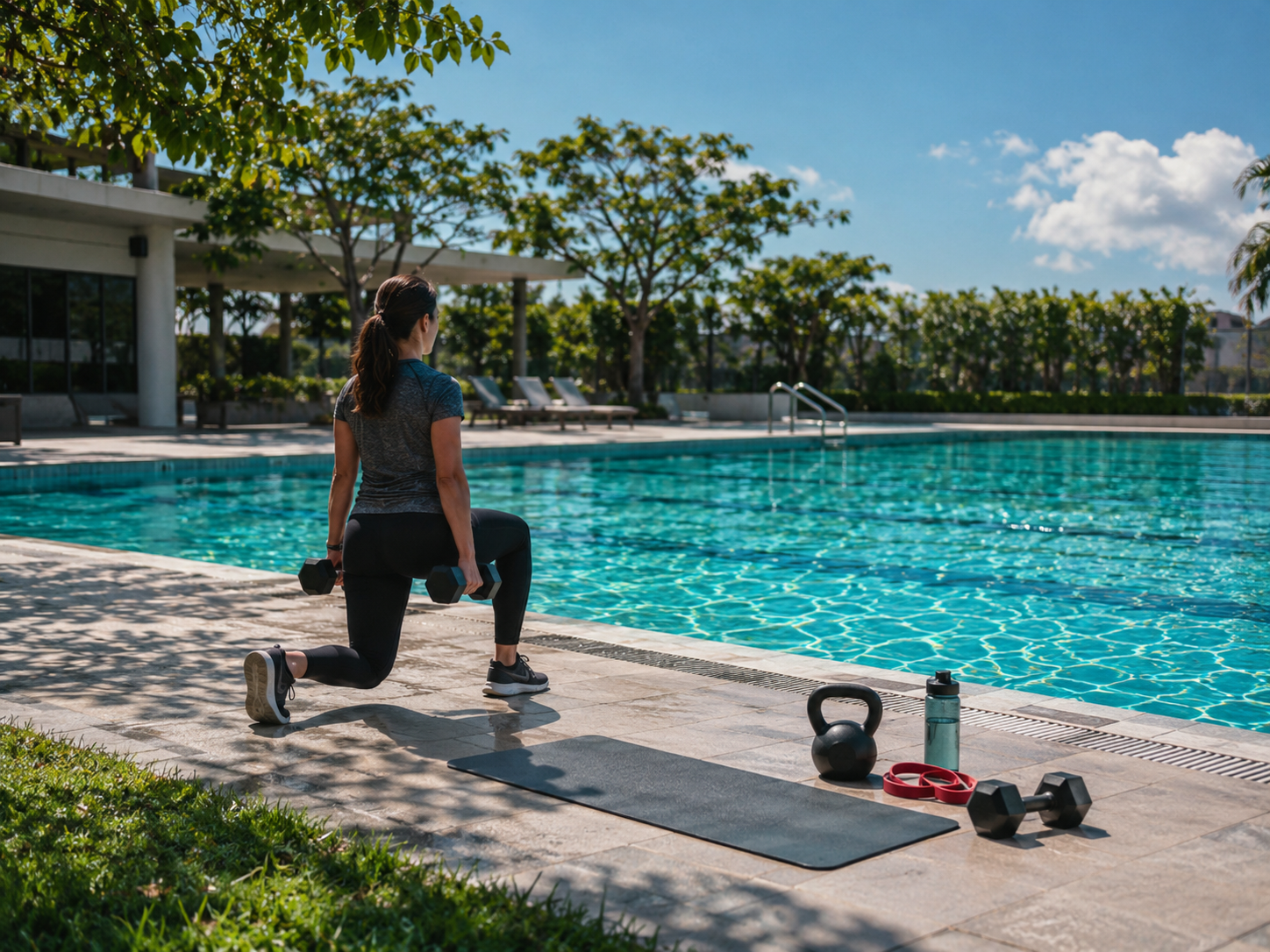
Dumbbells, kettlebells, and barbells allow you to select and adjust the load. Weight machines guide the movement along a set path and can make some exercises easier to set up. Neither option is automatically best for everyone: choice depends on access, comfort, movement skill, goals, and any advice from a qualified professional.
Bands and other resistance
Resistance bands provide tension as they stretch and are portable, making them useful for some home workouts and travel routines. Their resistance can be harder to describe consistently than a marked weight, so keep track of the band, setup, and exercise variation you use. Water-based exercises or carrying suitable objects can also provide resistance, provided the setup is stable and safe.
Why include strength work in a fitness plan?
Strength can support daily activities such as climbing stairs, carrying shopping, and getting up from a chair. A well-designed program can also help athletes develop the physical capacity needed for their sport. The purpose and results depend on the exercises, training dose, consistency, recovery, and individual circumstances.
For runners, strength exercises can complement running by training muscles and movement patterns that a running-only routine may not challenge in the same way. They are not a guarantee against injury, nor do they replace appropriate running progression, footwear choices, sleep, or attention to pain. Athletes should consider how lifting fits with demanding practice and competition days.
Yoga and flexibility work can contribute to mobility, balance, and mindful movement, while strength training emphasizes working against resistance. They can sit in the same weekly plan, but one does not necessarily provide all the training stimulus of the other. Cardio fitness also has its own role: activities such as cycling, swimming, and running challenge the cardiovascular system and can be combined with strength work according to a person’s goals and capacity.
How to start: practical steps
1. Choose a realistic goal
Decide what you want your training to help with. A beginner might aim to learn basic movement patterns, while a recreational athlete might want a routine that supports general fitness. A specific sport goal may call for coaching and a plan tailored to its demands. Avoid trying to pursue every possible outcome in one session.
2. Select movements for the major actions
A balanced beginner routine can include exercises that involve pushing, pulling, squatting or stepping, and hinging at the hips, along with trunk control. These are broad movement categories, not a requirement to use particular exercises. For example, a supported squat variation, a band row, a wall push-up, and a hip bridge may suit someone starting at home.
Choose variations you can perform with control and without sharp or worsening pain. If an exercise is unfamiliar, learn its setup before adding resistance. A qualified trainer or physical therapist can help with technique and appropriate modifications, especially when there is a history of injury or movement difficulty.
3. Begin with manageable effort
Start with a load or variation that lets you complete the movement with steady control and sound technique. You do not need to train to the point of exhaustion to make a session useful. If you cannot maintain form, feel unwell, or experience unexpected pain, stop and reassess rather than pushing through.
There is no universal starting weight or ideal number of repetitions for every person. The appropriate amount depends on training experience, the exercise, equipment, health status, and the aim of the session. A beginner can focus first on learning movements and establishing a consistent schedule before making the work harder.
4. Progress gradually
When a movement feels controlled and manageable over repeated sessions, consider a small change: a little more resistance, an additional repetition, a more challenging variation, or a slightly fuller range of motion. Change one factor at a time so you can judge how your body responds. Progress is not always linear; illness, stress, poor sleep, and a busy sports schedule can affect readiness.
5. Plan rest and recovery
Muscles and the rest of the body need time to recover between demanding sessions. Schedule easier days when needed, particularly when strength work is combined with running, sport practice, or other strenuous cardio. Recovery techniques can include adequate sleep, regular meals, hydration, and reducing training load when fatigue accumulates. Stretching or foam rolling may feel helpful to some people, but neither should be treated as a substitute for recovery time or medical care.
6. Track useful details
A simple log can record the exercise, resistance or variation, repetitions, and how difficult the session felt. This helps you notice gradual changes and avoid relying on memory. You do not need a complicated app or testing system. Keep records only as detailed as you find useful, and do not treat a single session as a verdict on your fitness.
Strength training at home
A home routine can be effective if it is planned around available space and equipment. First, check that the floor is stable, the area is clear, and equipment is in good condition. Use a secure chair or step only if it will not slide or tip. Store weights safely, and avoid improvised loads that could spill, break, or shift unexpectedly.
For a simple session, select a few movements that cover different muscle groups and movement patterns. A beginner might pair a chair squat with a wall push-up, a band row, and a hip bridge, then adjust the exercise selection as skills develop. This is an example, not a personalized prescription. If you have limited mobility, pain, or a health condition, get advice about suitable variations before following a generic routine.
When equipment is limited, progression may involve controlled technique, a different body position, or a more challenging version of an exercise rather than simply adding more repetitions. If your form changes as you tire, end the set or use an easier variation. A good home plan is one you can perform safely and consistently, not one that depends on maximum effort every time.
How strength training fits with nutrition and sport
Nutrition for athletes should support training and ordinary health, but there is no single diet that suits every person or sport. Regular meals that provide energy, carbohydrates, protein, fluids, and a range of nutrients can help meet general needs. Individual requirements vary with activity, body size, health, preferences, and training demands. A registered dietitian with sports experience can offer tailored guidance.
Supplements are not a substitute for sound training, adequate food, or medical advice. Be cautious about products that promise dramatic results or claim to prevent injuries. People with medical conditions, food restrictions, or concerns about eating should discuss nutrition with an appropriate health professional rather than relying on a generic sports plan.
Sports psychology matters, too. Setting process goals—such as practicing a movement with control—can be more useful than focusing only on appearance or a short-term performance outcome. A realistic plan should leave room for enjoyment, rest, and changing priorities. If exercise becomes a source of intense distress or compulsive behavior, consider speaking with a qualified health professional.
Pros, cons, and limitations
Potential advantages
- It can be adapted to different experience levels, goals, and equipment options.
- It can help build strength for daily tasks and sport-related activity.
- It can complement cardio, running, yoga, and flexibility work rather than requiring an all-or-nothing choice.
- Progress can be tracked through movement quality, chosen resistance, or exercise variations.
Possible disadvantages and limitations
- Learning unfamiliar exercises takes time, and poor setup or technique can increase the chance of injury.
- Equipment, space, coaching, or gym access may be barriers, although body-weight and band options can reduce some of them.
- Strength training does not replace aerobic activity, sport practice, sleep, or appropriate medical care.
- Results vary. A routine cannot guarantee a particular appearance, performance outcome, or protection from injury.
- Training that is too demanding or poorly matched to recovery can contribute to excessive fatigue or aggravate symptoms.
Injury prevention is best approached broadly. Gradual increases in training, appropriate technique, suitable equipment, recovery, and attention to symptoms can all matter, but no exercise program eliminates risk. If pain is persistent, severe, worsening, or affecting daily activities, seek guidance from a qualified healthcare professional rather than attempting to diagnose the cause through exercise advice online.
Sources and guidance
This overview uses general public guidance and established exercise terminology, not a new study or product comparison. The American College of Sports Medicine (ACSM) publishes resistance-training guidance for healthy adults. The U.S. Centers for Disease Control and Prevention (CDC) includes muscle-strengthening activity in its physical activity recommendations. The National Health Service (NHS) provides public information on strengthening exercises and physical activity. These sources offer general guidance; they do not replace individualized clinical advice.
Q&A
Is a push-up a strength training exercise?
Yes. A push-up uses body weight as resistance and challenges muscles involved in pushing and trunk control. Wall, incline, and floor variations allow different levels of difficulty, but choose a version you can perform with control.
Do I need weights to build strength?
No. Body-weight movements and resistance bands can provide a strength challenge. Weights are another option and may make it easier to adjust resistance in some settings. The suitable approach depends on your goals, equipment, and ability to exercise safely.
Can strength training replace running or cardio?
Not completely. Strength work and cardio fitness emphasize different physical demands. Many people benefit from including both, with the schedule adapted to their health, goals, and overall activity.
How often should a beginner train?
There is no single schedule for everyone. Start with a manageable routine that allows time to learn movements and recover, then adjust based on how you feel and any relevant professional guidance. Public recommendations such as those from the CDC can provide a general starting point, but personal circumstances may call for modifications.
Safety note
This article is for general information and is not medical advice or an individualized training plan. If you are pregnant, returning after an injury or illness, have a chronic condition, or are unsure what exercise is appropriate, consult a qualified healthcare professional. Stop exercising and seek urgent care for serious symptoms such as chest pain, fainting, or severe shortness of breath.