







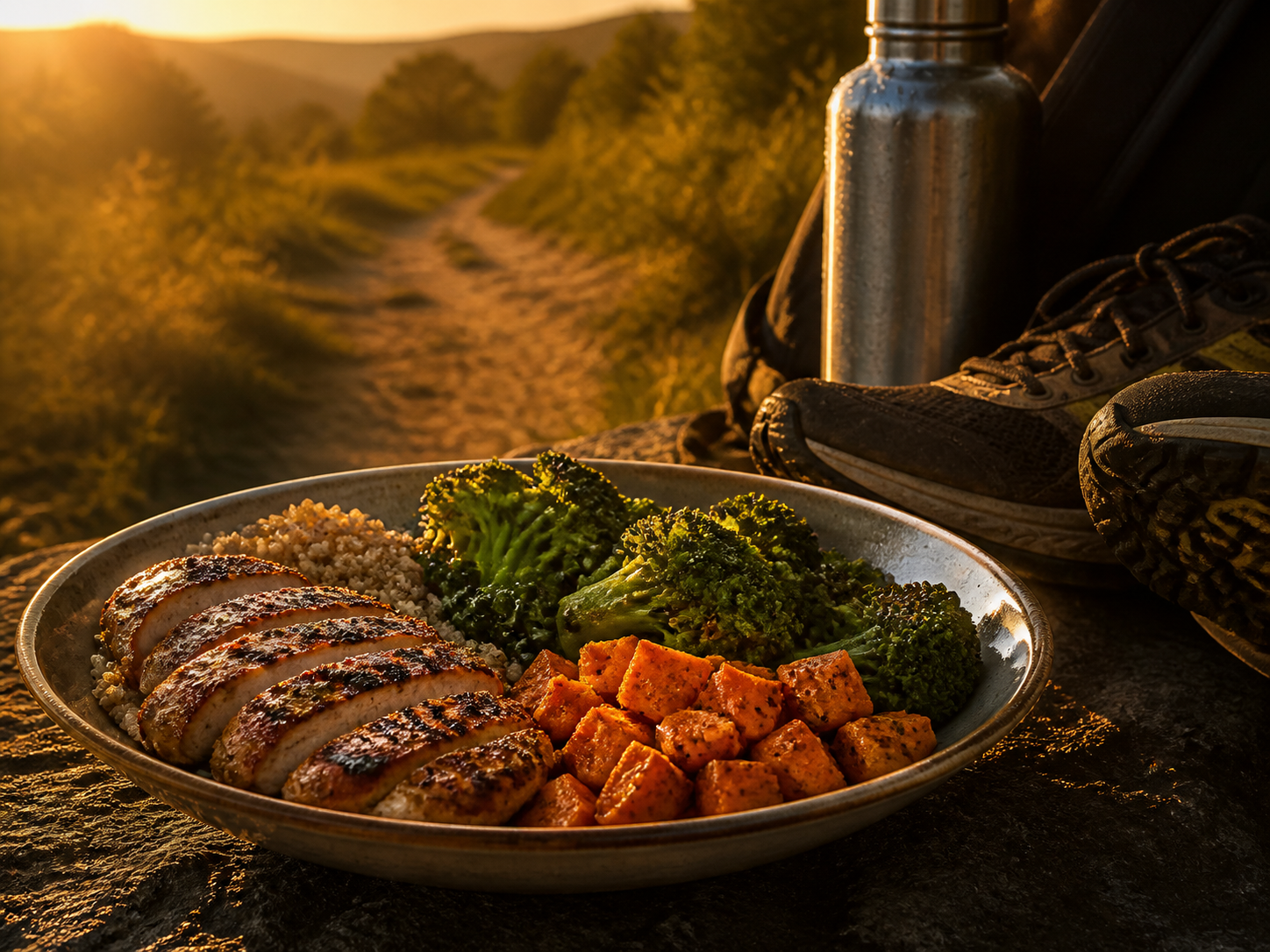
What is a balanced diet for athletes? It is a daily eating pattern that gives an athlete enough total calories, carbohydrate for training fuel, protein for muscle repair, fat for hormones and long sessions, plus fluids, electrolytes, vitamins, and minerals. For most active adults, a useful starting plate is one-half colorful produce, one-quarter lean protein, one-quarter quality carbohydrate, with healthy fats added in measured portions. Hard training days usually need more carbohydrate. Rest days usually need the same protein, plenty of produce, and slightly less starch.
Here is the front-loaded truth: athletes do not need a perfect diet. They need a repeatable diet that matches the work. A 150-pound recreational runner training five days per week may need 250 to 400 grams of carbohydrate on harder days, 110 to 150 grams of protein across the day, and steady hydration before thirst gets loud. A strength athlete may need fewer total carbs than a marathoner, but still needs enough to train hard and recover between sessions.
“A balanced athlete plate is not about eating clean. It is about eating enough of the right things at the right time.”
The Simple Definition of a Balanced Athlete Diet
Balanced diet for athletes: a way of eating that supports energy, training adaptation, immune health, body composition, and recovery without cutting out whole food groups unless there is a medical reason.
That definition matters because many athletes under-eat while trying to be disciplined. Low energy intake can show up as poor sleep, heavy legs, stalled lifts, nagging soreness, mood swings, missed periods, low libido, frequent colds, and workouts that feel harder than they should. If the diet is “healthy” but performance is falling, it is not balanced for that athlete.
The 5 Building Blocks Every Athlete Needs
1. Carbohydrate: the main training fuel
Carbohydrate is stored as glycogen in muscle and liver. High-intensity intervals, hills, heavy lifting volume, games, and long runs all use glycogen. When glycogen is low, pace drops, skill fades, and perceived effort rises. Athletes who train hard should not treat carbs like a reward. They are equipment.
Good options include oats, rice, potatoes, pasta, whole-grain bread, fruit, beans, yogurt, and sports drinks during long sessions. Choose mostly higher-fiber carbs away from training, and easier-to-digest carbs close to training.
2. Protein: repair, remodeling, and muscle retention
Protein helps repair training damage and build new tissue. Most active people do well with about 1.6 to 2.2 grams of protein per kilogram of body weight per day, split into three to five feedings. That means a 75-kilogram athlete often lands around 120 to 165 grams daily.
Useful protein foods include eggs, Greek yogurt, chicken, fish, lean beef, tofu, tempeh, lentils, cottage cheese, whey, soy protein, and beans paired with grains. The key is not one giant dinner. Spread protein across the day so the body gets repeated chances to repair.
“Protein after training helps, but protein at breakfast may be the habit that fixes the whole day.”
3. Fat: hormones, joints, and long-lasting energy
Dietary fat supports hormone production, cell health, absorption of vitamins A, D, E, and K, and steady energy. Athletes should not drive fat too low for long periods. Include olive oil, avocado, nuts, seeds, salmon, sardines, eggs, and nut butters. Keep very high-fat meals away from hard workouts if they upset your stomach.
4. Micronutrients: the quiet performance helpers
Iron helps move oxygen. Calcium and vitamin D support bone. Magnesium supports muscle and nerve function. Sodium helps fluid balance. Zinc and vitamin C support immune function and tissue repair. A colorful diet covers a lot, but athletes with heavy sweat, plant-based diets, low calorie intake, or fatigue should consider blood work with a qualified clinician.
5. Fluid and electrolytes: performance insurance
Even mild dehydration can make training feel harder. A practical target is pale-yellow urine most of the day, steady drinking with meals, and extra fluid around training. During sessions longer than 60 to 90 minutes, especially in heat, use sodium and carbohydrate. Sweat rate varies, so weigh before and after a few sessions to learn your pattern.
A Coach’s Plate Method for Training Days
You can count macros, but you do not have to start there. The plate method works because it scales with training load. On easy days, keep the plate moderate. On hard days, add an extra scoop of carbohydrate before and after training.
| Training day type | Carbohydrate | Protein | Produce | Fat |
|---|---|---|---|---|
| Rest or mobility day | 1 fist per meal | 1 to 2 palms | 2 fists | 1 thumb |
| Moderate workout | 1 to 2 fists per meal | 1 to 2 palms | 1 to 2 fists | 1 thumb |
| Long run, match, or heavy lift | 2 fists per meal plus snack | 1 to 2 palms | 1 fist near training, more later | Keep lower pre-workout |
What to Eat Before Training
The goal before training is simple: show up fueled, not stuffed. Two to three hours before a workout, eat a meal with carbohydrate, protein, and a little fat. Try rice with eggs and fruit, oats with Greek yogurt, a turkey sandwich, or potatoes with chicken.
If training starts within 30 to 60 minutes, keep it small and carb-focused: a banana, toast with honey, applesauce, a granola bar, or a sports drink. Athletes with sensitive stomachs should test foods during practice, not on race day.
What to Eat After Training
Post-workout nutrition matters most when you train again within 24 hours. Aim for protein plus carbohydrate within one to two hours. A practical target is 25 to 40 grams of protein and a carb portion that matches the workout. After a short lift, fruit and yogurt may be enough. After a two-hour run, you need a real meal.
“Recovery starts when the workout ends, but it is won by what you do for the next 24 hours.”
Sample One-Day Balanced Athlete Menu
- Breakfast: oats cooked with milk, Greek yogurt, berries, walnuts, and a pinch of salt.
- Pre-workout snack: banana and water, or toast with jam before a harder session.
- Lunch: rice bowl with chicken or tofu, black beans, peppers, spinach, salsa, and avocado.
- Post-workout: chocolate milk, smoothie, or protein shake with a bagel if dinner is far away.
- Dinner: salmon, potatoes, roasted vegetables, olive oil, and fruit.
- Before bed if needed: cottage cheese, yogurt, or soy milk for slow protein.
How Different Athletes Should Adjust the Plate
Endurance athletes
Runners, cyclists, swimmers, rowers, and triathletes often need more carbohydrate than they think. Long sessions, tempo work, and double days require fuel before, during, and after. If pace is slipping late in workouts, increase carbs around training before blaming fitness.
Strength athletes
Lifters need enough protein and total calories to recover from heavy loading. Carbs still matter because they support volume, bar speed, and focus. A common mistake is eating plenty of protein but not enough total food, then wondering why strength stalls.
Team sport athletes
Basketball, soccer, hockey, football, and tennis mix sprinting, skill, and contact. These athletes need carbs for repeated bursts, protein for repair, sodium for sweat, and easy meals that fit busy schedules. Portable foods win: wraps, smoothies, rice bowls, fruit, yogurt, trail mix, and sandwiches.
Red Flags Your Diet Is Not Balanced
Watch for frequent injuries, constant soreness, low motivation, poor concentration, headaches, cravings that feel out of control, waking during the night hungry, or workouts that keep getting worse. One bad day is normal. A two-week pattern is data.
Also watch for food rules that shrink your life. If you are afraid of carbs, avoid meals with teammates, or feel guilty after normal portions, get support from a sports dietitian or qualified clinician. Performance nutrition should make training easier, not make eating stressful.
Action Steps: Build Your Athlete Diet This Week
- Match carbs to work: add a carb serving before and after hard training.
- Anchor protein: include 25 to 40 grams at breakfast, lunch, and dinner.
- Color every plate: aim for at least two colors from fruit or vegetables daily, then build up.
- Hydrate with a plan: drink with meals, add sodium for long or hot sessions.
- Review performance: track energy, sleep, soreness, and workout quality for seven days.
Q&A
Do athletes need supplements to have a balanced diet?
No. Supplements can help fill specific gaps, but food does most of the work. Protein powder, creatine, vitamin D, iron, and electrolytes can be useful in the right case, but testing and context matter. Do not use supplements to patch a low-calorie diet.
Should athletes eat carbs at night?
Yes, if carbs fit the day’s training needs. Evening carbs can help restore glycogen and may support sleep for some athletes. The clock matters less than total intake and how your stomach feels.
What is the best breakfast for athletes?
A strong athlete breakfast includes carbohydrate, protein, fluid, and some produce. Oats with Greek yogurt and berries, eggs with toast and fruit, or a smoothie with milk, banana, protein, and oats all work.
How do I know if I am eating enough?
Look at training quality, mood, sleep, soreness, hunger, body weight trends, and health markers. If performance is dropping and you feel flat, add food around training for one week and monitor the response.
Bottom Line
A balanced diet for athletes is not a fixed meal plan. It is a system. Eat enough total food, place carbohydrates around hard work, spread protein across the day, include fats and colorful plants, and treat hydration like part of training. The best plan is the one that helps you train, recover, and repeat without turning food into a full-time job.