






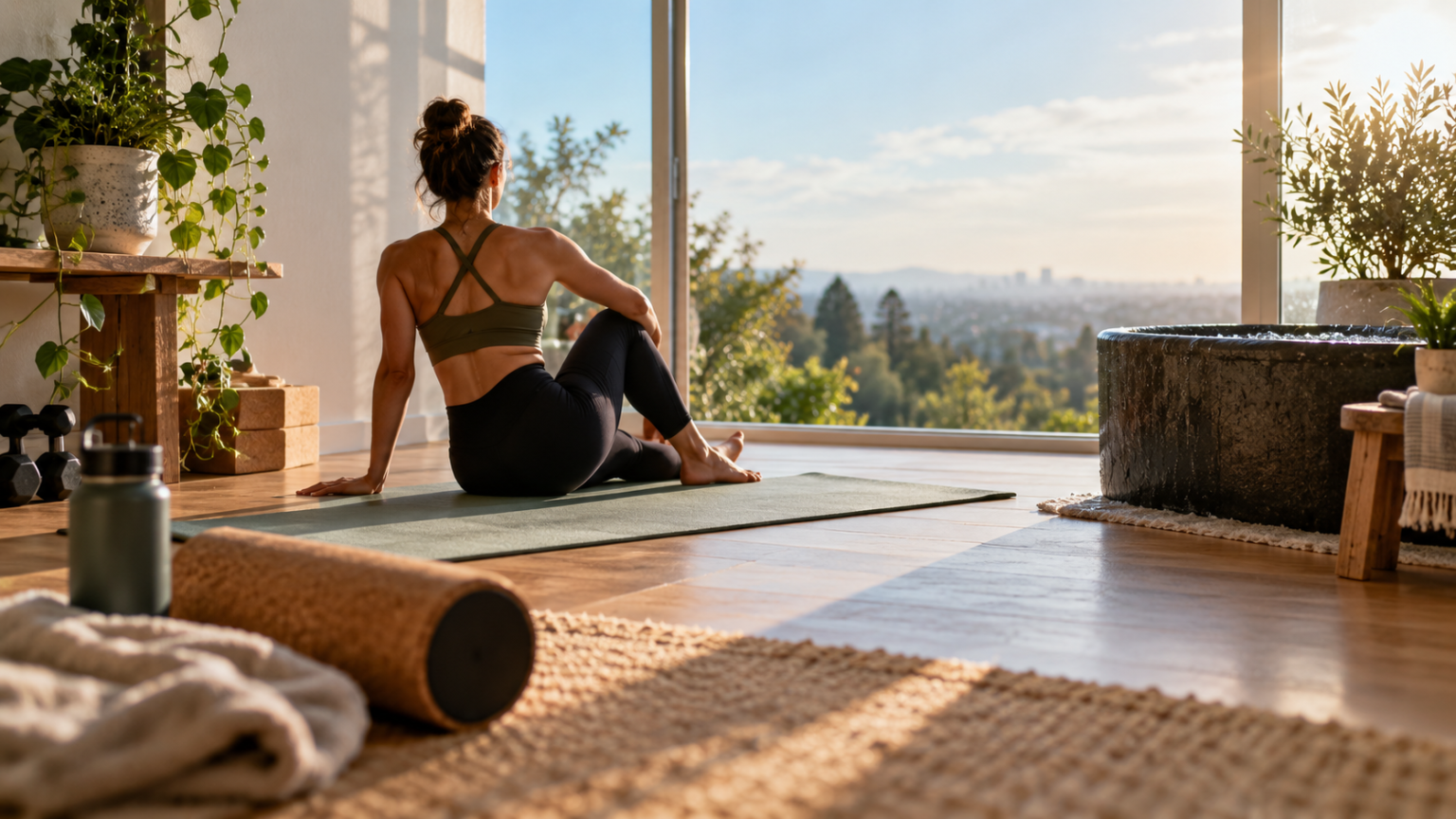
Working from home can make it easy to stay in one position for too long. A laptop at the wrong height, a chair without adequate support, or long periods of uninterrupted screen time may contribute to rounded shoulders, a forward head position, stiff hips, and discomfort in the back or neck. The best exercises to improve posture while working from home are not designed to force the body into one rigid position. They strengthen the muscles that support comfortable alignment, improve mobility, and encourage regular movement throughout the day.
Good posture is best understood as an adaptable relationship between the head, spine, pelvis, and limbs. It should allow you to breathe, move, and work without unnecessary strain. There is no single perfect posture that must be maintained continuously. Alternating between sitting, standing, walking, and exercising is generally more practical than trying to hold one fixed position for hours.
What Is Posture?
Posture is the way the body is positioned and supported during movement and rest. At a desk, this includes the position of the head, shoulders, upper back, lower back, pelvis, hips, knees, and feet. Posture is influenced by muscular strength, joint mobility, fatigue, work setup, vision, habits, stress, and the demands of a task.
Posture exercises cannot correct every source of discomfort. They may help improve body awareness, strength, flexibility, and tolerance for desk work, but persistent pain can have many possible causes. Exercise should support normal movement rather than become a test of how long you can hold a rigid pose.
Why Home Workers May Develop Postural Problems

Office and home-working environments often encourage prolonged sitting with limited variation. A laptop screen placed too low can encourage the head and neck to move forward. A keyboard positioned too far away may cause the shoulders to round. A soft sofa can place the pelvis in a less stable position, while a poorly adjusted chair may leave the feet unsupported.
Fatigue also matters. The longer a person works without a break, the more likely they are to relax into a position that feels comfortable in the short term but becomes uncomfortable when maintained for a long time. Stress may increase muscle tension around the neck and shoulders. These factors do not mean that one posture is permanently damaging, but they do show why strength training, flexibility, recovery techniques, and movement breaks are useful parts of a home-work routine.
Best Exercises to Improve Posture While Working From Home
The following exercises require little or no equipment. Perform them smoothly and within a comfortable range. Quality of movement matters more than forcing a deeper stretch or completing a large number of repetitions.
1. Chin Tucks
Chin tucks train awareness of the head and neck position without aggressively stretching the neck.
- Sit or stand tall with your gaze level.
- Keep your eyes facing forward and gently draw your chin backward, as if making a small double chin.
- Do not look down or press your head backward forcefully.
- Hold briefly, relax, and repeat several times.
This exercise may be useful after periods of laptop work. Stop if it causes dizziness, sharp pain, tingling, or symptoms that travel into the arm.
2. Wall Angels
Wall angels combine shoulder movement with upper-back control. They can help you notice whether your ribs, shoulders, and neck remain relaxed while your arms move.
- Stand with your back near a wall and place your feet a short distance away.
- Keep the back of your head, upper back, and pelvis as comfortably aligned with the wall as possible.
- Bring your arms into a goalpost position if that is comfortable.
- Slide your arms upward and downward slowly without shrugging or forcing them against the wall.
Your range of motion may be limited at first. A smaller, controlled movement is preferable to arching the lower back or pushing through shoulder pain.
3. Scapular Retractions
Scapular retractions strengthen awareness of the muscles around the shoulder blades. They should not become a forceful squeezing exercise.
- Sit or stand with your arms relaxed by your sides.
- Gently draw the shoulder blades slightly backward and downward.
- Keep the shoulders away from the ears and avoid thrusting the chest forward.
- Pause briefly, then release fully.
This movement can be performed during a work break or combined with a resistance band for additional strength training. A band should provide manageable resistance without causing the shoulders to roll forward.
4. Thoracic Extensions Over a Chair
Upper-back mobility can make it easier to change position after desk work. Use a stable chair without wheels if possible.
- Sit with your feet supported and your hands behind your head or across your chest.
- Keep your lower back relatively stable while gently extending your upper back over the chair back.
- Move only as far as comfortable, then return to an upright position.
Do not pull on your head or force the neck into extension. If the chair feels unstable, use a standing upper-back mobility exercise instead.
5. Doorway Chest Stretch
A chest stretch may feel useful when desk work leaves the front of the shoulders tight. It should create a mild stretch, not pain or numbness.
- Stand in a doorway with one forearm resting against the frame.
- Place the elbow at a comfortable height and step forward slowly.
- Keep the shoulder relaxed and avoid twisting the trunk.
- Hold briefly, breathe normally, and change sides.
People with a shoulder injury, instability, or recent surgery should ask a qualified professional whether this movement is appropriate.
6. Hip Flexor Stretch
Long periods of sitting keep the hips bent. A half-kneeling hip flexor stretch can provide a controlled change of position.
- Place one knee on a folded towel and the opposite foot in front.
- Keep the torso upright and gently shift the pelvis forward.
- Contract the gluteal muscles lightly instead of arching the lower back.
- Return to the starting position and repeat on the other side.
The sensation should be moderate and located near the front of the hip. Avoid bouncing or leaning excessively.
7. Glute Bridges
Glute bridges strengthen the gluteal muscles and provide a break from seated hip flexion.
- Lie on your back with your knees bent and feet about hip-width apart.
- Brace your abdomen gently and press through the feet.
- Lift the hips until the trunk and thighs form a comfortable line.
- Pause briefly, then lower with control.
Avoid pushing the hips so high that the lower back arches strongly. This is a strength exercise, so controlled repetitions are more useful than speed.
8. Bird Dog
The bird dog challenges trunk stability while the arms and legs move. It can support coordination useful for daily activity, running, and other sports.
- Start on your hands and knees with the hands under the shoulders and knees under the hips.
- Brace the trunk gently and extend one arm and the opposite leg.
- Keep the pelvis level and avoid rotating the torso.
- Return slowly and change sides.
Begin by moving only one limb at a time if maintaining balance is difficult. The exercise should not cause pain in the wrists, shoulders, lower back, or hips.
9. Dead Bug
The dead bug develops trunk control while the limbs move away from the body. It is a useful home workout option because it requires no equipment.
- Lie on your back with your hips and knees bent and your arms raised.
- Keep the rib cage relaxed and maintain a neutral, comfortable spine.
- Slowly lower one arm and the opposite leg without allowing the trunk to twist.
- Return to the start and alternate sides.
Use a smaller range of motion if your lower back lifts aggressively from the floor or you cannot control the movement.
10. Walking, Running, and Light Cardio
Posture is affected by overall movement habits, not just isolated exercises. A brisk walk can interrupt prolonged sitting and increase circulation. Running may support general fitness, but it does not automatically correct desk-related posture. A gradual running program should include appropriate recovery and strength training, particularly for people returning after a long break.
Low-impact cardio such as walking, cycling, or a short indoor routine may be more suitable during a painful flare-up or when a person is new to exercise. The best option is one that can be performed consistently without worsening symptoms.
A Practical Work-From-Home Routine
A simple routine can combine short movement breaks with two or three weekly strength sessions. For example, during the workday, stand up regularly, walk around the room, perform chin tucks, and complete a few shoulder movements. At another point in the day, use glute bridges, bird dogs, dead bugs, and a hip flexor stretch.
For a broader home workout, begin with a comfortable warm-up such as marching in place or walking. Follow with a small selection of upper-back, trunk, hip, and leg exercises. Finish with relaxed mobility rather than forcing long static stretches. People already involved in yoga may use gentle cat-cow movements, child’s pose, or supported chest-opening positions, provided these movements are comfortable and do not replace necessary strength work.
Progress gradually. You can add resistance, repetitions, sets, or complexity one change at a time. A qualified strength and conditioning professional can help adapt a program for a specific sport, work demand, or injury history.
Improve the Workstation as Well as the Body
Exercise is more effective when the work environment supports movement. The Occupational Safety and Health Administration, commonly known as OSHA, recommends arranging computer workstations so that equipment supports neutral and comfortable working positions. Practical adjustments include placing the top of a monitor near eye level, keeping the keyboard and mouse close enough to avoid reaching, supporting the feet, and positioning frequently used items within easy reach.
A laptop used for long sessions may be more comfortable with an external keyboard and mouse so the screen can be raised. A sit-stand desk can provide variety, but standing in one fixed position for hours is not a complete solution. Change position, shift weight, walk, and use short breaks to reduce the total time spent in any one posture.
Benefits and Limitations
Potential benefits:
- Improved awareness of head, shoulder, trunk, and pelvic position.
- Better strength and control in the upper back, hips, glutes, and core.
- Greater movement variety during the workday.
- Support for flexibility, general fitness, and injury-prevention habits.
- A practical foundation for other activities, including yoga, running, and recreational sports.
Limitations:
- Exercises cannot guarantee that all neck, shoulder, or back discomfort will disappear.
- They cannot compensate fully for an unsuitable workstation or very long uninterrupted work sessions.
- Improvement depends on consistency, sleep, stress, workload, and overall activity.
- Some movements may be unsuitable after surgery, during pregnancy, or with a diagnosed musculoskeletal or neurological condition.
- Stretching alone may not address weakness, poor load tolerance, or an underlying medical problem.
How Nutrition and Recovery Fit In
Nutrition for athletes and home exercisers should support adequate energy, protein, fluids, and a varied intake of vegetables, fruit, whole grains, and other nutrient-dense foods. No particular food can correct posture. However, inadequate food intake, dehydration, poor sleep, or insufficient recovery may reduce exercise quality and make fatigue more noticeable.
Recovery techniques can include sleep, easy walking, relaxed breathing, light mobility, and sensible training progression. Sports psychology principles are also relevant: setting a small, repeatable movement goal is often more sustainable than demanding perfect posture throughout the day. Use discomfort as information, not as a reason to ignore warning signs or push harder.
What the Evidence and Guidance Suggest
The American College of Sports Medicine provides general exercise guidance emphasizing regular aerobic activity, muscle strengthening, and gradual progression for health and fitness. Its approach supports combining strength, cardio fitness, mobility, and recovery rather than relying on one corrective exercise.
The NHS also provides public guidance on back pain and physical activity, generally encouraging people to stay active while seeking professional advice when symptoms are severe, persistent, or associated with warning signs. These sources do not establish one universally superior posture routine. A reasonable comparison method is to judge exercises by whether they address several relevant qualities: movement variety, upper-back and hip mobility, trunk and lower-body strength, ease of home use, and the ability to perform them without increasing symptoms.
Concise Q&A
Can posture exercises fix rounded shoulders?
They may improve strength, mobility, and awareness, which can make a more comfortable shoulder position easier to maintain. They cannot guarantee a permanent structural change, and rounded shoulders may have several contributing factors.
How often should I do these exercises?
Light mobility and movement breaks can be included regularly during the workday. Strength exercises generally need recovery between challenging sessions. Start with a manageable schedule and progress gradually.
Is yoga enough to improve posture?
Yoga can improve mobility, body awareness, breathing, and balance. A complete program may also need progressive strength training, walking or other cardio, and workstation adjustments.
Should I stretch when my back hurts?
Gentle movement may help some people, but stretching is not appropriate for every cause of back pain. Stop if symptoms intensify, spread into a limb, or are accompanied by weakness or numbness.
When should I seek medical advice?
Seek professional advice for severe or worsening pain, pain after significant trauma, unexplained weakness, persistent numbness, loss of bladder or bowel control, fever, or other concerning symptoms. A physiotherapist or physician can assess your individual situation.
Safety Disclaimer
This article is for general educational information and is not a diagnosis or individualized medical treatment plan. Exercise within a comfortable range and seek advice from a qualified healthcare professional before starting a new program if you have an injury, medical condition, neurological symptoms, recent surgery, or significant pain. Stop exercising and obtain appropriate care if symptoms worsen or new warning signs appear.