







Choosing between a treadmill and a running route outdoors is not a contest with one universal winner. Both can support cardio fitness, help build a consistent running habit, and fit into a broader routine that includes strength training, flexibility work, and recovery. The better option depends on your goals, environment, preferences, access to equipment, and how your body responds to each setting.
This treadmill vs outdoor running pros and cons comparison explains the differences in a practical way. It covers pace and terrain, weather, safety, motivation, injury prevention, and ways to combine both options. It also notes where the evidence or a simple comparison has limits: an indoor belt and an outdoor route are not perfectly interchangeable, and individual experiences vary.
What does treadmill vs outdoor running mean?
Treadmill running means running on a powered or manually driven belt indoors. A motorized treadmill lets the runner select a speed and, on many models, an incline. Outdoor running means running on an open-air route, such as a road, track, park path, or trail. Outdoor conditions can include changing surfaces, slopes, wind, temperature, and traffic or other people.
The comparison here is based on practical factors runners can assess: control over pace and conditions, route variety, access, safety, comfort, and how easily a session can be adapted. It draws on general exercise and safety guidance from the American College of Sports Medicine (ACSM), the U.S. Centers for Disease Control and Prevention (CDC), and the NHS. These organizations provide guidance on physical activity and exercise safety; this article does not claim that a single study proves one setting is better for every runner.
Treadmill running: advantages and disadvantages
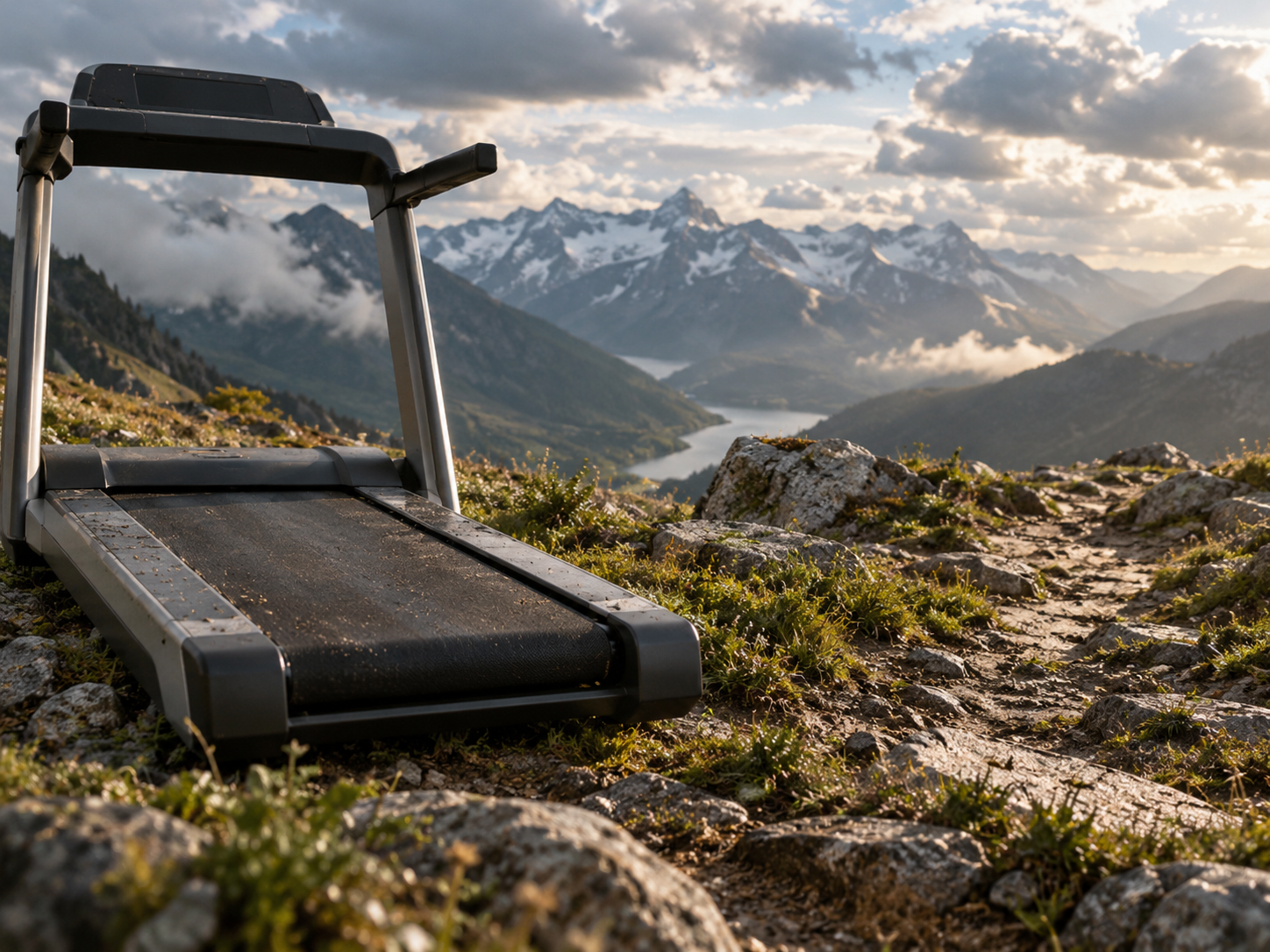
Potential advantages
- Controlled conditions: A treadmill provides a stable indoor setting. You can avoid rain, icy paths, heat, darkness, and some outdoor air-quality concerns, though indoor temperature and ventilation still matter.
- Convenient pace adjustments: A console makes it straightforward to set a speed and change it during intervals or a steady run. This can help a runner follow a planned session without checking a watch constantly.
- Incline options: Many treadmills allow incline adjustments, which can add an uphill challenge without finding a hill. Incline settings differ among machines, so the displayed grade should be treated as an estimate rather than a perfect match for a real slope.
- Easy access at home or a gym: A machine can make short runs practical when travel time, childcare, work hours, or local route access are barriers. A home workout also avoids having to plan a route.
- Predictable footing: The belt is generally even and free of outdoor obstacles. That predictability may suit some runners, but it does not remove the possibility of a fall, overuse problem, or equipment-related hazard.
Potential disadvantages
- Limited variety: The scenery and movement pattern can feel repetitive. Some runners find it harder to stay engaged indoors, especially during long sessions.
- Different movement demands: A moving belt and a stationary outdoor surface do not create identical running conditions. The belt may influence stride and pacing, while outdoor running involves moving through the air and responding to the ground. Individual differences, treadmill design, speed, and incline all matter.
- Equipment access and upkeep: A treadmill requires space and maintenance at home, or access to a gym. Noise, cost, and availability can be practical constraints; there is no single price that applies to all machines or memberships.
- Less exposure to outdoor skills: Indoor running does not teach you to manage uneven paths, turns, road crossings, or changing weather. Those skills matter if outdoor events or routes are part of your goals.
- Machine safety: The belt continues moving while the machine is on. A runner needs to know how to use the stop control, step onto the side rails safely when necessary, and keep children and pets away from the equipment.
Outdoor running: advantages and disadvantages
Potential advantages
- Changing scenery and routes: Parks, paths, tracks, and streets offer variety. Route choice can make runs feel more engaging and help runners practice the surfaces and terrain they expect to encounter in events.
- Natural pace variation: Hills, turns, wind, and surface changes prompt runners to adjust effort. This can build familiarity with pacing by perceived effort rather than relying only on a fixed speed display.
- Simple equipment needs: In many locations, outdoor running requires little beyond suitable footwear and a safe route. Access is not universal, however: distance, lighting, weather, traffic, and neighborhood conditions can be barriers.
- Time outdoors: Some people enjoy being outside and find that it supports their mood or motivation. This is a personal benefit, not a guaranteed mental-health treatment.
- Specific preparation: If you are training for an outdoor race, regular outdoor sessions help you become familiar with route conditions, turns, and the feel of running outside.
Potential disadvantages
- Weather and daylight: Heat, cold, storms, ice, and darkness can disrupt a plan or make a route unsuitable. Appropriate clothing and route choices help, but they do not make every condition safe.
- Traffic and route hazards: Cars, bikes, loose dogs, uneven pavement, and poor lighting can create risks. A route that is convenient is not necessarily a safe route.
- Variable terrain: Trails and uneven paths can demand more balance and attention. A sudden change in surface or elevation may feel challenging, especially when fatigue affects coordination.
- Less precise pace control: GPS readings, hills, wind, and stoplights can make pace vary. That is not inherently a disadvantage, but it can complicate sessions that call for tightly controlled speed targets.
- Environmental limits: Poor air quality, extreme temperatures, or unsafe local conditions may make an indoor option more sensible on a particular day.
Which option is better for cardio fitness?
Either setting can provide aerobic exercise when the effort and duration are appropriate for the runner. The CDC recommends that adults get regular aerobic activity and muscle-strengthening activity as part of overall health guidance. Its recommendations are broad population guidance, not a prescription for an individual training plan. A person can run easy, moderate, or hard on either a treadmill or outdoors; the setting alone does not determine the training effect.
For a steady run, use effort as well as pace. You should be able to adjust the session if heat, fatigue, terrain, or other conditions make a planned speed inappropriate. For intervals, a treadmill makes speed changes convenient, while a track or measured outdoor route can offer a useful alternative. Neither option guarantees that a pace shown on a display or watch exactly reflects effort.
Some runners raise treadmill incline to make an indoor session feel more like running outdoors. There is no single incline adjustment that perfectly reproduces all outdoor runs. A flat road, a hilly trail, and a windy route differ in more ways than slope. Choose incline based on comfort and the purpose of the workout rather than treating one setting as a universal conversion.
How to choose: practical steps
- Start with your goal. If you are preparing for a road race or trail event, include outdoor sessions when conditions and access allow. If your priority is fitting in regular cardio, a treadmill may remove scheduling or weather barriers.
- Check the day’s conditions. Consider temperature, air quality, lighting, surface condition, and traffic. Move indoors, choose a safer route, shorten the run, or rest if conditions are unsuitable.
- Match effort to experience. New runners should build duration and intensity gradually. Do not assume the same displayed speed will feel identical on different treadmills or outdoors.
- Use a mix when useful. One option can support consistency while the other adds variety or event-specific practice. A mixed routine is a choice, not a requirement.
- Notice how your body responds. Track comfort, fatigue, and recovery rather than judging a session only by distance or speed. If a particular surface or setting repeatedly causes pain, reduce the load and reassess.
- Plan recovery. Include easier days, adequate sleep, and rest as appropriate. Strength training can support general fitness, while mobility or yoga may help some people maintain flexibility and body awareness. Neither replaces gradual running progression.
Injury prevention, strength, and recovery
There is no surface that prevents every running injury. Risk can be affected by training changes, prior injury, footwear comfort, sleep, health conditions, and other factors. Switching abruptly from treadmill to hills, or adding a large amount of running in either setting, may be harder to tolerate than a gradual transition. Increase training conservatively and allow time to adapt.
A balanced plan can include strength exercises for the legs, hips, and trunk, selected at a level you can perform with good control. Strength training is useful for general physical capacity, but a particular exercise program should not be presented as a guaranteed way to prevent injury. Flexibility work and yoga may fit into warm-ups or recovery according to preference; avoid forcing painful stretches.
For outdoor sessions, choose visible clothing when appropriate, follow local traffic rules, and let someone know your route if you are running alone in a remote area. For treadmill sessions, become familiar with the emergency stop, use the machine as directed, and avoid stepping onto a moving belt. Stay hydrated according to the conditions and the length and intensity of the workout. Nutrition needs vary; general advice cannot replace individualized guidance from a qualified sports dietitian or clinician.
Stop exercising and seek appropriate medical advice for concerning symptoms such as chest pain, faintness, unusual shortness of breath, or severe pain. If pain persists, worsens, or changes how you move, consult a qualified health professional rather than trying to diagnose the cause from an article.
Limitations of this comparison
This is a general decision guide, not a controlled treadmill-versus-road experiment. Treadmills differ in belt, cushioning, calibration, and available features; outdoor routes differ in surface, grade, weather, and safety. A treadmill run may feel different from a run outside, but the size and direction of that difference vary by person and setup. There is no reliable single conversion for pace, effort, or calorie use that applies to every runner.
Preferences also matter. A technically ideal session that a person avoids may be less useful than a suitable workout they can repeat. Access, disability, health status, location, and training history can change which option is practical. The ACSM, CDC, and NHS offer broader exercise information, but individual questions about symptoms, medical conditions, or a return from injury belong with a qualified clinician.
Concise Q&A
Is treadmill running easier than running outdoors?
Not always. A treadmill offers controlled pace and conditions, but the belt, incline, and indoor environment can feel different. Outdoors, hills, wind, and surface changes affect effort. Compare sessions by perceived effort and context rather than assuming they are equivalent.
Should I set a treadmill to a 1% incline?
Not as a universal rule. Incline may change the effort, but one setting cannot reproduce every outdoor route or compensate for all differences between a treadmill and outside. Use a comfortable setting that suits your workout.
Can I train for an outdoor race on a treadmill?
A treadmill can support fitness and structured workouts. If possible, add some outdoor running to practice the surface, turns, and conditions relevant to your event. The amount depends on your goals and access.
Which is better for beginners?
Either may work. Choose the setting that feels accessible and safe, start at a manageable effort, and increase gradually. Beginners with health concerns or a history of injury may benefit from professional guidance.
Bottom line
The treadmill vs outdoor running pros and cons comparison comes down to control versus variety, convenience versus route-specific practice, and personal preference. Treadmills make pace and conditions easier to manage; outdoor runs provide changing terrain and direct experience with real routes. Both can contribute to cardio fitness, and neither is automatically safer or more effective for every person. Pick the option that suits your current circumstances, adjust the session to your body and conditions, and combine the two when doing so supports consistency and your goals.
Disclaimer: This article is for general information only and is not medical advice. Exercise carries risk. Consult a qualified healthcare professional about symptoms, medical conditions, or safe training after an injury.