


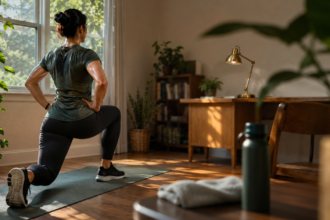



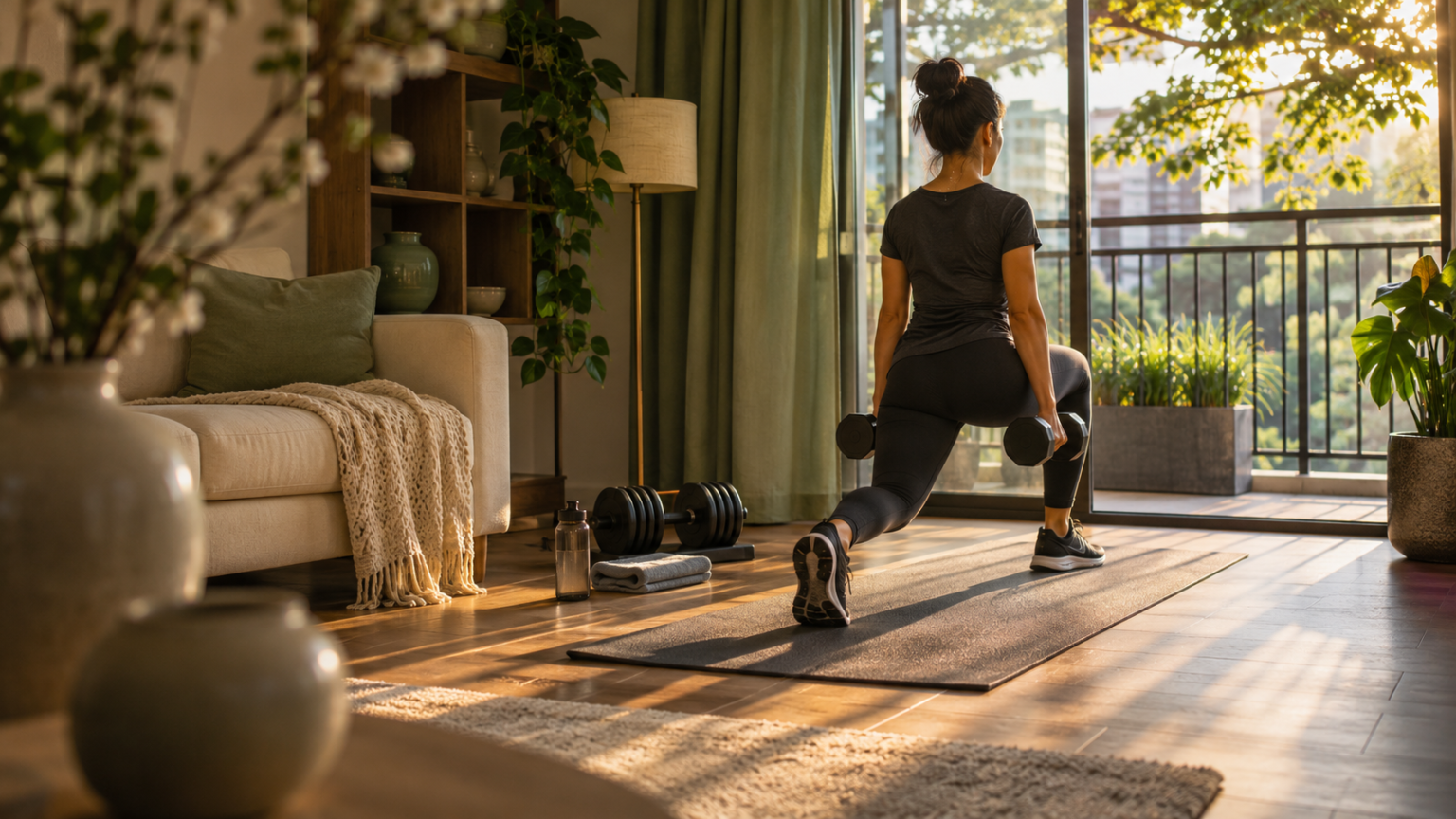
Learning how to weight train at home can make strength training more convenient, whether you have a full set of equipment or just a small space and a few adjustable dumbbells. The essentials are the same as in a gym: choose exercises that train the major muscle groups, use a challenging but manageable load, practise controlled technique, and increase the training demand gradually. A home routine can also fit alongside running, yoga, and other activities without requiring a complicated setup.
This guide explains what home weight training involves, how to choose equipment and exercises, and how to build a simple routine. It also covers progression, recovery, common limitations, and ways to reduce avoidable injury risk. It is general information, not an individualized exercise or medical plan.
What Does Weight Training at Home Mean?
Weight training at home is resistance exercise performed in your home using external weights, such as dumbbells, kettlebells, or a barbell, or other forms of resistance, such as resistance bands and body weight. The purpose is to challenge muscles through movements such as squatting, pushing, pulling, hinging at the hips, and carrying or holding a load. The weight does not have to be heavy to count: it needs to provide a suitable challenge while allowing you to maintain control and sound technique.
Strength training is a broader term for exercise that makes muscles work against resistance. It includes weight training, but it can also involve bands, body-weight movements, and some forms of machine or functional training. In practice, people often use the terms interchangeably.
A useful home routine trains the whole body over the week rather than repeatedly working only the muscles that are easiest to exercise. Include movements for the legs and hips, chest and shoulders, back, and trunk. The exact exercises and schedule should reflect your experience, available equipment, goals, and health.
Choose a Home Setup That Fits
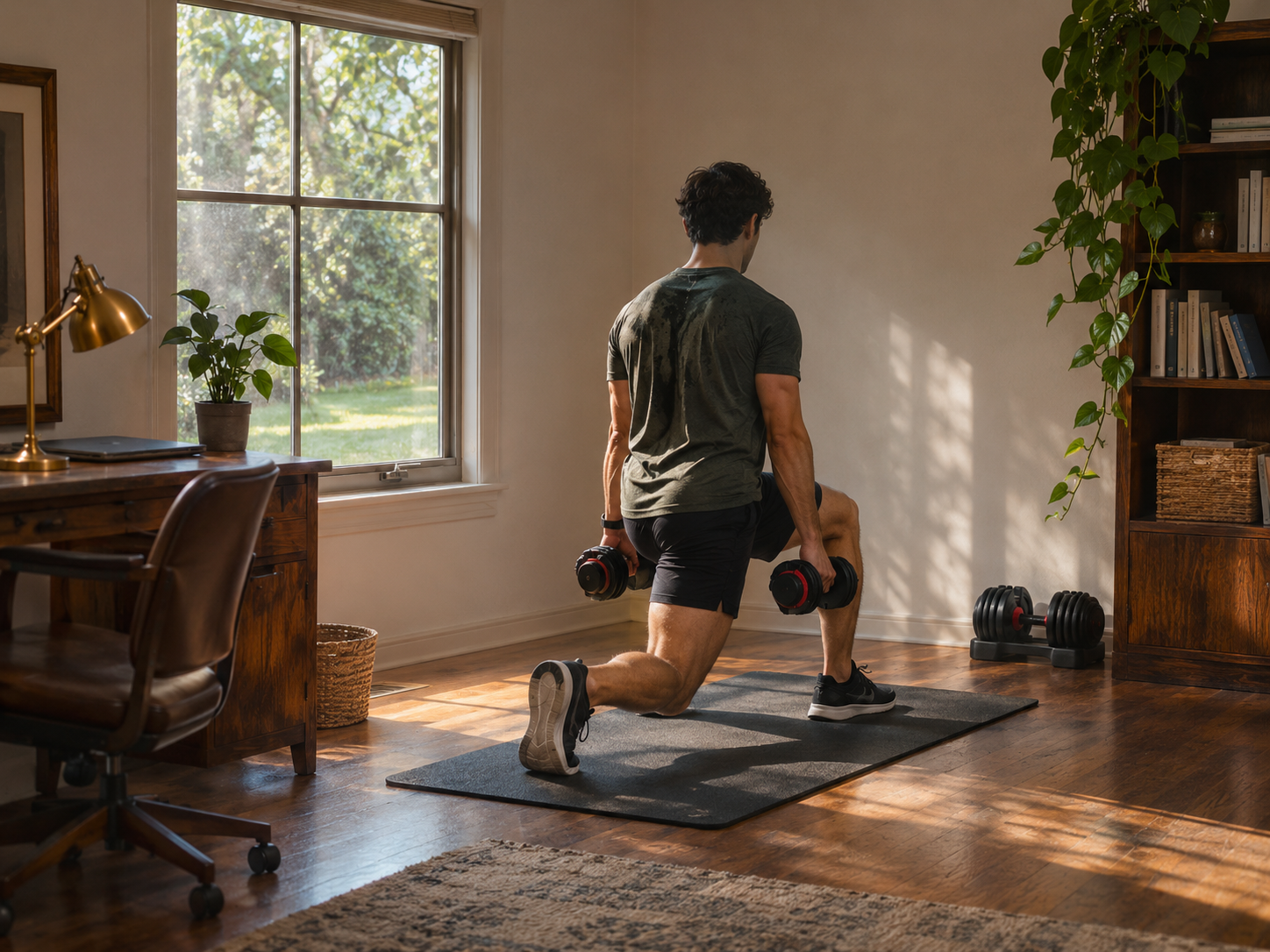
You can start without buying a large collection of equipment. Body-weight squats, push-ups against a wall or sturdy counter, glute bridges, and step-ups can provide resistance for beginners. A resistance band or a pair of dumbbells adds options for rows, presses, curls, and loaded lower-body exercises. Adjustable weights can save space and allow you to change resistance as your ability develops.
Before using equipment, check that it is in good condition and that fasteners, handles, and band anchors are secure. Use a stable surface and enough clear floor space to move without striking furniture or losing balance. Do not attach a band to an object unless it is designed to hold the force. If you use a chair or bench for support, confirm that it will not slide or tip.
Choose equipment based on the movements you plan to do, not on an assumption that more equipment always means better results. A modest setup used consistently can be more practical than an elaborate one that is difficult to store or use safely.
How to Build a Beginner Routine
For a straightforward start, schedule two or three non-consecutive strength sessions each week. Begin each session with a few minutes of easy movement and practise the exercises without heavy resistance. A session can include one exercise from each of these movement patterns:
- Squat: body-weight squat, goblet squat, or sit-to-stand from a stable chair.
- Hip hinge: glute bridge or a light Romanian deadlift with dumbbells.
- Push: wall push-up, incline push-up, or dumbbell floor press.
- Pull: resistance-band row or one-arm dumbbell row with stable support.
- Trunk stability: bird dog, dead bug, or a plank variation that you can hold without losing position.
These are examples, not a required list. Use versions that you can perform comfortably and safely. If an exercise causes sharp pain, stop rather than trying to push through it. For each movement, begin with a small number of controlled repetitions and one or two sets. Rest long enough between sets to regain control and breathing. The appropriate amount of work differs by person, exercise, and training history; there is no single starting prescription for everyone.
Keep a simple record of the exercise, resistance, sets, and repetitions. This helps you notice whether the same load is becoming easier and makes progression more deliberate. It also reduces the temptation to change several parts of a routine at once.
Practical Steps for Each Workout

1. Prepare your space and body
Move trip hazards, secure pets and children away from the training area, and place water within reach. Start with easy movement such as marching in place, comfortable arm circles, or unloaded versions of your planned exercises. A warm-up should prepare you to move; it does not need to leave you tired.
2. Use a manageable load
Select resistance that lets you complete the planned movement with control. You should be able to keep a stable position and use a consistent range of motion. If you need to swing the weight, hold your breath for an extended period, or shorten the movement to finish, reduce the load or choose an easier variation.
3. Control the movement
Move smoothly in both directions and avoid dropping a weight or bouncing into the end of a joint’s range. Breathe continuously. Many people find it useful to breathe out during the more effortful part of a repetition and breathe in as they return, while avoiding prolonged breath-holding. Keep the weight close to your body when lifting it from the floor, and stop a set if your technique deteriorates.
4. Leave room to recover
Muscles need time to recover from demanding sessions. Avoid training the same muscle groups hard on consecutive days when you are new to resistance work. Rest, sleep, and sufficient food all contribute to recovery. Mild, temporary muscle soreness can happen after unfamiliar exercise, but severe pain, swelling, unusual weakness, or symptoms that do not improve warrant professional advice.
Progress Without Rushing
Progressive training means gradually increasing the challenge as your capacity improves. You can add repetitions within a comfortable range, add a set, use a slightly heavier weight, choose a more demanding variation, or improve control and range of motion. Change one factor at a time so you can judge how your body responds. There is no need to increase resistance every workout.
When all repetitions are controlled and the final ones still feel easy, consider a modest increase in difficulty. If the new load makes you lose control, return to the previous version. With body-weight exercises, progression might mean moving from a wall push-up to a higher incline and then a lower incline, rather than forcing a floor push-up before you are ready.
Good technique is not a guarantee against injury, and no single form cue suits every body. Use a range of motion that is comfortable for you. If you have trouble understanding an exercise, consider guidance from a qualified fitness professional who can observe your movement in person or through an appropriate remote session.
Fitting Strength Training Around Running and Other Exercise
Home weights can complement running by developing strength in muscles that support everyday movement and sport. They do not replace running practice for improving running-specific skill or endurance. If both activities matter to you, arrange sessions so that fatigue from one does not consistently undermine the quality of the other. For example, a runner may prefer to avoid a demanding leg workout immediately before a key run, but the best schedule depends on training volume and recovery.
Yoga and flexibility work can support mobility and relaxation, but they are not substitutes for progressively challenging resistance exercise when strength is the goal. Likewise, cardio fitness and strength are related parts of overall fitness but train different capacities. A balanced week can include strength, aerobic activity such as brisk walking or running, and mobility work, with rest as needed.
Nutrition for athletes is relevant even for recreational home training. Regular meals that provide enough energy, protein-containing foods, and fluids can support training and recovery. Supplements are not required simply because you lift weights. Individual dietary needs vary, and people with medical conditions, significant weight changes, or specialized nutrition requirements should consult an appropriately qualified health professional.
Benefits, Pros, and Cons
Potential benefits
- Convenience: Training at home removes travel time and can make short sessions easier to schedule.
- Flexible equipment: Body weight, bands, and a small number of weights can cover many basic movement patterns.
- Privacy and control: You can choose your pace, music, and workout time, and repeat movements while learning them.
- Adaptability: Exercises can often be adjusted to match available space, ability, and equipment.
Trade-offs
- Limited load: Light weights may eventually be insufficient for some exercises unless you add heavier equipment or suitable variations.
- Less direct supervision: It can be harder to spot technique errors or get immediate coaching when training alone.
- Space and storage: Equipment needs a safe place to be used and stored, and shared living spaces can constrain exercise choice.
- Consistency still matters: Convenience does not automatically create a routine; you still need to plan sessions and allow recovery.
Home training is one workable option, not an inherently superior replacement for a gym or coached programme. The right setting is the one that lets you train safely, consistently, and appropriately for your needs.
Limitations and Injury Prevention
A home routine cannot diagnose or treat an injury. If you have persistent joint pain, a recent operation, a significant health condition, balance concerns, or uncertainty about which movements are appropriate, seek guidance from a clinician or qualified exercise professional before beginning or changing your training. Stop exercising and seek urgent medical care for concerning symptoms such as chest pain, fainting, or severe shortness of breath.
Common ways to reduce avoidable risk include starting below your maximum effort, keeping equipment maintained, using stable supports, progressing gradually, and stopping when pain or technique loss changes how you move. Avoid copying a workout that assumes a different training background or equipment setup. A programme that is safe and effective for one person may not suit another.
Injury prevention is not achieved by one stretch, exercise, or piece of equipment. Load management, technique, recovery, and attention to symptoms all matter. Flexibility work may be useful for comfort or mobility, but forcing a stretch or training through pain is not a reliable prevention strategy.
Sources and Method
This guide uses general principles described by the American College of Sports Medicine (ACSM), including its resistance-training guidance and position stand, Progression Models in Resistance Training for Healthy Adults, published in Medicine & Science in Sports & Exercise. It also refers to the National Health Service (NHS) guidance on strength exercises and exercising safely. The exercise examples here are general adaptations of common movements, not a reproduction of an individualized programme. Recommendations should be adjusted to a person’s health, experience, and goals.
Questions and Answers
Can I weight train at home without dumbbells?
Yes. Body-weight exercises and resistance bands can provide resistance. Choose a variation that challenges you while allowing controlled movement, and make it harder gradually as it becomes easier.
How often should a beginner train?
Many beginners start with two or three non-consecutive sessions per week, but the right schedule depends on health, other exercise, and recovery. Start conservatively and adjust if fatigue or soreness interferes with daily activity or later sessions.
Do I need to train to failure?
No. Beginners can make progress without taking every set to the point where another repetition is impossible. Ending a set while you can still maintain technique is a practical way to manage effort and practise consistent movement.
Can I combine home weights with running or yoga?
Yes. Strength training, running, and yoga can fit in the same weekly plan. Manage the timing and intensity so that fatigue does not compromise your form or recovery, and keep enough rest for your needs.
Disclaimer: This article is for general informational purposes and is not medical advice. Exercise carries some risk, and individual needs differ. Consult a qualified health professional about personal health concerns or before starting a programme if you have a condition, injury, or other reason to need tailored guidance.