






Compression socks are a common accessory for runners, strength-training athletes, travelers, and people who spend long periods standing. Interest in them often centers on two questions: do compression socks improve running, and can they support recovery afterward? The evidence is more nuanced than many product claims suggest. Compression socks may improve comfort, reduce the feeling of heavy or swollen lower legs, and help some athletes feel ready for their next session. However, they are not a substitute for training, adequate nutrition, sleep, medical care, or a well-planned recovery routine.
This guide explains the potential compression socks benefits for running and recovery, how graduated compression works, practical ways to use socks, possible drawbacks, and situations in which medical advice is important.
What Are Compression Socks?
Compression socks are close-fitting garments designed to apply pressure around the lower leg. Many athletic versions use graduated compression, meaning the pressure is generally greatest near the ankle and gradually decreases higher up the leg. This design is intended to support the movement of blood through the veins toward the heart and may limit some fluid accumulation in the lower legs.
Compression is usually described in millimeters of mercury, or mmHg. Light, moderate, and medical-grade products differ in pressure, length, construction, and intended use. A recreational running sock is not automatically equivalent to a medically prescribed compression garment. Fit matters: a sock that is too tight, poorly shaped, or folded over can cause discomfort and may create unwanted pressure points.
Potential Benefits for Running
Improved comfort during longer sessions
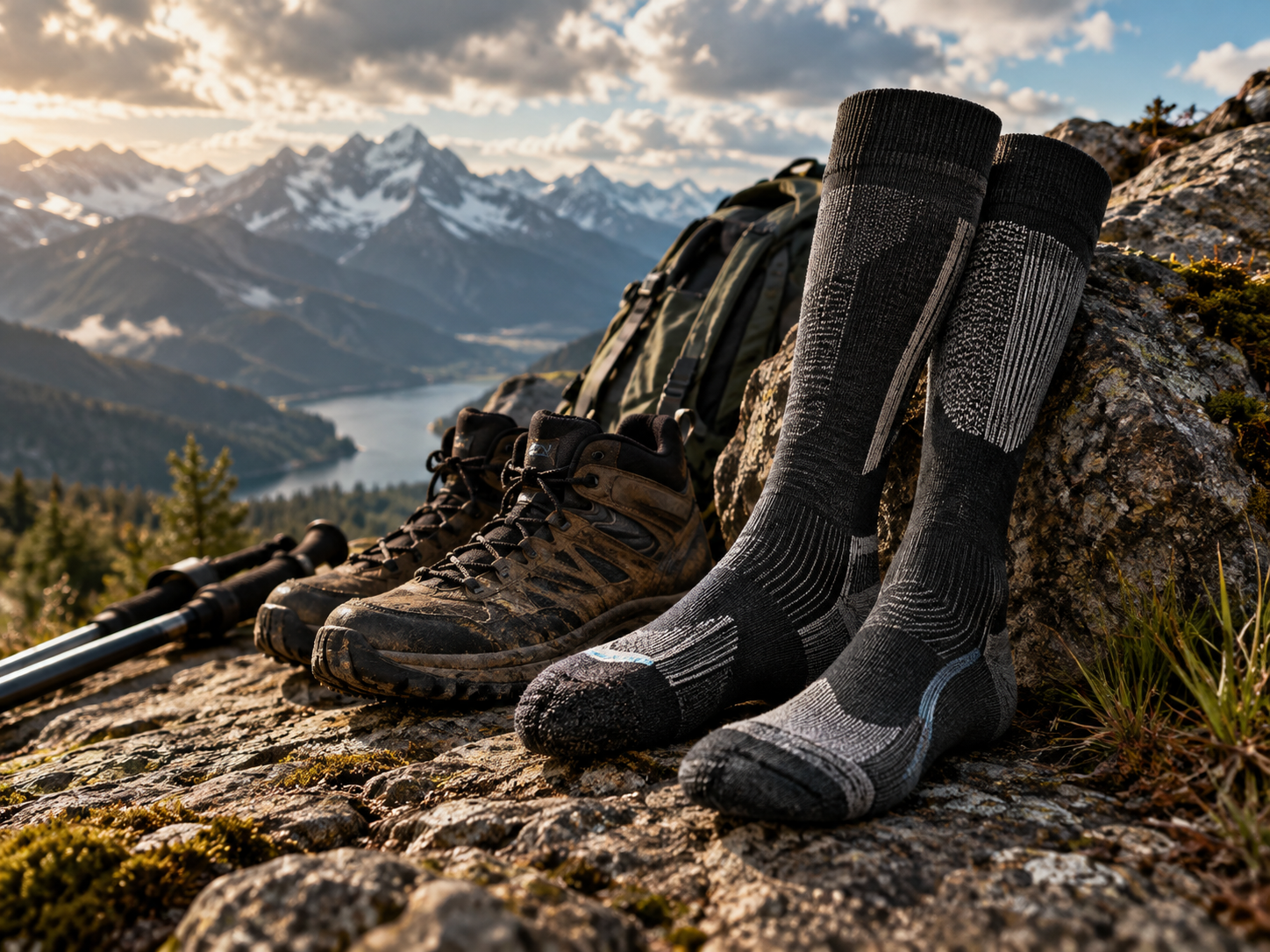
Some runners report that compression socks make their calves feel more supported during long runs, races, or periods of standing at an event. The snug fabric can reduce movement of the sock and provide a mild feeling of stability. This is a comfort response rather than proof that the socks directly increase strength or endurance.
Comfort can still be useful. If a runner feels less distracted by rubbing, lower-leg heaviness, or mild swelling, the session may feel easier to manage. Individual responses vary, so a sock that helps one athlete may feel restrictive to another.
Possible reduction in lower-leg swelling
Graduated compression may help limit dependent swelling, particularly when a person sits or stands for a long time. This may be relevant after travel, during an all-day competition, or following a long training session. The effect should not be confused with treatment for unexplained swelling. New, one-sided, painful, warm, or rapidly increasing swelling requires medical assessment rather than self-treatment with sports socks.
Perceived support without immobilizing the ankle
Unlike a brace, a compression sock does not normally restrict ankle movement. It may provide a mild layer of support around the calf and lower leg while allowing normal running mechanics. This does not mean it prevents sprains, stress injuries, tendon problems, or muscle strains. Injury prevention still depends on gradual training progression, appropriate footwear, strength, coordination, recovery, and attention to pain.
Does compression improve running performance?
Research on performance is mixed. Some studies report small improvements in perceived exertion, running economy, or time-to-fatigue, while others find little meaningful difference. Differences in sock pressure, fabric, athlete experience, exercise intensity, weather, and study design make broad conclusions difficult.
A useful interpretation is that compression socks may support comfort and confidence, but they should not be treated as a reliable performance enhancer. A runner who improves after wearing them may benefit from comfort, temperature control, reduced distraction, or personal preference rather than a large physiological change. Testing them in training is more sensible than introducing them for the first time on race day.
Potential Benefits for Recovery
Reduced perception of soreness or heaviness
After hard running, hill work, strength training, or a competition, some athletes find that compression socks reduce the sensation of heavy legs. Research reviews have examined compression garments after exercise-induced muscle damage and have found that some recovery measures may improve, while other outcomes remain inconsistent. The most dependable benefit may be how the garment feels to the wearer rather than a guaranteed acceleration of tissue repair.
Support during low-intensity movement
Recovery is not always complete rest. Easy walking, gentle cycling, mobility work, and light yoga can help an athlete stay comfortable while avoiding another demanding workout. Compression socks may be convenient during these activities, especially when the legs feel mildly tired or swollen. They do not replace a gradual return to normal training.
Use after travel or prolonged sitting
Some people wear compression socks during long periods of sitting because the pressure may help with lower-leg discomfort and swelling. Travelers should select a properly fitted product and follow medical advice if they have a history of blood clots, circulation problems, or significant swelling. Compression socks are not a guarantee against deep vein thrombosis and should never be used to ignore symptoms such as unexplained leg pain, warmth, redness, or sudden swelling.
What Compression Socks Cannot Do
- They cannot repair a torn muscle, stress fracture, ligament injury, or irritated tendon.
- They cannot replace sufficient carbohydrate and protein intake, hydration, sleep, or rest days.
- They cannot guarantee faster recovery or better race results.
- They cannot correct poor running technique, an unsuitable training load, or inadequate strength.
- They do not make pain safe to ignore.
For injury prevention, combine sensible increases in training volume with calf and hip strength, balance work, mobility appropriate to your needs, and recovery between hard sessions. For cardio fitness, consistent aerobic training matters far more than any single garment. Home workouts, yoga, and strength training can complement running when they are planned around the athlete’s current capacity.
How to Choose a Pair
1. Match the sock to the purpose
For ordinary running comfort, an athletic sock with light or moderate graduated compression may be sufficient. A stronger medical compression level should be selected with guidance from a qualified clinician, especially when the goal is to manage swelling or a diagnosed vein condition.
2. Measure rather than guess
Use the manufacturer’s sizing instructions and measure the foot and lower leg as directed. Some products also require an ankle or calf measurement. A sock that slides down, bunches behind the knee, or leaves deep marks is not fitting correctly.
3. Check the construction
Look for a smooth toe seam, breathable material, adequate moisture management, and a heel that stays in place. Runners prone to blisters may prefer a fabric blend that reduces friction. In hot conditions, a thin breathable model may be more comfortable than a thick sock.
4. Consider the length
Knee-high socks are common for running and travel because they cover the calf. Ankle socks provide less coverage and should not be assumed to offer the same compression pattern. Choose based on the area you want covered and the intended activity.
Practical Steps for Using Compression Socks
- Try them during an easy session. Wear the socks for a short run or walk before using them during a long race or demanding workout.
- Put them on carefully. Turn the sock partly inside out, place the foot in position, and gradually roll the fabric up the leg. Avoid pulling aggressively on the top band.
- Smooth out wrinkles. Wrinkles and folds can create concentrated pressure and rubbing. The top should sit flat without digging into the skin.
- Monitor your response. Remove the socks if you experience numbness, tingling, unusual coldness, skin color changes, pain, or increasing discomfort.
- Wash and inspect them. Follow care instructions so the fabric retains its shape. Replace socks when they become loose, stretched, damaged, or unable to stay in place.
- Use them as one part of recovery. Pair them with a cool-down, a balanced meal, fluids according to thirst and conditions, sleep, and appropriate mobility work.
Pros and Cons
Potential advantages
- May reduce the sensation of heavy or tired lower legs.
- May help limit mild lower-leg swelling during prolonged sitting or standing.
- Can reduce sock movement and provide a secure, supportive feeling.
- May be useful for comfort during recovery walks, travel, or long events.
- Easy to combine with running, strength training, yoga, or home workouts.
Possible disadvantages
- Some runners find them hot, restrictive, or distracting.
- Incorrect sizing can cause pressure marks, rubbing, or numbness.
- Benefits for performance and biological recovery are not consistent across studies.
- High-quality products may cost more than ordinary running socks, and replacement is still necessary when they wear out.
- They may create false confidence and encourage an athlete to train through an injury.
Limitations of the Evidence
Compression research is difficult to compare because studies use different garments, pressure levels, exercise tests, wearing schedules, and definitions of recovery. Some outcomes are objective, such as blood-flow measures or laboratory performance tests. Others are subjective, such as soreness, comfort, and perceived readiness. A result observed in a controlled study may not translate into a noticeable benefit during everyday training.
For this article, the comparison approach is to separate three questions: whether compression can affect circulation or swelling, whether it changes athletic performance, and whether it improves how recovered an athlete feels. Clinical guidance generally treats compression differently from sports-performance research. The Cleveland Clinic explains common uses and precautions for compression socks, while the NHS discusses compression stockings in the context of venous conditions. For sports evidence, the review titled Compression Garments and Recovery from Exercise-Induced Muscle Damage: A Systematic Review and Meta-Analysis, published in the British Journal of Sports Medicine, is a useful example of why recovery findings should be interpreted as mixed rather than guaranteed. The review Bringing Light into the Dark: Effects of Compression Clothing on Performance and Recovery in the International Journal of Sports Physiology and Performance also illustrates the variety of results across performance and recovery outcomes.
When to Seek Medical Advice
Speak with a healthcare professional before using stronger compression if you have peripheral artery disease, significant circulation problems, diabetes with reduced sensation, skin disease, unexplained leg swelling, heart failure, or a history of vascular problems. A clinician can help determine whether compression is appropriate and what level is safe.
Seek prompt medical care for sudden one-sided leg swelling, severe calf pain, warmth, redness, chest pain, fainting, or unexplained shortness of breath. These symptoms may require urgent assessment. Do not attempt to manage them by simply changing socks or continuing exercise.
Q&A
Should I wear compression socks while running or after running?
Either can be reasonable if the socks fit well and feel comfortable. Test them during training first. Wearing them after a run may be preferable if you like the feeling but find them distracting during exercise.
Do compression socks prevent running injuries?
No. They may improve comfort, but there is no guarantee that they prevent strains, sprains, stress injuries, or overuse conditions. Training progression, strength, technique, footwear, and recovery remain more important.
Can I wear them overnight?
Do not assume that overnight use is appropriate. Follow the product instructions and ask a clinician if you need compression for a medical condition. Remove them if they cause pain, numbness, color changes, or skin irritation.
Are tighter socks better?
No. More pressure is not automatically more effective. The correct level depends on the purpose, your health, and the garment’s design. Excess pressure or poor fit can be harmful or uncomfortable.
Do I need compression socks for recovery?
No. They are optional. A sound recovery plan includes sleep, adequate energy and protein, hydration, light movement when appropriate, and rest from excessive training. Compression socks may be a useful comfort tool, not a requirement.
Bottom Line
The most credible compression socks benefits for running and recovery are improved comfort, a possible reduction in lower-leg heaviness or mild swelling, and a feeling of support during or after activity. Evidence for major performance gains or universally faster muscle recovery is limited and inconsistent. Choose a properly fitted pair, test it in ordinary training, and treat it as one small part of a broader plan involving running, strength training, flexibility, nutrition for athletes, injury prevention, sports psychology, and recovery techniques.
Safety disclaimer: This article is for general information and is not a diagnosis or substitute for individualized medical advice. Consult a qualified healthcare professional before using medical-grade compression or if you have circulation problems, unexplained swelling, persistent pain, or other concerning symptoms.