







Runner’s knee is a common name for pain around or behind the kneecap, often associated with running, jumping, squatting, or prolonged sitting. The term may refer to patellofemoral pain, but it is not a complete diagnosis. Knee pain can also result from tendon problems, joint injury, arthritis, referred pain from the hip or back, or other conditions that need professional assessment.
This guide explains the best exercises for runners knee pain relief, how to use them safely, and how strength training, flexibility, running adjustments, recovery techniques, and nutrition can support a return to activity. The recommendations are intended for general education. They should not replace an examination by a qualified clinician, especially when pain is severe, persistent, or associated with swelling, instability, locking, fever, or a traumatic injury.
What Is Runner’s Knee?
Runner’s knee commonly describes patellofemoral pain: discomfort felt at the front of the knee, usually around the kneecap. It may feel like an ache, pressure, or sharp pain during activities that load the knee while it is bent. Running downhill, using stairs, squatting, kneeling, and sitting for a long time can aggravate symptoms.
Current clinical guidance generally treats patellofemoral pain as a condition influenced by several factors rather than by one universally incorrect movement. Hip and quadriceps weakness, sudden changes in training, reduced recovery, limited ankle or hip mobility, running mechanics, and overall workload may all contribute. The most useful treatment varies from person to person.
The American Academy of Orthopaedic Surgeons describes patellofemoral disorders as conditions involving the movement and loading of the kneecap within the femoral groove. The National Health Service also recommends assessment when knee symptoms do not improve or interfere with normal activities. These sources support a practical approach: identify warning signs, manage aggravating loads, and progressively rebuild strength.
Before You Exercise: Check Your Symptoms
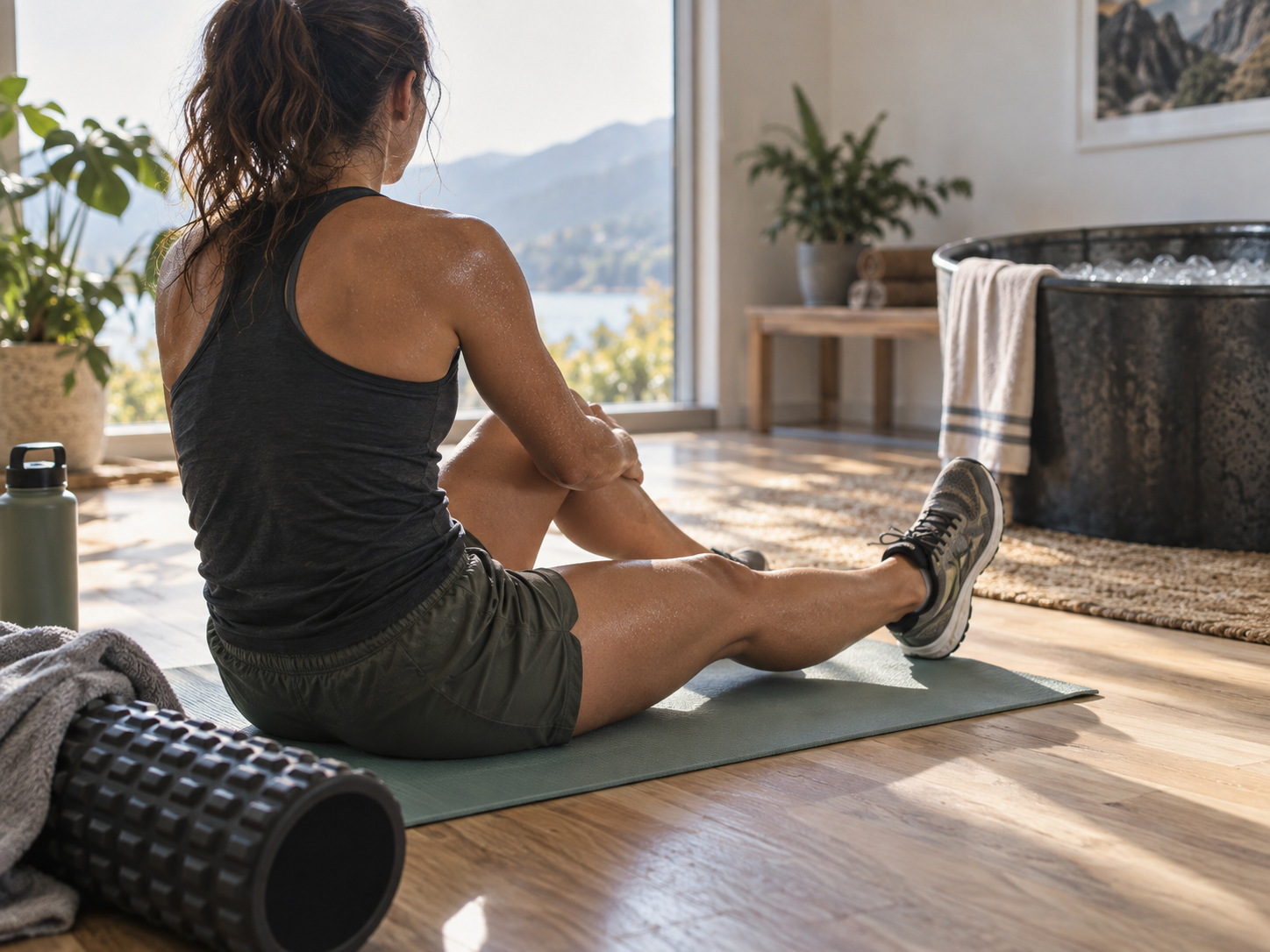
Exercise should produce manageable effort, not a steady escalation of pain. A mild increase in discomfort during a controlled exercise may be acceptable if it settles soon afterward and does not leave the knee worse later that day or the next morning. If pain becomes sharp, causes limping, or continues to intensify, stop and reassess.
Seek prompt medical advice after a major fall, collision, or twist, or if you cannot bear weight. An evaluation is also important for substantial swelling, repeated giving way, true locking, a hot or red joint, fever, calf swelling, unexplained night pain, numbness, or symptoms that persist despite sensible activity modification.
Best Exercises for Runners Knee Pain Relief
1. Isometric wall sit
A wall sit trains the quadriceps while allowing you to control the knee angle and total effort.
- Stand with your back against a wall and feet slightly forward.
- Slide down only as far as you can without sharp pain. A shallow bend is appropriate at first.
- Keep your knees pointing in the same direction as your toes.
- Hold the position while breathing normally, then return to standing.
Begin with several short holds rather than a single exhausting effort. Increase the hold time or depth gradually, but change only one variable at a time. This exercise is useful when repeated knee bending is uncomfortable because the position is predictable and easy to adjust.
2. Straight-leg raise
The straight-leg raise develops quadriceps control without requiring much knee movement.
- Lie on your back with one knee bent and the other leg straight.
- Tighten the thigh of the straight leg and keep the knee extended.
- Lift the leg until it is level with the opposite thigh.
- Pause briefly, lower with control, and relax before repeating.
Keep the movement smooth and avoid arching your lower back. If the exercise is easy and symptom-free, a light ankle weight may be considered later, although it is not essential.
3. Step-down
Step-downs develop strength and control for tasks that resemble running and descending stairs.
- Stand on a low step while holding a rail or wall for balance.
- Slowly lower the opposite heel toward the floor.
- Keep the working knee aligned over the middle of the foot.
- Press through the foot to return to the starting position.
Use a low step first. A higher step increases the demand on the knee and hip, so it should be introduced only when the lower version is controlled. Do not let the pelvis drop or the knee collapse inward. These signs indicate that the movement is currently too demanding or needs a slower pace.
4. Glute bridge
Glute bridges strengthen the hip extensors, which help share the work required during running, climbing, and lifting.
- Lie on your back with knees bent and feet flat.
- Brace your abdomen gently and squeeze your glutes.
- Lift your hips until your trunk forms a comfortable line with your thighs.
- Pause, then lower slowly.
Avoid pushing into pain in the lower back. To progress, use a longer pause, a resistance band around the thighs, or a single-leg variation. Single-leg bridges require more control and should not be the first version for someone with active knee pain.
5. Side-lying hip abduction
This exercise targets the muscles on the outside of the hip, including the gluteus medius. These muscles help control the pelvis and thigh during single-leg activities.
- Lie on your side with the lower knee bent for stability and the upper leg straight.
- Keep the upper leg slightly behind your body, with the toes facing forward.
- Lift the leg without rolling the pelvis backward.
- Lower slowly and repeat.
Small, controlled movements are usually more useful than lifting the leg as high as possible. A resistance band can be added once the bodyweight version is comfortable.
6. Calf raise
Calf raises improve lower-leg strength and ankle function, which are relevant to running and jumping.
- Stand near a wall or sturdy support.
- Rise onto the balls of your feet while keeping the ankles straight.
- Pause at the top and lower under control.
Start with both legs. Progress to single-leg calf raises or perform them on a step if you can maintain control. This exercise should challenge the calf rather than cause sharp pain in the knee or Achilles tendon.
7. Gentle mobility work
Mobility exercises can make movement more comfortable, but stretching alone does not correct every cause of runner’s knee. Useful options include a gentle quadriceps stretch, a hip-flexor stretch, a calf stretch, and controlled ankle movements.
Hold a comfortable stretch without bouncing. Stop if the stretch creates joint pain, tingling, or a pulling sensation that travels down the leg. Mobility work is best viewed as a complement to progressive strengthening rather than a substitute for it.
How to Build a Practical Home Routine
A simple home program can begin with two or three strength sessions each week. Choose one quadriceps-focused exercise, one hip exercise, one posterior-chain exercise, and one lower-leg exercise. Perform a level that allows steady technique and leaves some capacity in reserve.
For example, a beginner session might include wall sits, straight-leg raises, glute bridges, side-lying hip abductions, and calf raises. After a short warm-up, complete one or two manageable rounds. As symptoms become more stable, add repetitions, resistance, range of motion, or a more demanding variation. Avoid increasing all of these at once.
On other days, use low-impact cardio such as cycling, swimming, rowing, or walking on a comfortable surface if those activities do not aggravate symptoms. Cardio fitness can be maintained while running volume is temporarily reduced, although each alternative should be judged by the knee’s response.
Running Adjustments During Recovery
Complete rest is not always necessary, but running through progressively worsening pain is rarely helpful. Temporarily reduce distance, speed, hills, or frequency. A shorter, easier run on level ground may be better tolerated than a long downhill session.
Some runners benefit from modestly increasing step frequency, which can reduce the amount of braking and knee loading in certain situations. This is not a universal correction, and forcing a dramatic change may create new problems. Make small adjustments and judge them by comfort, control, and recovery afterward.
Check whether a recent workload change preceded the symptoms. New intervals, hill training, a different surface, longer runs, less sleep, or a sudden increase in weekly mileage can all raise total stress. Rebuild gradually, alternating harder sessions with easier days.
Recovery, Nutrition, and Sports Psychology
Recovery techniques are most effective when they support a well-managed training plan. Sleep, rest days, adequate food, hydration, and sensible workload changes matter more than any single recovery product. Ice or heat may temporarily change symptoms, but neither addresses the underlying need for appropriate loading and strength.
Nutrition for athletes should provide enough energy, protein, carbohydrates, vitamins, and minerals to support training and tissue repair. Favor regular meals containing protein-rich foods, carbohydrate sources around demanding sessions, fruits, vegetables, and fluids. Supplements are not automatically necessary, and deficiencies should be assessed with a qualified professional rather than guessed from knee pain alone.
Persistent pain can also affect confidence and motivation. Sports psychology strategies such as setting process goals, tracking symptoms without constantly checking them, using relaxed breathing, and planning gradual exposure to feared movements can make rehabilitation more consistent. Fear of movement is worth discussing with a physiotherapist or clinician, particularly when it limits normal activity long after an injury should have settled.
Pros, Cons, and Limitations
Progressive exercise has advantages: it can improve strength, movement tolerance, confidence, and general fitness; it can be performed at home with little equipment; and it supports long-term injury prevention better than relying only on short-term symptom relief.
It also has limitations: exercise may not help if the underlying diagnosis is different, if the workload remains too high, or if technique and progression are poorly managed. Improvements are usually gradual rather than immediate. More exercise is not always better, and a program that causes increasing pain needs adjustment. Some people require individualized physiotherapy, imaging, medication advice, or treatment for a condition unrelated to patellofemoral pain.
This article uses a conservative comparison method: recommendations are aligned with patient guidance from the American Academy of Orthopaedic Surgeons and the National Health Service, with exercise selection based on common rehabilitation principles for quadriceps, hip, calf, and movement-control training. These sources provide general guidance rather than a personal diagnosis or a guarantee that one exercise will work for every runner.
Q&A
Should I stop running if my knee hurts?
Not always. Reduce or pause the specific running load that aggravates symptoms, then maintain comfortable activity if possible. Stop and seek assessment when pain is severe, worsening, associated with swelling or instability, or not settling with sensible modifications.
Are squats good for runner’s knee?
Squats can be useful when performed within a comfortable range and progressed gradually. Start with a shallow squat or sit-to-stand movement, keep the knee aligned with the foot, and avoid forcing depth while symptoms are irritable.
Is stretching enough?
Stretching may improve comfort or mobility, but it is usually not enough by itself. A balanced plan commonly includes progressive strengthening, workload management, and a gradual return to running.
How long should recovery take?
Recovery time varies with the cause, symptom severity, training demands, sleep, and consistency with rehabilitation. If symptoms are not improving, repeatedly return after running, or interfere with daily life, arrange an assessment rather than extending self-treatment indefinitely.
Safety Note
This is general health information, not medical advice. Do not use these exercises to delay care after a significant injury or when you have marked swelling, inability to bear weight, locking, fever, redness, numbness, or repeated giving way. A sports medicine clinician or physiotherapist can help confirm the diagnosis and tailor exercise selection, running progression, and recovery targets to your needs.