







Caffeine can make a workout feel more manageable and may improve performance for some people, but the right amount depends on body size, sensitivity, health, and the activity. Taking more is not a reliable shortcut to a better session: excess caffeine can cause jitters, stomach discomfort, a racing heartbeat, or disrupted sleep. This guide explains how to think about caffeine before exercise, when to take it, and how to test a routine safely.
What does “caffeine before a workout” mean?
Caffeine before a workout means consuming caffeine-containing food, drink, or a supplement before exercise in an attempt to affect alertness, effort, or performance. Caffeine is a stimulant that acts on the central nervous system. It is found naturally in coffee, tea, and cocoa, and is added to some soft drinks, energy products, gels, and supplements.
It is not a necessary nutrient, and people can train effectively without it. A useful approach is to treat caffeine as an optional tool rather than a requirement. Its effects vary: a dose that feels modest to one person may cause unpleasant symptoms in another.
How much caffeine should you take before exercise?
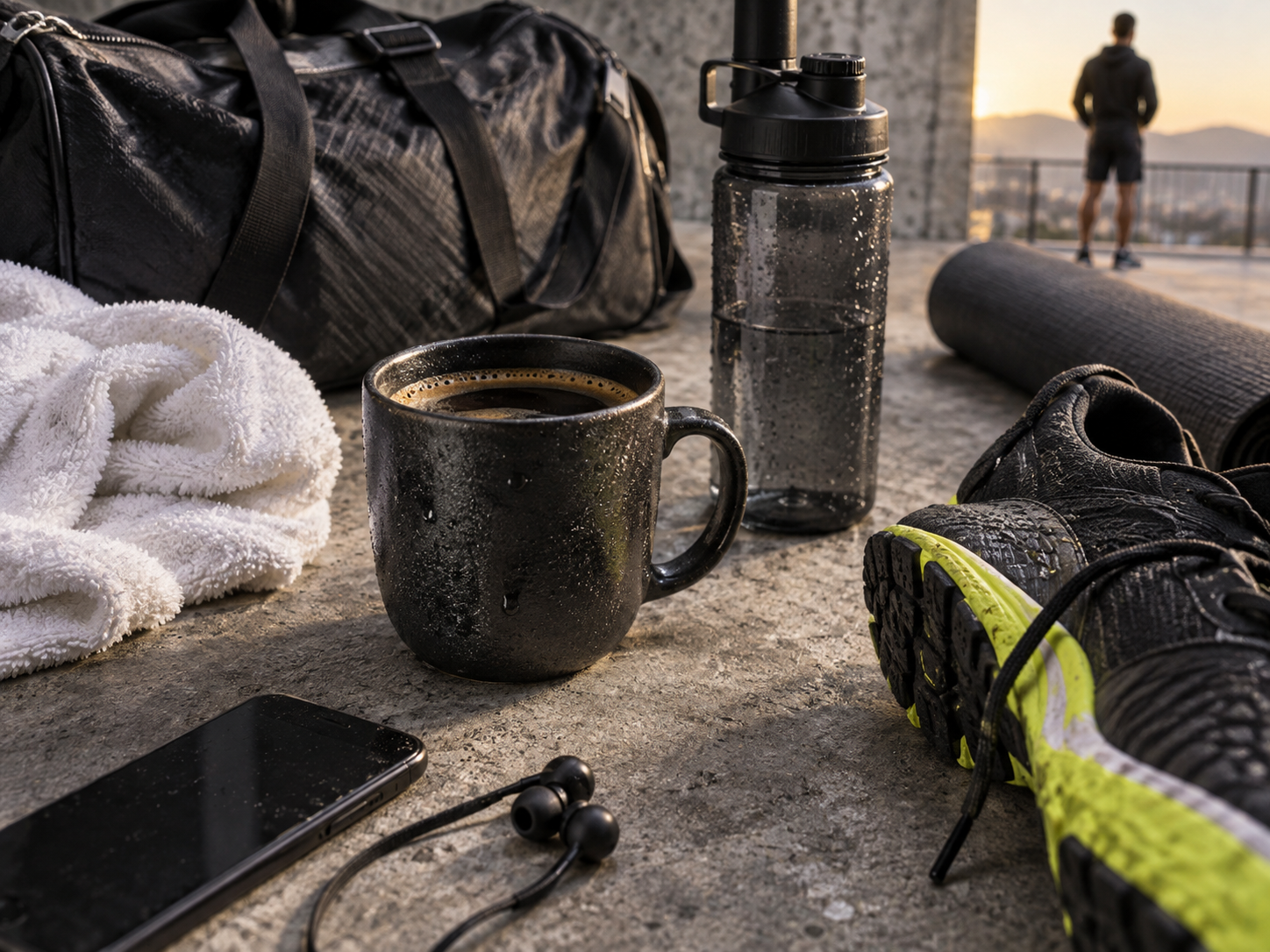
For healthy adults who choose to use it, sports-nutrition guidance commonly discusses a range of 3 to 6 milligrams per kilogram of body weight. The International Society of Sports Nutrition (ISSN) position stand on caffeine and exercise performance describes this range as one associated with performance benefits in many settings. It is a research-based range, not a personal prescription or a target everyone should reach.
Starting at the low end—or below it—is sensible, especially if you rarely consume caffeine. Some people notice an effect at lower amounts, while others experience side effects before reaching the amounts studied in sports research. There is little reason to increase a dose simply because a workout feels difficult.
For context, the U.S. Food and Drug Administration (FDA) says that up to 400 milligrams per day is an amount not generally associated with negative effects for most healthy adults. That is a general daily reference, not a recommended pre-workout dose and not a guarantee of safety for every person. Count caffeine from all sources throughout the day, including coffee, tea, chocolate, energy drinks, medications, and supplements.
Products vary considerably. A cup of coffee does not have a fixed caffeine content: serving size, beans, brewing method, and preparation all matter. Check a product label when available, and be cautious with powders or concentrated products, where a small measuring error can result in a much larger dose than intended.
Choose a conservative starting point
- Check whether caffeine is appropriate for you. Consider medical conditions, medications, pregnancy, anxiety, sleep problems, and past reactions. Ask a healthcare professional or pharmacist if you are unsure.
- Estimate your current intake. Include everyday drinks and any supplements, not just the item you plan to take before training.
- Use a modest amount first. Try it on an ordinary training day rather than before an important race, match, or demanding session.
- Record the response. Note the amount, timing, exercise, perceived effort, stomach comfort, mood, and sleep that night.
- Keep what works; skip what does not. A benefit is not worth persistent jitters, digestive problems, or lost sleep.
When should you take caffeine?
The ISSN position stand reports that caffeine is often taken about 60 minutes before exercise, while research also examines other timing and delivery strategies. For an ordinary drink or supplement, beginning with roughly 30 to 60 minutes before a session is a practical experiment—not a guarantee that the effect will peak at a particular moment. Individual response and the product form can change the timing.
For example, a person who drinks coffee before a morning run may prefer enough time to assess how it affects their stomach. Someone training in the evening may decide that the possible alertness benefit is not worth the risk of sleep disruption. Caffeine can remain in the body for hours, and the duration varies among individuals. There is no single cutoff time that protects everyone’s sleep.
Do not take an extra serving during a workout just because you do not immediately feel an effect. Give a routine several ordinary sessions to assess, while keeping the amount conservative. Never use caffeine to mask unusual fatigue, illness, pain, or inadequate recovery.
Does caffeine help every kind of workout?
Research reviews describe potential benefits across some endurance, strength, and high-intensity exercise outcomes, but results are not uniform. Effects depend on the activity, the outcome measured, the person, and how the caffeine is used. Caffeine may change perceived effort or alertness without automatically improving technique, fitness, or long-term training progress.
Running and cardio fitness
Some runners use caffeine before a race or a demanding cardio session because it may make effort feel more tolerable. A long run also brings practical concerns: caffeine can affect the stomach, and a new product can be an unwelcome surprise on the road. Test any routine during training, not for the first time on race day. Hydration, appropriate pacing, adequate fueling, and a progressive training plan remain central.
Strength training and home workouts
Caffeine may help some people feel more alert during resistance training, but it does not replace sound programming, suitable loads, rest between sets, or consistent practice. For home workouts, consider the same basics as in a gym: warm up, use equipment safely, and stop if you feel unwell. A stimulant cannot correct poor exercise form or make an unsafe setup safe.
Yoga, flexibility, and skill-based exercise
Caffeine is not required for yoga or flexibility work. If it makes you feel restless, anxious, or unusually focused on pushing harder, it may be a poor match for a calm or technique-focused session. For balance, mobility, and precise movement, choose an amount—or no caffeine—that lets you pay attention to control and comfort.
Potential benefits and drawbacks
Possible benefits
- Greater alertness or a lower perception of effort for some people.
- A possible performance benefit in certain exercise settings, as described in sports-nutrition research.
- Convenient intake through familiar drinks for people who already tolerate them.
Possible drawbacks
- Jitters, anxiety, restlessness, or a racing heartbeat.
- Digestive discomfort, nausea, or a need to use the bathroom at an inconvenient time.
- Sleep disruption, which can undermine recovery and future training.
- Uncertainty about actual caffeine content, especially with large drinks and multi-ingredient supplements.
- Overreliance: feeling unable to train without caffeine or using it to push through inadequate recovery.
These trade-offs matter for sports psychology as well as physiology. If a person becomes worried that a session will fail without a particular drink, the routine may be adding pressure rather than helping. It can be useful to practice some sessions without caffeine so that training confidence does not depend on a stimulant.
How to fit caffeine into athlete nutrition and recovery
Caffeine is only one small part of preparation. A balanced meal or snack, appropriate fluids, enough sleep, and a training plan matched to current fitness generally matter more to consistent progress. For longer or harder exercise, an athlete may need a suitable fueling strategy; caffeine does not supply all the energy, fluid, or nutrients that exercise requires.
Recovery techniques such as rest days, adequate food, hydration, and sleep should not be traded for a caffeinated late-night workout. If a session is repeatedly difficult because of poor sleep, low energy, or lingering soreness, consider adjusting training and recovery rather than increasing caffeine. Persistent pain or symptoms deserve appropriate professional assessment, not stimulant use.
Limitations and safety considerations
Research findings describe group averages and do not predict an individual’s response. Studies may use controlled conditions that differ from a person’s normal workout, and products can differ from those used in research. Tolerance, genetics, medication use, sleep, and habitual intake can all affect the experience. Caffeine is not a substitute for medical care, and this article cannot determine a safe dose for a particular person.
People who are pregnant or trying to become pregnant should follow advice from their healthcare professional. The American College of Obstetricians and Gynecologists advises limiting caffeine during pregnancy to less than 200 milligrams per day; that is a pregnancy-related daily limit, not an exercise dose. Children and adolescents should not use adult sports-dosing guidance. People with heart conditions, high blood pressure, anxiety disorders, sleep disorders, or medication interactions should ask a clinician or pharmacist before using caffeine for exercise.
Stop exercising and seek appropriate medical help for severe or concerning symptoms such as chest pain, fainting, or a markedly irregular heartbeat. Avoid combining multiple stimulant products, and do not use concentrated caffeine powder unless a qualified professional has specifically advised a safe, measured product and method. For tested athletes, check current anti-doping rules and supplement contamination risks; rules and product status can change.
Practical example: a low-risk trial
- Pick a familiar workout of moderate difficulty, not a competition or a personal-record attempt.
- Check the caffeine amount on the drink or product and count it toward your day’s total.
- If caffeine is appropriate for you, try a small, familiar serving around 30 to 60 minutes beforehand. Do not assume a larger serving will work better.
- Notice alertness, perceived effort, technique, stomach comfort, and any unusual symptoms during the session.
- Check how you sleep and feel afterward. If sleep or wellbeing worsens, reduce the amount, take it earlier, or avoid it.
This is a way to observe your own response, not a clinical test. Do not experiment if you have been advised to avoid caffeine or have a health concern that needs professional guidance.
Questions and answers
Is 200 milligrams a good pre-workout amount?
Not necessarily. Whether that amount is appropriate depends on the individual, the source, total daily intake, health, and timing. It may be too much for a caffeine-sensitive person and unnecessary for someone who already feels alert. Use conservative judgment rather than treating a common product serving as a universal recommendation.
Should I take caffeine before every workout?
No. It is optional, and regular use can make it harder to tell whether it helps. Some people prefer to reserve caffeine for selected sessions; others avoid it because of side effects or sleep concerns. There is no need to use it to maintain fitness.
Can I use coffee instead of a pre-workout supplement?
Some people prefer coffee because it is familiar, but its caffeine content varies and it may not suit everyone’s stomach. Supplements can contain multiple active ingredients, so read the full label and avoid stacking products. Neither option is automatically better.
What if caffeine makes me feel anxious or sick?
Do not try to push through those effects. Stop using that product, reduce or avoid caffeine, and seek medical advice if symptoms are severe, persistent, or concerning. If you have chest pain, fainting, or a serious heartbeat disturbance, seek urgent medical care.
Bottom line
For adults who can safely use caffeine, sports guidance often discusses 3 to 6 milligrams per kilogram, commonly taken around an hour before exercise. That range is not a requirement, and a smaller amount—or none—may be the better choice. Start conservatively, count caffeine from every source, test timing during ordinary training, and protect sleep and recovery. The most useful pre-workout plan is one that supports consistent, safe exercise without unpleasant side effects.
Sources and further reading: Guest NS et al., “International Society of Sports Nutrition position stand: caffeine and exercise performance,” Journal of the International Society of Sports Nutrition (2021); U.S. Food and Drug Administration, “Spilling the Beans: How Much Caffeine is Too Much?”; American College of Obstetricians and Gynecologists, “Moderate Caffeine Consumption During Pregnancy.” Guidance summarized here is general information, not individualized medical advice.
Disclaimer: This article is for educational purposes only and is not a substitute for diagnosis or advice from a qualified healthcare professional. Consult a clinician or pharmacist about caffeine if you have a medical condition, take medication, are pregnant, or are uncertain whether it is safe for you.