







Quick answer: The best mobility exercises for office workers with tight hips combine gentle hip-flexor work, controlled rotation, glute activation, and regular movement breaks. Start with 15 minutes, four or five days per week. Use a pain-free range, breathe slowly, and stop if you feel sharp pain, numbness, or symptoms that travel down the leg.
Sitting for long periods keeps the hips bent and reduces the chances to use the glutes, hip rotators, and upper legs through a full range. That does not mean your hips are permanently shortened, but it can make standing, walking, squatting, or running feel stiff. A small daily routine often works better than one hard stretching session on the weekend.
Coach’s definition: Hip mobility is your ability to move the hip joint with control through the range you need for daily life and sport. Flexibility is only one part of that range. Strength, balance, joint control, and confidence also matter.
What tight hips usually feel like
Office workers commonly notice stiffness after standing up, a short stride, tension at the front of the hip, difficulty sitting comfortably on the floor, or a lower back that works harder during a squat. These signs can come from several factors, including long sitting, weak or poorly coordinated muscles, training load, stress, or an existing injury. They do not identify one diagnosis by themselves.
Try this simple check before you start: walk for two minutes, perform five slow bodyweight squats, and note where you feel resistance. Repeat the same check after the routine. You are looking for easier movement and better control, not a dramatic stretch sensation.
The 15-minute office-worker hip mobility routine
Complete the exercises in order. Move slowly enough that you can keep your ribs stacked over your pelvis and breathe through your nose when comfortable. Use a wall, desk, or chair for balance.
1. Three-dimensional breathing with pelvic control
Time: 60 seconds. Lie on your back with knees bent and feet flat, or sit tall if floor work is not practical. Place one hand on your lower ribs. Inhale gently through your nose, allowing the ribs to expand. Exhale and lightly tighten your abdominal muscles without flattening your back forcefully. Repeat for five to eight breaths.
This is a preparation drill, not a flexibility test. It helps you find a neutral starting position before asking the hips to move.
2. Half-kneeling hip-flexor stretch
Dosage: 2 sets of 30 seconds per side. Kneel with your right knee down and left foot in front. Tuck the pelvis slightly as if bringing your belt buckle toward your ribs. Keep your torso tall and shift forward only until you feel a mild stretch at the front of the right hip. Do not arch your lower back to create a bigger sensation.
For a more useful version, squeeze the glute on the kneeling side for five seconds, relax, then repeat. This teaches the hip to extend while the pelvis stays controlled.
“A good hip-flexor stretch should make standing taller feel easier, not force you into a deep backbend.”
3. Adductor rock-back
Dosage: 8 slow repetitions per side. Start on hands and knees. Extend your right leg out to the side with the foot flat or the toes pointing forward. Keep your spine long and slowly move your hips back until you feel a gentle stretch along the inner thigh. Return to the start without rounding aggressively.
Keep the movement smooth. The inner thigh helps control hip position, so this drill is valuable before squats, lateral movement, or a walk after a long desk session.
4. 90/90 hip switches
Dosage: 6 to 8 controlled repetitions. Sit with both knees bent and feet wider than your hips. Let both knees fall to the right, return through the middle, and then lower them to the left. Use your hands behind you if needed. Keep the motion small enough that you do not collapse into pain.
When the basic version feels steady, sit taller and pause for two seconds on each side. The goal is active rotation, not forcing the knees to the floor.
5. Glute bridge with a three-second hold
Dosage: 2 sets of 10 repetitions. Lie on your back with feet about hip-width apart. Press through the whole foot, lift the hips, and squeeze the glutes at the top for three seconds. Keep the ribs from flaring and avoid pushing into a low-back cramp. Lower with control.
This exercise does not stretch the hips, but it builds the strength needed to use hip extension after hours of sitting. If hamstrings dominate, bring the feet slightly closer to your body and reduce the height of the bridge.
6. Supported deep squat hold
Time: 2 rounds of 20 to 30 seconds. Hold a door frame, sturdy desk, or squat rack. Lower only as far as you can keep your feet planted and your breathing calm. Gently shift side to side or rock forward and back by a few centimeters.
Use a folded towel under the heels if ankle stiffness limits the position. Over time, reduce the support rather than forcing a lower squat immediately.
7. Hip airplane preparation
Dosage: 5 repetitions per side. Stand beside a wall and hold it lightly. Shift onto one leg, hinge forward a little, and open the free hip a few inches before returning it to center. Keep the standing knee soft and the pelvis level.
This drill connects hip mobility to balance and control. It should feel like a quiet, precise movement. If balance is difficult, keep both fingertips on the wall and make the range smaller.
A practical movement-break schedule
Mobility work has a better chance of helping when it is paired with less uninterrupted sitting. Set a timer for every 45 to 60 minutes during the workday. Stand, walk to refill water, perform five chair squats, or take ten slow steps in each direction. The break does not need to be a workout.
| Workday moment | Action | Time |
|---|---|---|
| Start of the day | Half-kneeling stretch and glute bridges | 3 minutes |
| Mid-morning | Walk, then complete 90/90 switches | 4 minutes |
| After lunch | Adductor rock-backs and supported squats | 5 minutes |
| End of work | Full routine or an easy walk | 15 to 25 minutes |
Coach’s rule: If your routine takes so long that you avoid it, it is too long for your current schedule. A repeatable five-minute break can contribute more than a perfect routine performed once a month.
How to progress without irritating your hips
For the first two weeks, use the listed time and repetitions. Rate stiffness before and after on a scale from zero to ten. A small improvement is useful. If the next morning feels noticeably worse, reduce the range, cut one set, or take a rest day.
In weeks three and four, add one of the following changes, not all of them at once:
- Increase each stretch by 10 seconds while keeping the sensation mild.
- Add a two-second pause at the end of each controlled rotation.
- Use less hand support during the squat or hip airplane.
- Add a 20- to 30-minute easy walk on two or three days.
- Practice the routine before strength training, then keep loaded exercises light until movement feels consistent.
Mobility should support your training. It should not leave you sore enough to alter your walking pattern or make your next workout worse.
Common mistakes that slow progress
Stretching only the front of the hip
The hip is a ball-and-socket joint supported by muscles in several directions. Repeating one aggressive hip-flexor stretch may miss rotation, adductor control, glute strength, or ankle limitations. Pair a gentle stretch with active movement.
Chasing the deepest position
More range is not automatically better. A smaller range that you can control is more useful than a deep position achieved by twisting the back or lifting a foot.
Ignoring strength
If your body does not trust a range, it may create stiffness around it. Bridges, split squats, controlled step-ups, and carries can help you build capacity. Begin with two sets and leave several good repetitions in reserve.
Using a foam roller as the entire plan
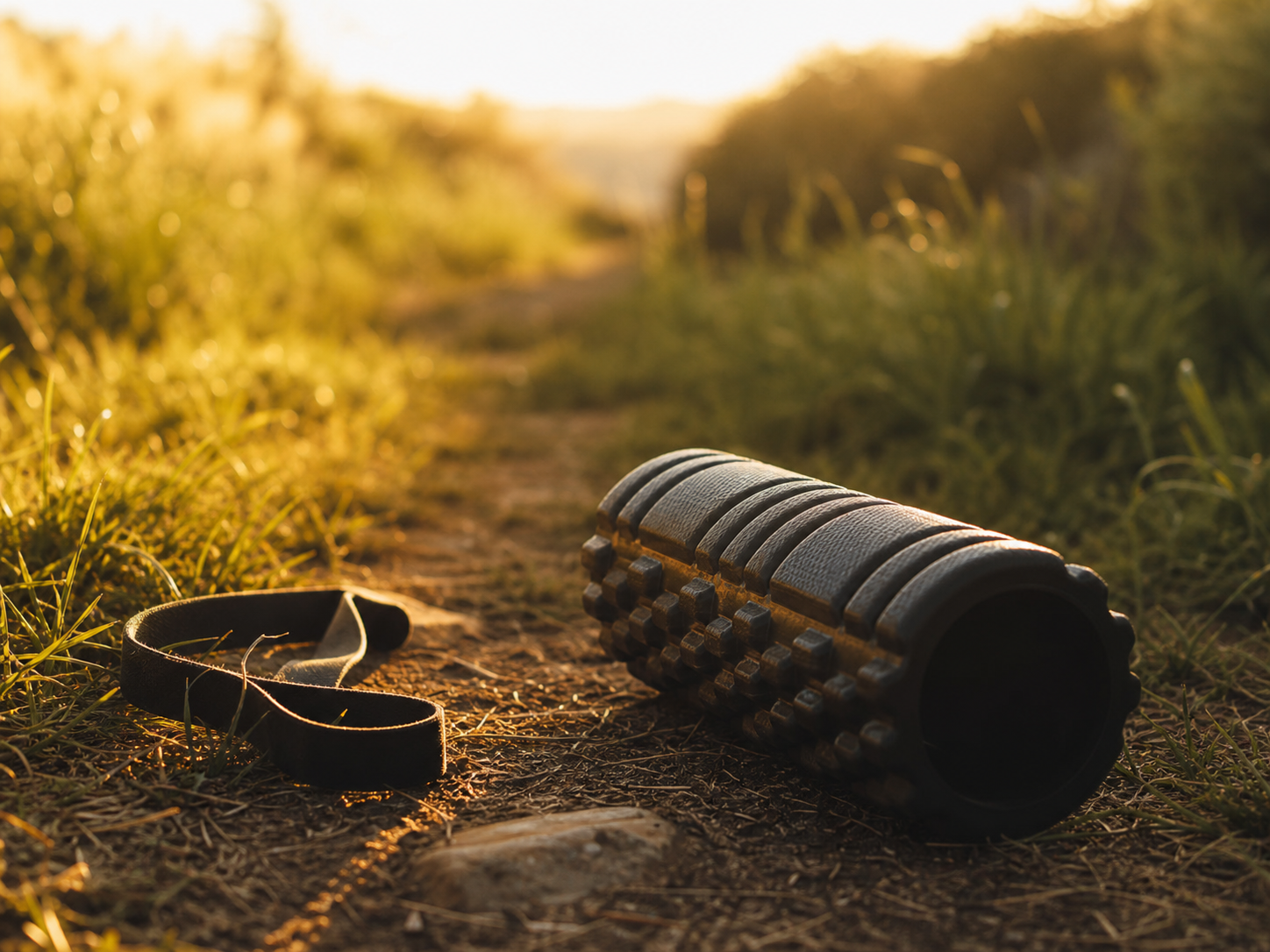
Self-massage can temporarily change how stiff an area feels, but it does not replace movement practice. If you use a roller, spend 30 to 60 seconds on the glutes or upper thigh, then follow with one active exercise such as a bridge or hip switch.
“Mobility is not a hunt for the biggest stretch; it is practice for owning the range you already have.”
When to get professional help
Talk with a qualified physical therapist or clinician if hip pain follows a fall, keeps worsening, limits sleep, causes limping, or does not improve after several weeks of sensible movement. Seek prompt medical care for severe pain, sudden weakness, loss of bladder or bowel control, or numbness in the groin area. A persistent ache that travels below the knee may involve the back or nerve tissue rather than the hip alone.
Do not use this routine to push through sharp pain. A mild stretch, light muscle effort, or temporary stiffness can be acceptable. Pinching in the front of the hip, catching, instability, or radiating symptoms are reasons to stop and get assessed.
Questions and answers
How often should office workers do hip mobility exercises?
Most people can start with 10 to 15 minutes four days per week, plus brief movement breaks during the day. Daily gentle practice is also reasonable if it does not increase pain or next-day stiffness.
Can tight hips cause lower back discomfort?
They can contribute to extra movement in the lower back, especially when the hips do not extend or rotate comfortably. Lower back discomfort has many possible causes, so do not assume the hips are the only issue.
Should I stretch before or after sitting all day?
Both can work. Use active drills such as hip switches and bridges before activity. Use the half-kneeling stretch or an easy walk after work when you want to reduce the feeling of stiffness.
How long does it take to improve hip mobility?
Many people notice a short-term change after one session, but lasting improvement usually requires several weeks of repeated practice and more movement throughout the day. Track comfort and control rather than chasing a specific flexibility score.
Bottom line
The best mobility exercises for office workers with tight hips are simple enough to repeat: half-kneeling hip-flexor stretches, adductor rock-backs, 90/90 switches, glute bridges, supported squats, and balance work. Pair them with hourly movement breaks, keep the range comfortable, and progress gradually. Your target is not extreme flexibility. It is hips that move with less stiffness and more control when you stand, walk, train, and live.
“The win is not touching the floor; the win is moving through your day without your desk posture dictating every step.”