






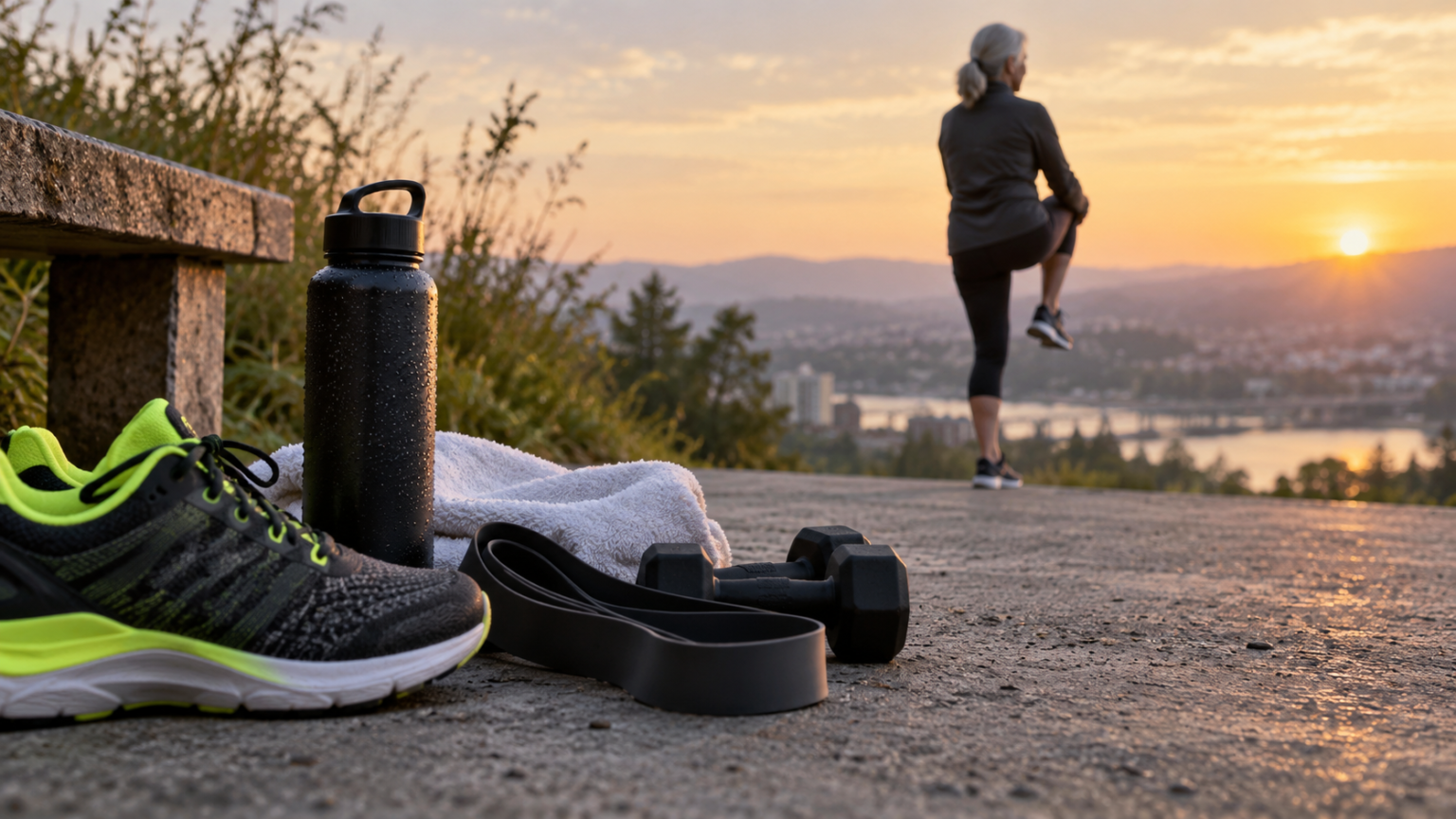
Learning how to improve balance and stability for older adults can support safer movement, greater confidence, and continued participation in activities such as walking, running, strength training, yoga, and home workouts. Balance is not a fixed ability that inevitably disappears with age. It can respond to regular practice, stronger muscles, better mobility, and attention to factors that affect coordination.
A balanced program should match a person’s current abilities and health status. It may include exercises that challenge the legs, hips, trunk, vision, and inner-ear systems, along with flexibility work, cardio fitness, sensible nutrition, recovery, and injury-prevention habits. The goal is not to perform difficult poses or stand on unstable equipment. The goal is to move with control during ordinary tasks, including walking, turning, stepping over obstacles, climbing stairs, and getting up from a chair.
What Balance and Stability Mean
Balance is the ability to keep the body’s center of mass controlled over its base of support, whether standing still or moving. Stability is the ability to control the body when it is disturbed or when a movement changes position. These skills overlap, but they are not identical. Standing on one leg tests a form of static balance, while recovering from a trip or changing direction tests dynamic stability.
Balance depends on information from vision, the vestibular system in the inner ear, and sensory receptors in the muscles, joints, and skin. The brain combines those signals and coordinates an appropriate response. Strength in the ankles, calves, thighs, hips, and trunk also matters. Limited joint mobility, pain, fatigue, medication effects, poor lighting, and unsuitable footwear can make balance more difficult.
Balance training is therefore broader than simply trying to stand on one foot. Effective practice combines controlled weight shifting, leg and trunk strength, walking tasks, mobility, and gradual exposure to movements that resemble daily activities.
Why Balance Training Matters in Later Life

Good balance can make daily movement more manageable and may help an older adult remain independent. It can improve confidence when walking outdoors, using stairs, reaching for an object, or moving around a busy home. Stronger legs and hips can also make tasks such as rising from a chair or stepping onto a curb easier.
Balance work may complement other forms of exercise. Walking and other cardio activities support endurance, while strength training improves the force available to control movement. Yoga and mobility exercises can help with body awareness and range of motion. Running may remain appropriate for some older adults, but it requires sufficient strength, joint tolerance, and impact readiness. Balance training can be useful whether a person walks, jogs, cycles, swims, or does not participate in organized sports.
Exercise does not eliminate the possibility of falling or guarantee injury prevention. It is one part of a broader approach that can include vision care, medication review, home-safety changes, appropriate footwear, and evaluation of medical conditions that affect movement.
Practical Steps to Improve Balance and Stability
1. Start with a safety check
Choose a clear area with a stable countertop, sturdy table, or wall within reach. Avoid practicing beside furniture that rolls or has a narrow base. Wear shoes that fit securely, or follow professional advice about exercising barefoot. Keep lighting adequate and remove loose rugs, cords, and clutter.
An older adult who has had a recent fall, feels faint, has unexplained dizziness, experiences chest pain or unusual shortness of breath, or has a new change in strength or coordination should seek medical guidance before beginning a new program. A physical therapist can assess gait, transfers, joint movement, and balance responses and can adapt exercises to the person’s needs.
2. Build a stable standing position
Begin with both feet comfortably apart. Distribute weight across the heel, the base of the big toe, and the base of the little toe. Keep the knees relaxed rather than locked, lengthen through the spine, and allow the arms to move naturally. Practice standing tall while turning the head slowly from side to side, provided this does not cause dizziness.
Next, try a narrower stance, such as bringing the feet closer together. Progress to a staggered stance with one foot slightly ahead of the other. Hold a stable support lightly when needed. The purpose is to develop control, not to force a long hold or abandon good posture.
3. Practice weight shifting
Weight shifting prepares the body for walking and changes in direction. While holding a counter if necessary, move the body gently forward and backward without lifting the feet. Then shift from side to side. Keep the movement slow enough to notice how pressure changes under each foot.
Progress by reaching toward safe targets at different heights or by taking a small step and returning to the starting position. The movement should stay within a comfortable range. Reaching too far or moving quickly can turn a useful drill into an avoidable loss of control.
4. Strengthen the legs and hips
Strength training is central to stability because the body needs force to correct a sway, climb stairs, or rise from a chair. Suitable home exercises may include sit-to-stand repetitions from a firm chair, supported mini-squats, heel raises, toe raises, and controlled hip abduction while holding a counter.
Use a range of motion that does not produce sharp pain. Keep the knees aligned with the feet during squats and step-ups, and avoid allowing fatigue to change technique. A resistance band or light weight may be added when body-weight exercises become easy, but progression should be gradual. A qualified professional can help select resistance and volume, especially for someone with osteoporosis, arthritis, joint replacement, or a history of injury.
5. Add walking and stepping drills
Walking is a practical form of dynamic balance. Begin by walking at a comfortable pace on a clear, level surface. Practice stopping, starting, turning, and changing direction. Step over low, clearly visible objects only when a stable support or trained supervision is available. Side steps and backward steps can be useful, but they should be introduced slowly because they require different coordination from forward walking.
For an older adult who runs, balance drills can support control during changes of pace, uneven paths, and single-leg loading. They do not replace a gradual running plan, appropriate shoes, strength work, or attention to pain. Someone returning to running after a long break may need walking intervals and professional assessment before adding impact.
6. Include yoga or mobility work thoughtfully
Yoga can combine balance, flexibility, breathing, and body awareness. Supported versions of tree pose, warrior positions, chair-based movements, and gentle transitions may be appropriate. Use a wall, chair, or other reliable support for standing poses. Avoid treating a challenging pose as a test of fitness, and do not force a joint toward its end range.
Flexibility work may make movement feel easier, but flexibility alone does not create stability. Pair stretching with active control and strength. Gentle ankle, hip, and thoracic-spine mobility can be particularly useful when stiffness affects walking mechanics, although the right exercises depend on the individual.
7. Train the senses and attention
Balance can become harder when visual information is limited or when attention is divided. After basic exercises are comfortable, practice safe variations such as looking toward a target while standing, carrying a light object during walking, or speaking while performing a simple movement. Keep one hand near support and remove distractions from the practice area.
Do not close the eyes or stand on unstable surfaces without appropriate supervision. Those variations substantially reduce reliable sensory information and can increase risk, particularly for people with neuropathy, vestibular problems, or a history of falls.
How to Structure a Weekly Routine
A practical routine can combine several short sessions rather than relying on one demanding workout. A typical session might begin with easy walking and joint movements, continue with sit-to-stands and heel raises, and finish with supported balance positions and relaxed mobility work.
Balance exercises are often most useful when performed regularly while the person is alert and not excessively fatigued. Strength sessions should allow recovery between harder efforts. Cardio fitness can be developed through walking, cycling, swimming, or another tolerated activity. The best choice is one that can be performed consistently and adjusted for medical conditions.
Increase only one challenge at a time. For example, reduce hand support, narrow the stance, add a small direction change, increase walking time, or use a modest amount of resistance. If several variables become harder simultaneously, it becomes difficult to identify why symptoms or form have changed.
Nutrition and Recovery for Stability
Nutrition supports the muscles and nervous system involved in movement. Regular meals containing protein-rich foods, vegetables or fruit, whole grains or other carbohydrate sources, and adequate fluids can support training and recovery. Older adults should discuss protein needs with a clinician or registered dietitian when kidney disease, unintended weight loss, swallowing difficulties, or other medical conditions are present.
Hydration matters because dehydration can contribute to weakness, headache, or light-headedness, although dizziness has many possible causes. Do not use sports supplements as a substitute for medical assessment or a balanced diet. Supplements can interact with medicines and are not automatically appropriate because a product is marketed to athletes.
Recovery includes sleep, rest between demanding sessions, and attention to persistent soreness. Gentle movement on an easy day may be comfortable, but pain that worsens, changes walking mechanics, or continues beyond normal post-exercise discomfort deserves assessment. Heat, ice, massage, and other recovery techniques may provide temporary comfort for some people, but they do not correct a strength, balance, or medical problem by themselves.
Benefits, Limitations, and Trade-Offs
Potential benefits
- Improved control during standing, walking, turning, and transfers.
- Greater lower-body strength and confidence with everyday movement.
- Better awareness of posture, foot placement, and weight distribution.
- A useful complement to cardio fitness, strength training, yoga, and recreational sport.
- More opportunities to identify hazards or movement difficulties before they cause a problem.
Important limitations
- Balance exercises cannot remove every fall risk or prevent every injury.
- Progress varies with vision, neurological health, pain, medication, strength, hearing, and previous injury.
- Exercises copied from a video may be unsuitable for a person’s condition or environment.
- More difficult exercises are not automatically more effective; poor technique can increase risk.
- Training cannot replace treatment for vertigo, fainting, neurological symptoms, severe weakness, or another underlying medical issue.
Research and clinical recommendations should also be interpreted in context. The Centers for Disease Control and Prevention’s STEADI initiative provides fall-prevention resources for healthcare professionals, including screening and intervention approaches. The American College of Sports Medicine publishes guidance on exercise participation and progression, while the World Health Organization includes balance and functional activity in its physical-activity guidance for older adults. These sources support a combined approach involving strength, functional movement, and individualized safety decisions rather than a single universal exercise.
When to Seek Professional Help
Arrange an assessment if balance has changed suddenly, falls are recurring, walking requires furniture support, one side feels weaker, or exercise causes unusual symptoms. Medical review is also appropriate for fainting, new numbness, persistent dizziness, severe joint pain, or shortness of breath that is out of proportion to the activity.
A physical therapist may evaluate gait, footwear, transfers, range of motion, strength, and environmental barriers. An occupational therapist can help with home-safety strategies. A clinician or pharmacist can review medicines that may contribute to sedation, low blood pressure, or dizziness. These evaluations are especially valuable when an older adult is taking multiple medicines or has a condition affecting the nervous, cardiovascular, or musculoskeletal systems.
Questions and Answers
How often should older adults practice balance?
Many people can benefit from brief, regular practice on several days of the week, combined with strength and aerobic activity. The appropriate frequency depends on ability, fatigue, medical conditions, and the difficulty of the exercises.
Is standing on one leg the best balance exercise?
No. Single-leg standing is one option, but it may be too difficult or too narrow in focus for some people. Sit-to-stands, weight shifts, stepping, turns, and supported yoga movements can train balance in ways that relate more directly to daily activities.
Can walking alone improve stability?
Walking supports endurance and provides some balance practice, but it may not challenge leg strength, side-to-side control, or recovery from a disturbance enough. Combining walking with strength and targeted balance exercises is generally more comprehensive.
Should an older adult use a wobble board?
Unstable equipment is not required for effective balance training and may be unsafe without supervision. Stable-surface exercises that progress gradually are often a more practical starting point. A physical therapist can decide whether unstable equipment is appropriate.
What is the safest first step at home?
Clear a small practice area, place a sturdy support within reach, and begin with comfortable standing, weight shifts, and chair sit-to-stands. Stop if symptoms appear and seek guidance when the person has a fall history or a medical condition affecting balance.
Safety Disclaimer
This article is for general educational information and does not diagnose or treat a medical condition. Exercise can carry risks, including falls and musculoskeletal injury. Older adults should obtain individualized advice from a qualified healthcare professional when they have significant medical conditions, recent falls, new symptoms, or uncertainty about safe exercise intensity.