





Blisters can turn a comfortable long run into a painful one, but thoughtful preparation often reduces the risk. The best approach is not a single sock, balm, or shoe: it is a combination of well-fitted footwear, moisture management, gradual training, and prompt attention to friction. This guide explains how to prevent blisters when running long distances, what to do when a hot spot appears, and when foot problems need medical care.
What is a running blister?
A blister is a small pocket of fluid that forms between layers of skin, most often after repeated rubbing or pressure. On a long run, friction may come from a shoe that shifts, a seam that presses on a toe, or skin rubbing against another toe. Heat and dampness can make the skin more vulnerable, although the exact combination differs between runners. Blisters are not a sign that you simply need to toughen up; they are a signal to reduce irritation and check what is causing it.
Why long-distance running raises the risk
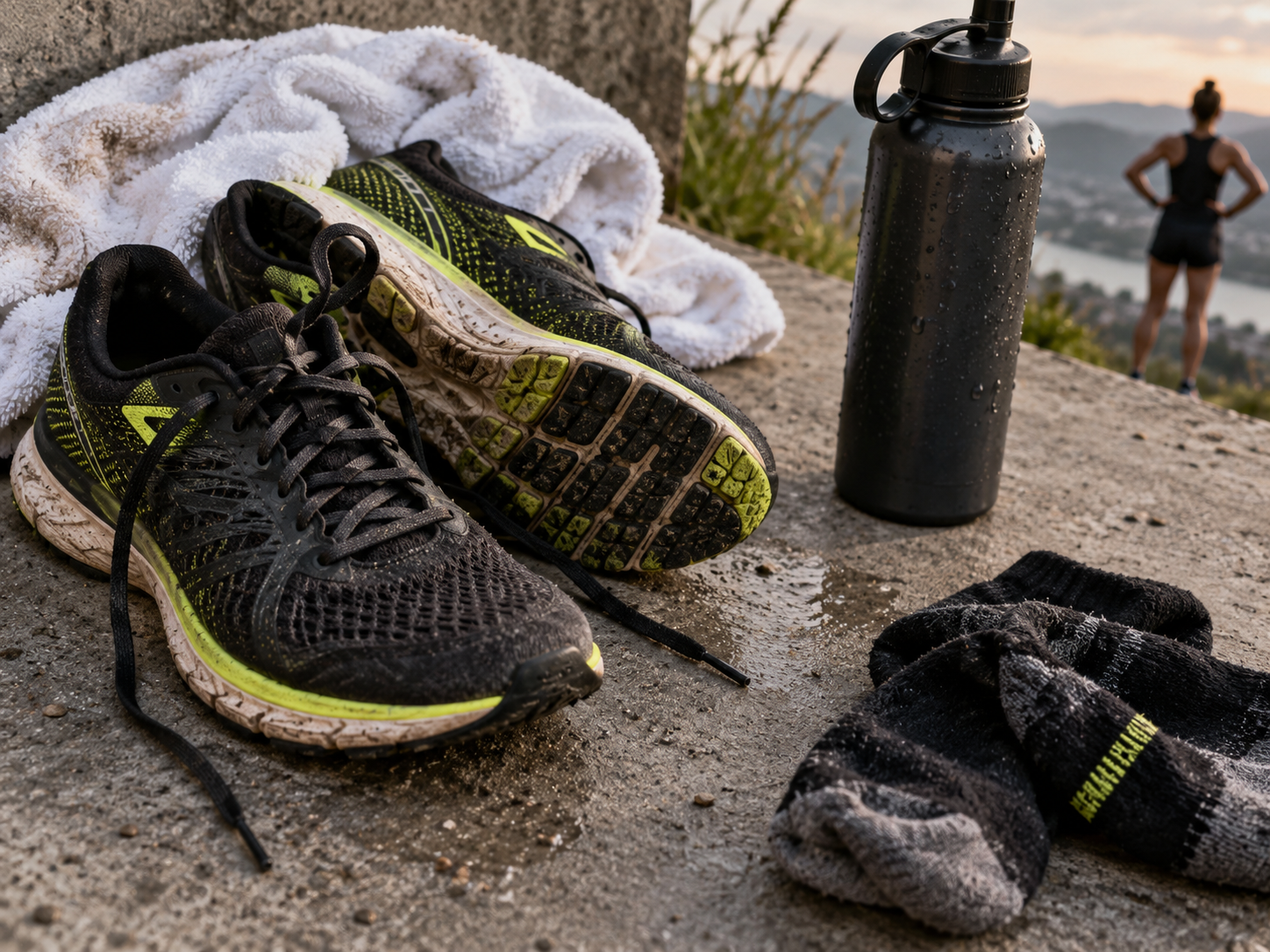
More time on your feet means more repeated contact between skin, socks, and shoes. Footwear that feels fine during a short jog may rub after several hours, particularly if the foot swells, the sock becomes wet, or your running form changes with fatigue. A long run may also expose you to rain, heat, rough trails, or a new shoe-and-sock combination. Several modest sources of friction can add up, so prevention works best when you consider the whole setup.
How to prevent blisters when running long distances
1. Choose shoes that fit your feet and your route
Fit matters more than a particular brand or model. Your toes should have room to move, while the heel and midfoot should feel secure without painful pressure. Check for rubbing at the heel, little toe, big toe, and across the top of the foot. Try shoes later in the day or after activity if your feet tend to swell, and assess them with the socks you plan to run in.
Test new shoes on shorter outings before relying on them for a long run or race. A gradual introduction lets you notice pressure points while there is time to change the lacing, sock, or shoe. There is no universal rule that every running shoe needs a particular break-in distance. A shoe that causes pain or persistent rubbing should not be forced into your training plan.
2. Use lacing to manage movement and pressure
If your heel lifts, modestly adjusting the lacing near the top eyelets may help hold it in place. If the shoe feels tight over the forefoot, loosening the laces across that area may ease pressure. Make adjustments carefully: laces that are too loose can let the foot slide, while laces that are too tight can create their own painful pressure points. Recheck the fit while standing and walking, not only when seated.
3. Find socks that work for your feet
Try running socks made to move moisture away from the skin, and look for smooth construction around areas that commonly rub. The best thickness and material depend on your shoe fit and personal preference. Some runners do well with a double-layer sock; others find that it adds bulk or changes the fit. Test options on ordinary runs before using them for a long effort.
Change out of wet socks when practical, especially after a rainy run or a long, sweaty session. Avoid assuming that one type of sock prevents blisters for everyone. Check for wrinkles, worn-through areas, and seams that press against a toe. A sock that bunches inside the shoe may create more friction than a simple, well-fitting alternative.
4. Protect known hot spots before they hurt
A hot spot is an area that feels warm, tender, or unusually sensitive before a blister forms. If you know where you tend to develop one, apply a suitable friction-reducing product or a smooth protective dressing before the run. Some runners use a lubricant on intact skin; others use athletic tape or blister-prevention patches. Follow the product directions and test it beforehand, since adhesives and skin products can irritate some people.
Apply tape smoothly, without folds or tight bands that could restrict circulation. Check that the edges are secure and that the dressing does not create a new ridge inside the shoe. Lubricant can be convenient, but may wear off or be less useful in wet conditions. Tape can stay in place longer for some runners, but may peel, wrinkle, or be uncomfortable to remove. Neither option makes poor shoe fit safe to ignore.
5. Keep feet comfortable and inspect them routinely
Wash and dry your feet, including between the toes, and keep toenails trimmed so they do not press against neighboring toes or the shoe. Do not cut skin or aggressively remove thickened areas to prevent blisters; damaged skin can create new problems. If you have recurring calluses, painful nail changes, or foot-shape concerns, ask a podiatrist or other qualified clinician for advice.
Before a long run, check for cuts, irritated skin, dampness, and objects inside your shoes. During training, pay attention when a familiar area starts to feel different. Addressing a small irritation early is usually easier than continuing until the skin breaks.
6. Build long-run distance gradually
Increase running time and distance in a way that lets your body adapt, and avoid making several major changes at once. For example, switching shoes, socks, terrain, and weekly mileage together makes it difficult to identify what caused a new hot spot. Keep notes about conditions and equipment if blisters recur. Gradual training supports general injury prevention, but it cannot guarantee blister-free running: even experienced runners can develop them when the weather, route, or footwear changes.
What to do when a hot spot or blister appears
If you notice rubbing, stop somewhere safe and inspect the area. Remove grit or other material from the shoe, smooth out any sock folds, and adjust the laces. Dry the foot if possible, then protect the spot with a clean, smooth dressing or a product you have already tested. If the irritation continues, shortening or stopping the run may be safer than trying to push through. Pain can change your stride and contribute to other problems.
For a blister that has not opened, the conservative choice is to keep the skin covering it intact, protect it from further rubbing, and let it heal. Do not peel off the skin. If it breaks on its own, wash the area gently with soap and water, leave any attached skin in place, and cover it with a clean dressing. Replace the dressing if it becomes wet or dirty.
Guidance on draining blisters is not identical. The NHS advises against bursting them, while the American Academy of Dermatology describes careful drainage as an option for a painful blister. Because puncturing can introduce infection and the right decision depends on the person and blister, the safest general advice is to seek guidance from a clinician for a large or very painful blister rather than improvising. People with diabetes, reduced sensation, poor circulation, or a weakened immune system should get medical advice before treating a foot blister themselves.
Pros and cons of common prevention options
- Moisture-managing socks: They may help keep skin drier and reduce bunching when the fit is right. They can cost more than basic socks, and fabric or thickness that suits one runner may not suit another.
- Lubricant: It is easy to apply to a known friction area and may reduce rubbing on intact skin. It can wear away, transfer to socks, or perform differently in wet conditions.
- Tape or protective patches: They provide a barrier over a specific spot and can be useful when placed smoothly. Adhesives may irritate skin, edges can lift, and poorly applied tape can create a new friction point.
- Changing shoes or lacing: A better fit can address the source of rubbing. Finding the right setup may require trial and error, and a lacing adjustment cannot correct every shoe-fit problem.
These approaches are options, not guarantees. You can start with the least complicated change that addresses the likely cause, then test it on a shorter run. Avoid layering multiple new products on race day.
How strength, flexibility, recovery, and nutrition fit in
Strength training, yoga, and flexibility work can support general running fitness, balance, and movement, but they do not directly prevent a shoe from rubbing the skin. A sensible strength routine may help you maintain control when tired; comfortable mobility work may make training feel better. Neither replaces a shoe and sock fit check. Likewise, recovery techniques such as rest, sleep, and a gradual return after hard sessions support training, but are not a blister treatment.
Nutrition for athletes matters for fueling and recovery, not as a proven way to stop friction blisters. No particular food or supplement should be presented as a reliable blister-prevention method. Keep long-run fueling and hydration familiar and appropriate to your needs, and do not use a supplement to compensate for painful footwear. Cardio fitness can help you manage long efforts, but improving endurance does not remove skin friction; fatigue may even make it easier to miss a developing hot spot. Sports psychology strategies such as a planned check-in during a run can help you notice discomfort and respond calmly, rather than ignoring it.
Limitations: prevention is personal
There is no method that guarantees a blister-free long run. Foot shape, skin sensitivity, gait, weather, terrain, shoe construction, and the length of the effort all influence what works. Advice that helps one runner may make another runner’s shoe too tight or skin irritated. Blisters can also resemble other skin conditions, and repeated sores may have a cause that is not ordinary friction. If a blister keeps returning despite equipment changes, a healthcare professional can assess the foot and help identify a suitable plan.
Seek medical care if redness spreads, the area becomes increasingly warm or swollen, pain worsens, pus appears, or you develop a fever. Get prompt advice if you have a condition that affects sensation, circulation, or healing. Do not run through a wound that is worsening or looks infected.
Quick Q&A
Should I pop a blister before a long run?
Usually, keep an intact blister covered and avoid puncturing it. For a large, painful, or unusual blister, ask a clinician for advice, especially if you have a health condition that affects healing.
Are cotton socks always a bad choice?
Not for every runner, but some cotton socks hold moisture and may feel less comfortable during a long, sweaty run. Test socks in your own shoes and choose the pair that stays comfortable without bunching.
Can I prevent blisters with petroleum jelly?
A lubricant may reduce rubbing on a known hot spot for some people, but it is not guaranteed to last or suit every shoe and condition. Test a small amount during training and stop if your skin becomes irritated.
When should I stop running?
Stop or shorten the run if pain continues after adjusting your sock, shoe, or dressing, or if the skin is broken and worsening. Continuing can deepen the injury and may alter your stride.
Sources and approach
This guide compares general blister-care guidance from the American Academy of Dermatology, How to Prevent and Treat Blisters, and the NHS, Blisters. Their advice informs the conservative recommendations to protect intact skin, keep broken skin clean and covered, and seek care when risk is higher or signs of infection occur. Running-specific equipment suggestions are practical prevention measures, not claims that either source tested a particular shoe, sock, or product.
Disclaimer: This article is for general information, not a personal diagnosis or treatment plan. Consult a qualified healthcare professional about persistent, severe, infected, or high-risk foot problems.