


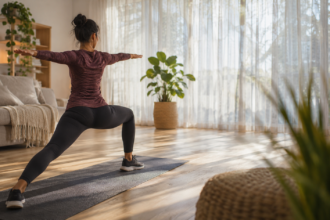

Knowing how to yoga breath means learning to coordinate comfortable, controlled breathing with movement and stillness. The phrase is often used to search for advice on breathing in yoga, but there is no single breath pattern that suits every pose, class, or person. A useful starting point is to breathe smoothly through the nose when comfortable, avoid straining or holding the breath, and let the breath support rather than force movement.
Breathing is not a contest in lung capacity. In yoga, it can help you notice effort, pace transitions, and settle attention. The practical goal is not to make every inhale or exhale unusually long; it is to maintain a calm, manageable rhythm while adapting to your body. This guide explains foundational breathing, how to pair breath with movement, common techniques, benefits and limitations, and when to seek qualified guidance.
What Does “Yoga Breath” Mean?
Yoga breathing is the deliberate attention to breathing during yoga practice. Many yoga traditions use the Sanskrit term pranayama for practices that regulate or observe the breath. The word is used for a range of techniques, from simple awareness of natural breathing to structured patterns involving a particular rhythm. In ordinary movement practice, teachers may also cue students to inhale during an opening movement and exhale during a folding or contracting movement.
These are useful conventions, not universal rules. Different schools teach different sequences, and the same person may find a different rhythm in a challenging balance than in a resting pose. The breath should remain comfortable. If a cue makes you tense, dizzy, short of breath, or distracted by the need to perform it perfectly, return to natural breathing and modify or pause the pose.
Breath awareness is not a substitute for medical treatment, and it does not guarantee a particular outcome such as improved athletic performance, anxiety relief, or injury prevention. It is one component of a physical practice that may also include mobility, strength, balance, and relaxation.
Start With Comfortable Breathing
Before adding a technique, notice how you breathe at rest. Sit or lie in a position where your neck and abdomen are relaxed. Let the breath arrive without pulling in a large amount of air. Notice whether the inhale and exhale feel easy, and whether your shoulders are tensing. There is no requirement to breathe only into the belly: the ribs and abdomen can both move naturally.
If nasal breathing feels comfortable, use it as a gentle starting point. If your nose is blocked, you are exercising vigorously, or nasal breathing feels uncomfortable, do not force it. Breathe in the way that feels easiest and follow any individualized medical advice you have received. Keep the jaw and face soft, and avoid pushing the breath to its maximum range.
Try this brief reset before a session:
- Settle into a stable position with the spine supported rather than rigid.
- Take several ordinary breaths and notice their pace without trying to change it.
- Let the next few exhalations be easy and unforced. Do not squeeze the abdomen to empty the lungs.
- Stop monitoring the breath if attention to it causes discomfort or anxiety.
This is breath awareness, not a breath-holding exercise. It can be done for a short time; longer practice is not automatically better.
How to Coordinate Breath With Yoga Movement
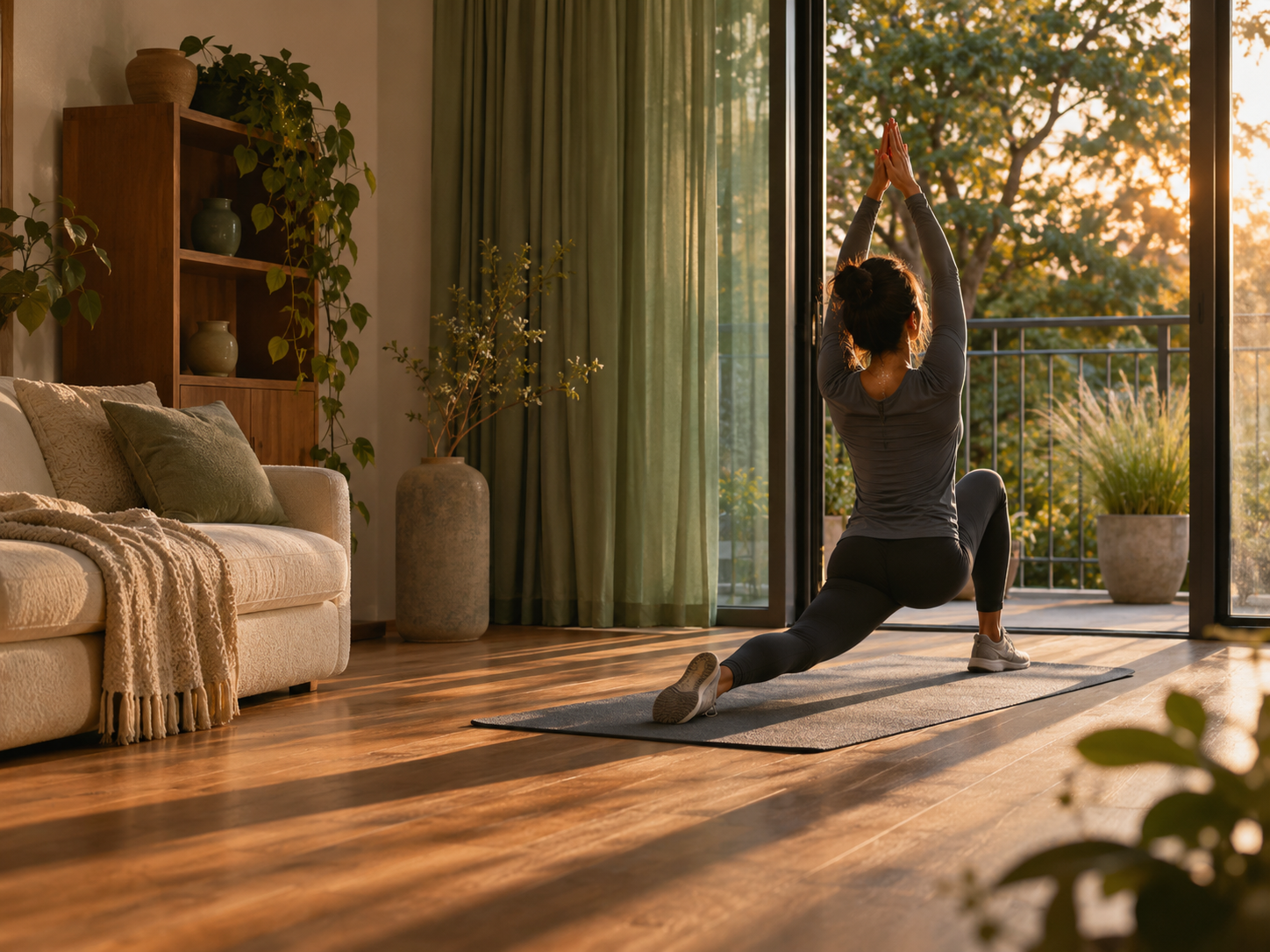
In many classes, an inhale accompanies a movement that lengthens or opens the front of the body, while an exhale accompanies a fold, twist, or effortful transition. For example, a teacher might cue an inhale as you raise your arms and an exhale as you lower them. Treat this as a practical rhythm rather than a strict anatomical law. The appropriate cue depends on the pose, teaching style, and your comfort.
A simple way to coordinate breath is to move at a pace that leaves enough time to breathe. Begin the movement with the breath, or let the breath and movement happen together without trying to synchronize every detail. If the movement takes longer than one breath, continue breathing naturally rather than holding the inhale until you reach the final position.
Use the breath to manage effort
During a demanding pose, notice whether you are clenching your jaw, lifting your shoulders, or unintentionally holding your breath. These signs may mean you are working harder than intended. Reduce the range of motion, use a prop, take a resting position, or leave the pose. Breathing normally is a useful check, but it is not proof that a pose is safe for every joint or medical condition.
Let transitions stay smooth
For a home workout or a flow class, connect one movement to the next only while the connection feels controlled. You do not need to move faster to match a prescribed number of breaths. In a balance pose, for example, a stable, ordinary breath may be more useful than a long exhale that makes you sway. In a restorative pose, there may be no movement to synchronize at all.
Three Approaches to Try
1. Natural breath awareness
Notice the sensation of breathing without changing its rate. This is a low-complexity option for beginners, warm-ups, cool-downs, or moments when a more structured method feels distracting. You can focus on the air near the nostrils, the movement of the ribs, or the pause between breaths, but there is no need to monitor every sensation.
2. Gentle breath-led movement
Choose a simple movement, such as lifting and lowering the arms while seated. Inhale during the lift if that feels comfortable and exhale during the lowering. Keep each movement small enough that you can breathe continuously. Repeat for a few cycles, then return to ordinary breathing. This can help you practice coordination without adding a difficult pose.
3. Slightly lengthened exhale
Some people find it comfortable to make the exhale a little longer than the inhale. Try this only if it feels easy: allow a natural inhale, then exhale gently for a moment longer without pushing the lungs empty. Do not count if counting creates pressure, and do not hold your breath between phases. Stop if you feel light-headed, air-hungry, or uneasy.
These approaches are options, not a ranked program. Avoid advanced breath-retention practices or forceful breathing techniques unless you have appropriate instruction and they are suitable for your health and experience.
Practical Steps for a Yoga Session
- Choose a suitable setting. Use a stable surface and enough space to move. If you have a condition, injury, or recent surgery that affects exercise, ask a qualified health professional which movements are appropriate.
- Begin with ordinary breathing. Spend a short moment noticing your natural rhythm. Do not attempt to correct it before you know how it feels.
- Warm up gradually. Start with comfortable movements and increase effort in stages. Breath control cannot replace a warm-up or make an unsuitable movement appropriate.
- Add one cue at a time. Pair the breath with a simple movement before applying a cue to a more challenging pose. If the cue disrupts balance or creates strain, set it aside.
- Modify effort when breathing changes. If you cannot breathe comfortably, reduce the pose’s depth or intensity, rest, or stop. Do not treat breathlessness as a target to overcome in yoga.
- Finish calmly. Allow breathing to return to its usual pattern. You do not need a special breathing technique to end a practice.
Potential Benefits and Limitations
Attention to breathing may make it easier to notice when effort is rising, keep a steadier pace, and remain engaged with a movement. For runners and people doing strength training, that awareness can be relevant to warm-ups, mobility sessions, and recovery periods. Yoga may also complement a broader routine that includes cardio fitness, resistance exercise, sleep, and adequate nutrition for athletes. It does not replace those elements.
Breath cues can be useful for coordinating movement, but their value depends on the person and the task. A cue that works during a slow stretch may not fit a fast transition or a high-effort exercise. Evidence about a particular yoga or breathing practice should not be generalized to every style, person, or health outcome. Breathwork alone cannot promise better flexibility, prevent injuries, treat a mental health condition, or speed recovery from an injury.
Structured breathing can also have drawbacks. Counting or controlling the breath may feel stressful, and some people become dizzy or uncomfortable when they change their breathing pattern. A rigid focus on matching every movement to a cue can interfere with balance and natural pacing. If this happens, return to normal breathing and choose a less demanding practice.
Safety and When to Stop
Stop a breathing exercise if it causes dizziness, faintness, tingling, chest discomfort, unusual shortness of breath, or distress. Sit or lie somewhere safe and let your breathing return to normal. Seek urgent medical help for severe or persistent symptoms, especially chest pain or serious difficulty breathing.
People with respiratory or cardiovascular conditions, a history of fainting, pregnancy-related concerns, or other health issues that may affect exercise should ask an appropriate clinician about breath practices and physical activity. This is particularly important before breath retention, forceful breathing, or exercises that provoke symptoms. A yoga instructor can offer movement modifications, but is not a substitute for individualized medical advice.
For general guidance, the National Center for Complementary and Integrative Health (NCCIH) describes yoga as a practice that can include physical postures, breathing techniques, and meditation, and advises attention to safety and appropriate instruction. The U.S. National Library of Medicine’s MedlinePlus provides general information on breathing exercises and notes that people should follow clinician guidance when exercises are used for a health condition. These sources support a cautious, general approach; they do not establish that one breathing pattern is best for everyone.
Q&A
Should I breathe through my nose during yoga?
Nasal breathing is a common cue when it feels comfortable, but it is not mandatory for every person or situation. Do not force it if congestion, exertion, or a health concern makes it difficult.
Should I inhale or exhale during a stretch?
A common teaching cue is to inhale while lengthening and exhale while folding or settling into a position. Use the cue only if it feels natural. Keep breathing continuously and avoid forcing a stretch deeper on an exhale.
Is it normal to hold my breath in a difficult pose?
People sometimes hold their breath unintentionally when effort rises. Ease out of the pose or reduce its intensity until breathing is comfortable. Do not deliberately hold your breath during ordinary yoga movement unless you are following a suitable, specifically taught practice.
Can yoga breathing improve sports performance?
Breath awareness may help with pacing and concentration, but its effect varies and should not be promised as a performance improvement. It is best viewed as one possible part of training, alongside sport-specific practice, strength work, recovery, and appropriate nutrition.
How long should I practice?
There is no required duration. Start with a few comfortable breaths or a brief period of awareness, then stop or return to normal breathing if it becomes uncomfortable. A longer session is not necessary for the practice to count.
Takeaway
To learn how to yoga breath, start by noticing ordinary breathing, then add simple coordination only when it feels comfortable. Keep the breath unforced, adapt cues to the movement, and treat discomfort as a reason to pause or modify. Breath awareness can support a thoughtful yoga practice, but it has limits and should complement, not replace, appropriate exercise instruction and health care.
Health information disclaimer: This article is for general information, not diagnosis or personalized medical advice. Consult a qualified health professional about breathing exercises or yoga if you have symptoms, an injury, or a condition that may affect safe participation.