



Many people ask, “What is yoga flow?” Yoga flow is a style of yoga in which poses are linked together in a continuous, coordinated sequence. The movement usually follows the rhythm of the breath, with an inhale or exhale guiding each transition. The result can feel more active than a class based on holding one pose at a time, although the pace and difficulty vary widely between instructors and styles.
Yoga flow is often associated with vinyasa yoga, a broad category that emphasizes movement from one posture to another. However, “flow” is not one fixed routine or a standardized training program. A gentle class may include slow transitions, breathing exercises, and longer holds. A more vigorous class may raise the heart rate through repeated movements, standing poses, balances, and strength-focused sequences.
What Is Yoga Flow?
Yoga flow is a movement practice that connects yoga poses in an intentional sequence. Instead of treating each posture as a separate exercise, the practitioner moves through transitions while maintaining attention on breathing, alignment, and body awareness.
A simple flow might move from a standing position into a forward fold, then to a plank, a low push-up variation, an upward-facing posture, and a downward-facing posture. The sequence may then repeat or develop into standing lunges, twists, balances, and cooldown stretches. The exact order depends on the teacher, the objective of the session, and the participant’s experience.
The word “flow” describes the connection between movements, not a promise of constant motion or a particular fitness result. Some flows are designed for mobility and relaxation, while others place greater emphasis on muscular endurance, coordination, balance, or cardio fitness.
How Yoga Flow Differs From Other Yoga Classes
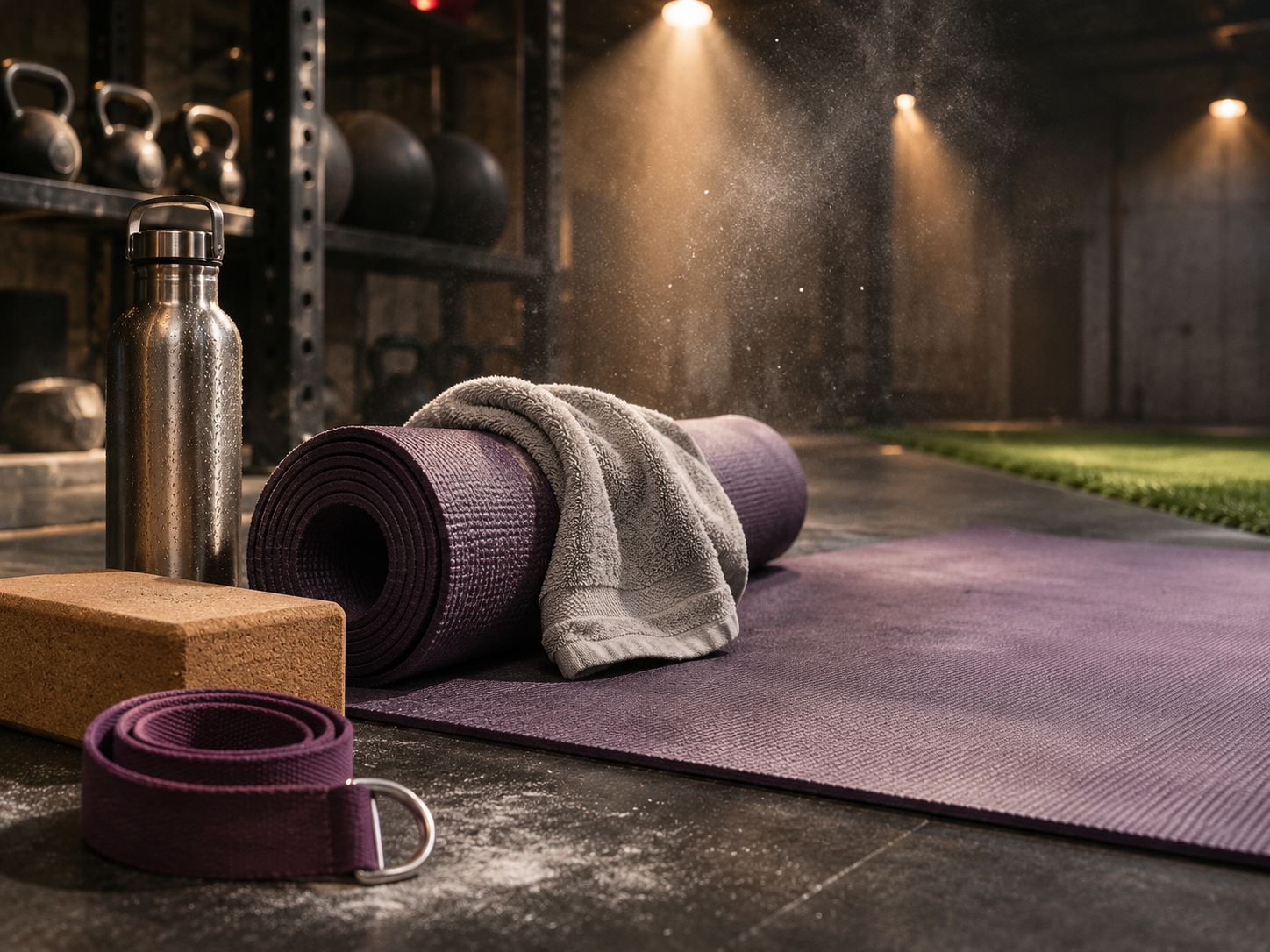
Yoga includes many approaches, and class names do not always have identical meanings from one studio or instructor to another. Yoga flow commonly differs from other formats in these ways:
- Compared with restorative yoga: flow usually involves more transitions and active movement, while restorative practice uses supported poses held for longer periods.
- Compared with yin yoga: flow tends to use active muscular engagement and repeated movement, while yin classes commonly emphasize longer, mostly passive holds.
- Compared with a traditional strength workout: flow may challenge the muscles through bodyweight positions, but it does not necessarily provide progressive resistance in the same way as weight training.
- Compared with a stretching session: flexibility may improve as a secondary benefit, but a flow can also include balance, coordination, trunk stability, and light-to-moderate cardiovascular work.
These categories overlap. A class labeled “slow flow” may be suitable for beginners, while a “power flow” may be physically demanding. Reading the class description and asking the instructor about the pace and modifications can help you choose an appropriate session.
What Happens During a Typical Yoga Flow?
A well-structured class often follows a gradual progression rather than moving immediately into difficult positions. The format can vary, but many sessions include the following elements.
1. Centering and breathing
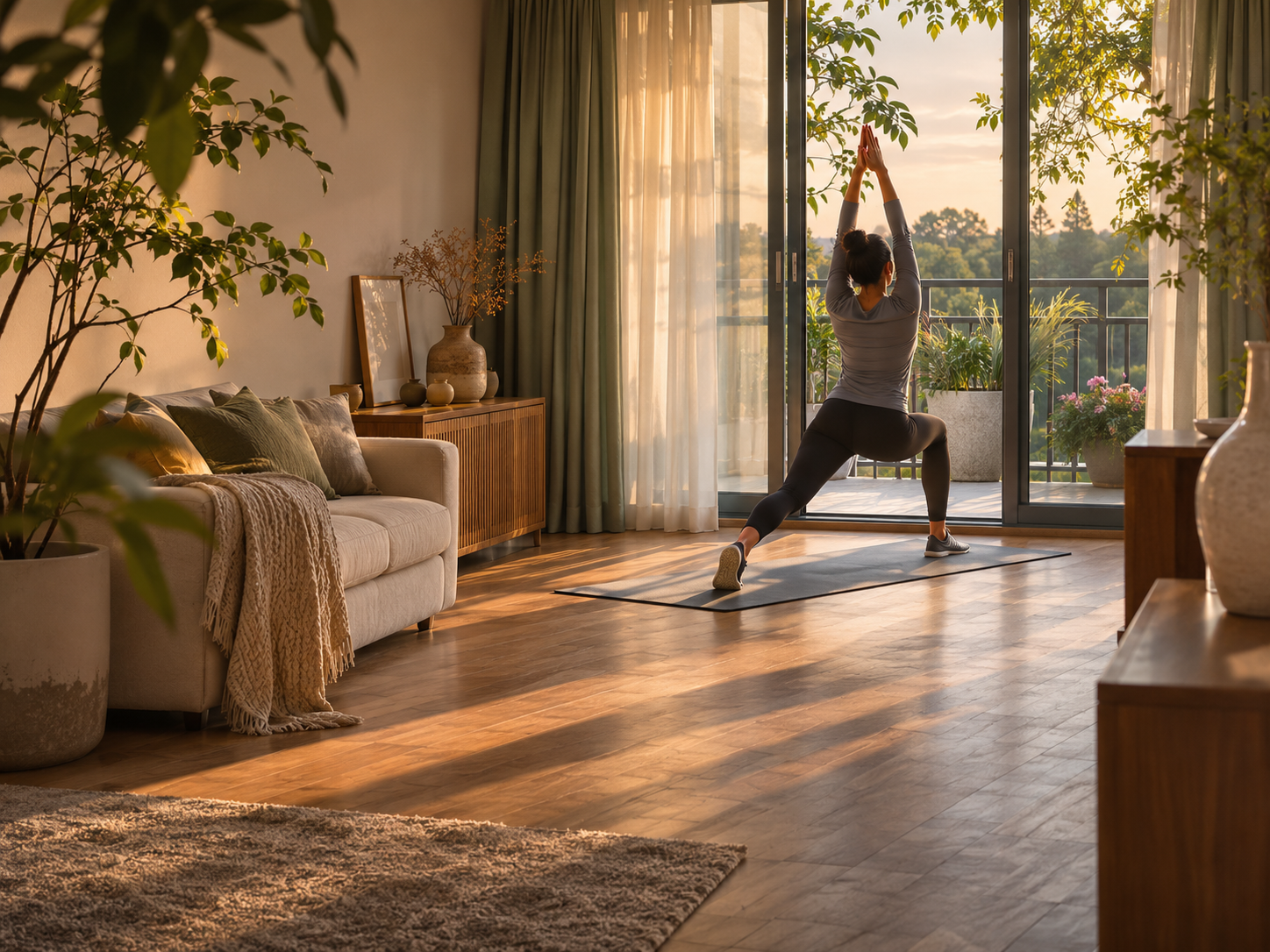
The class may begin with a seated or lying position, gentle breathing, and an opportunity to notice physical sensations. This opening can help participants shift attention toward the practice and establish a steady breathing rhythm.
2. Warm-up movements
Early movements may include gentle spinal flexion and extension, shoulder mobility, hip movement, or easy standing patterns. These exercises prepare the joints and muscles for a wider range of motion without requiring an intense stretch at the start.
3. Repeated foundational sequences
Many classes use repeated patterns such as modified sun salutations. These may combine standing, folding, stepping, planking, and returning to an upright position. Repetition can make the sequence easier to follow and allow participants to focus on breathing and technique.
4. Standing poses and focused work
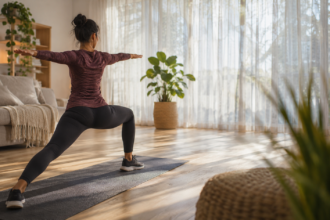
The main section may include lunges, squats, side-angle positions, rotations, balances, or bodyweight strength exercises. The instructor may offer different versions so participants can select a suitable challenge.
5. Cooldown and relaxation
The final portion usually slows the pace. It may include seated or lying stretches, gentle twists, breathing, and a period of relaxation. A cooldown can help the session end gradually, although it should not be treated as a guarantee against muscle soreness or injury.
Practical Steps for Starting Yoga Flow
You do not need to be highly flexible to begin. A beginner-friendly routine can be short and simple, provided that the movements are controlled and the sequence matches your current ability.
Choose an appropriate format
Look for labels such as beginner flow, gentle flow, slow flow, fundamentals, or mobility flow. If you have little experience, a class that clearly describes modifications is usually easier to manage than an advanced or fast-paced session.
Prepare a stable practice area
Use a level, uncluttered surface with enough room to extend your arms and legs. A yoga mat can provide traction, but a stable floor is also important. Keep water nearby and avoid practicing close to furniture or objects that could interfere with balance.
Begin with a short sequence
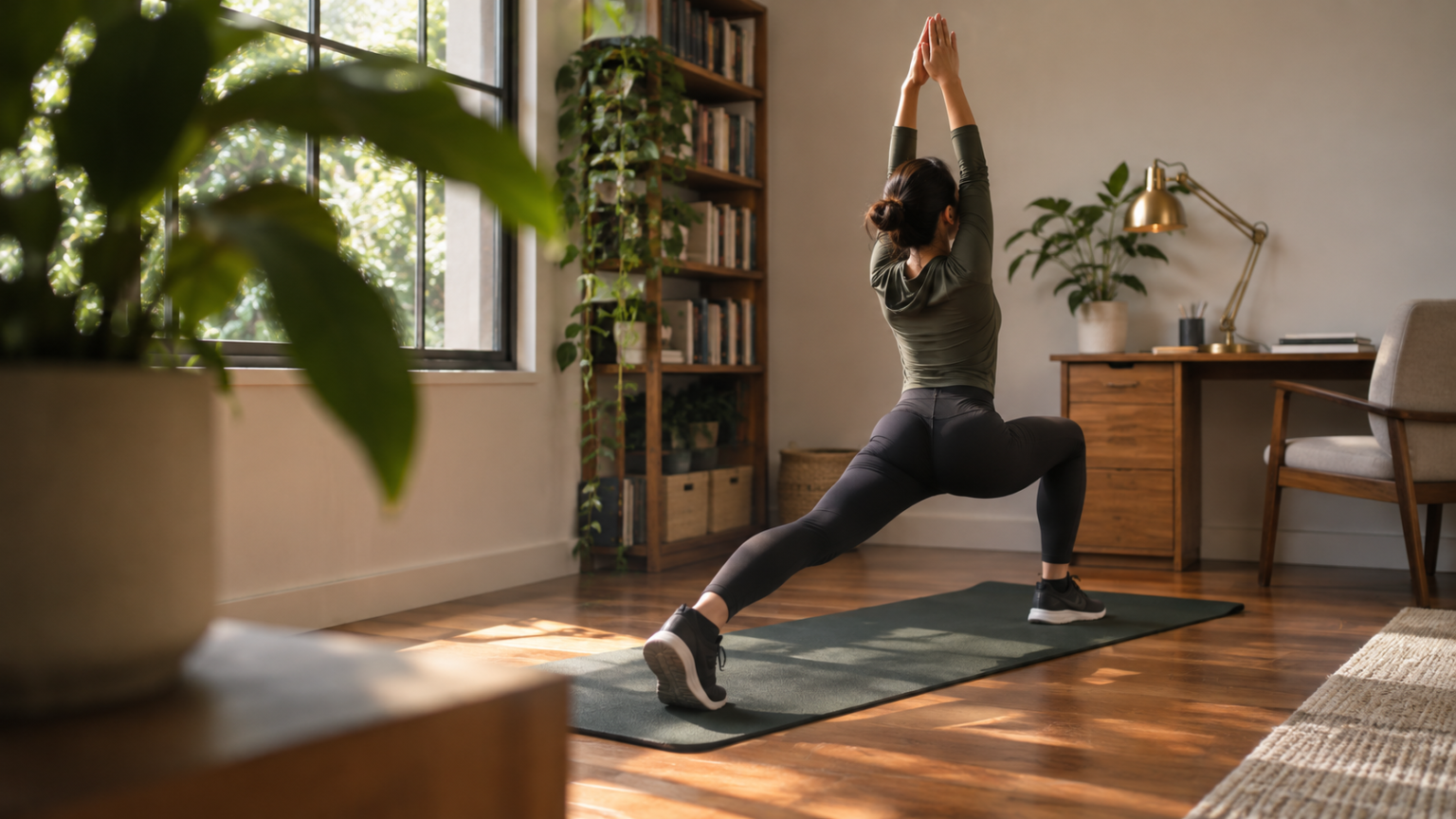
A home session could start with a few slow rounds of breathing, cat-cow movements, a supported child’s pose, a standing forward fold with bent knees, and a low lunge on each side. You might then add a modified plank, a gentle downward-facing dog, and a brief relaxation period.
The goal is to establish control and familiarity with transitions. More poses and faster movement are not automatically better. If your breathing becomes strained, your alignment becomes difficult to maintain, or you feel pain, reduce the range of motion or stop the movement.
Coordinate movement with breathing
There is no universal rule that every pose must match one particular breath. In general, practitioners often inhale when lengthening or opening the front of the body and exhale during folding or returning to a neutral position. The more important principle is to keep breathing steadily rather than holding your breath during effort.
Use modifications without treating them as failures
Common modifications include lowering the knees during plank work, placing the hands on blocks, shortening a lunge stance, keeping the back heel lifted, or replacing a difficult balance with a supported version. Modifications allow the movement pattern to remain useful while reducing unnecessary strain.
Potential Benefits of Yoga Flow
The effects of yoga flow depend on the sequence, frequency, intensity, and the participant’s starting point. A regular practice may support several areas of physical and mental fitness.
Mobility and flexibility
Repeated controlled movement can take joints through different ranges of motion, while selected poses may lengthen or load muscles in a gradual way. Flexibility is specific to the body region and movement, so improved comfort in one pose does not mean every type of flexibility has improved.
Balance and coordination
Transitions, single-leg poses, and changes in body position require awareness of balance and control. These skills can complement other activities, including running, court sports, and outdoor recreation.
Muscular endurance
Holding or repeatedly moving through planks, lunges, squats, side supports, and standing poses can challenge the legs, shoulders, hips, and trunk. This is useful for general conditioning, but it may not replace a progressive strength-training plan when maximal strength or muscle growth is the primary goal.
Body awareness and stress management
Breathing practice, attention to physical sensations, and a quiet cooldown may help some people manage stress and improve their awareness of tension. The National Center for Complementary and Integrative Health, or NCCIH, describes yoga as a practice that commonly combines physical postures, breathing techniques, and meditation or relaxation. Research findings vary by condition and study design, so yoga should be viewed as one possible part of a broader wellness plan rather than a universal treatment.
Support for other training
A carefully selected flow can fit alongside running, strength training, and home workouts. For example, a gentle session may be used on a recovery day, while a more active flow may serve as a movement-focused workout. It is important to consider total training load, especially when a flow includes repeated lunges, wrist-bearing positions, or demanding balances.
Neutral Pros and Cons
Yoga flow has practical advantages, but it also has limitations.
Potential advantages
- It can combine mobility, balance, breathing, and bodyweight conditioning in one session.
- It can be adapted for a home workout with limited equipment.
- It offers many intensity options, from gentle movement to challenging sequences.
- It may complement sports that require coordination, trunk control, or range of motion.
- It encourages attention to technique and internal feedback rather than focusing only on external performance.
Potential disadvantages and limitations
- Class names are not standardized, so the difficulty can be hard to predict.
- Fast transitions may make it difficult for beginners to maintain good alignment.
- Some sequences place repeated load on the wrists, shoulders, knees, hips, or lower back.
- Yoga flow alone may not provide enough progressive overload for specific strength goals.
- It should not be assumed to prevent all sports injuries or correct every movement problem.
- Flexibility improvements may be limited if practice is inconsistent or if the selected movements do not address the relevant joints and muscles.
For athletes, yoga flow should be integrated with sport-specific practice, strength training, appropriate nutrition, sleep, and recovery techniques. It is not a substitute for a complete training plan or professional medical care.
Yoga Flow for Runners and Athletes
Runners may use gentle flow to move through the ankles, hips, hamstrings, calves, and upper back after long periods of repetitive movement. A pre-run routine should generally emphasize dynamic, controlled movements rather than prolonged, intense stretching. A post-run or separate recovery session can use slower movements if they feel comfortable.
Athletes in strength or field sports may benefit from flow sequences that include thoracic rotation, hip mobility, balance, and controlled trunk movement. However, a demanding yoga class can add fatigue to an already heavy training week. The session should fit the athlete’s current workload instead of being added without adjustment.
Nutrition for athletes also matters. Eating enough overall energy and consuming suitable fluids and meals around training can affect recovery and performance. Yoga flow cannot compensate for inadequate fueling, insufficient sleep, or an excessive training load.
Safety Considerations
Yoga is often suitable for many healthy adults, but it is not risk-free. Start gradually and avoid forcing a joint or muscle into a position. Pain that is sharp, worsening, associated with numbness, or accompanied by loss of strength is a reason to stop and seek appropriate medical advice.
People who are pregnant, recovering from surgery, managing a chronic condition, experiencing significant pain, or returning to exercise after an injury should ask a qualified health professional about suitable modifications. An instructor should know about relevant limitations before class begins. Do not use yoga flow as a replacement for diagnosis or treatment.
Safety and information disclaimer: This article is for general educational purposes and does not provide medical advice. Exercise carries some risk, and individual needs vary. Consult a qualified healthcare professional or appropriately credentialed instructor when you have health concerns, an injury, or uncertainty about safe exercise intensity.
Concise Q&A
Is yoga flow good for beginners?
Yes, if the class is labeled beginner, gentle, or slow flow and the instructor offers modifications. Beginners should prioritize steady breathing, controlled transitions, and comfortable range of motion over speed or advanced poses.
Is yoga flow a cardio workout?
Some vigorous flows can raise the heart rate and contribute to cardio fitness, but the intensity varies substantially. A slow flow should not be assumed to provide the same cardiovascular stimulus as running, cycling, or another sustained aerobic workout.
Can yoga flow build strength?
It can improve bodyweight muscular endurance and challenge the trunk, legs, shoulders, and arms. For substantial strength development, combine yoga with a progressive resistance program that increases the challenge over time.
How often should someone practice?
There is no universal schedule. A short, manageable practice performed consistently may be more useful than occasional sessions that cause excessive fatigue. Balance yoga with rest, sport practice, strength work, and other recovery needs.
Does yoga flow prevent injuries?
It may support mobility, balance, and body awareness, but it cannot guarantee injury prevention. Injury risk is influenced by training load, technique, equipment, recovery, previous injuries, and many other factors.
Sources and Further Reading
The definition and health context in this article are informed by the National Center for Complementary and Integrative Health’s overview, “Yoga: What You Need To Know”, which explains common elements of yoga and summarizes evidence and safety considerations. The training guidance is also consistent with general exercise principles described by the American College of Sports Medicine in its physical activity and exercise guidance. These sources do not establish one universal yoga-flow routine; class intensity and sequence should be evaluated from the actual instructions provided.
Final Takeaway
Yoga flow is a connected sequence of yoga postures coordinated with breathing and mindful movement. It can support mobility, balance, body awareness, and muscular endurance, and it can fit into a broader plan that includes running, strength training, nutrition, and recovery. The most suitable flow is one that matches your experience, current fitness, health status, and training goals. Start with controlled movement, use modifications freely, and treat comfort and consistent breathing as more important than reaching a deeper pose or moving at a faster pace.