






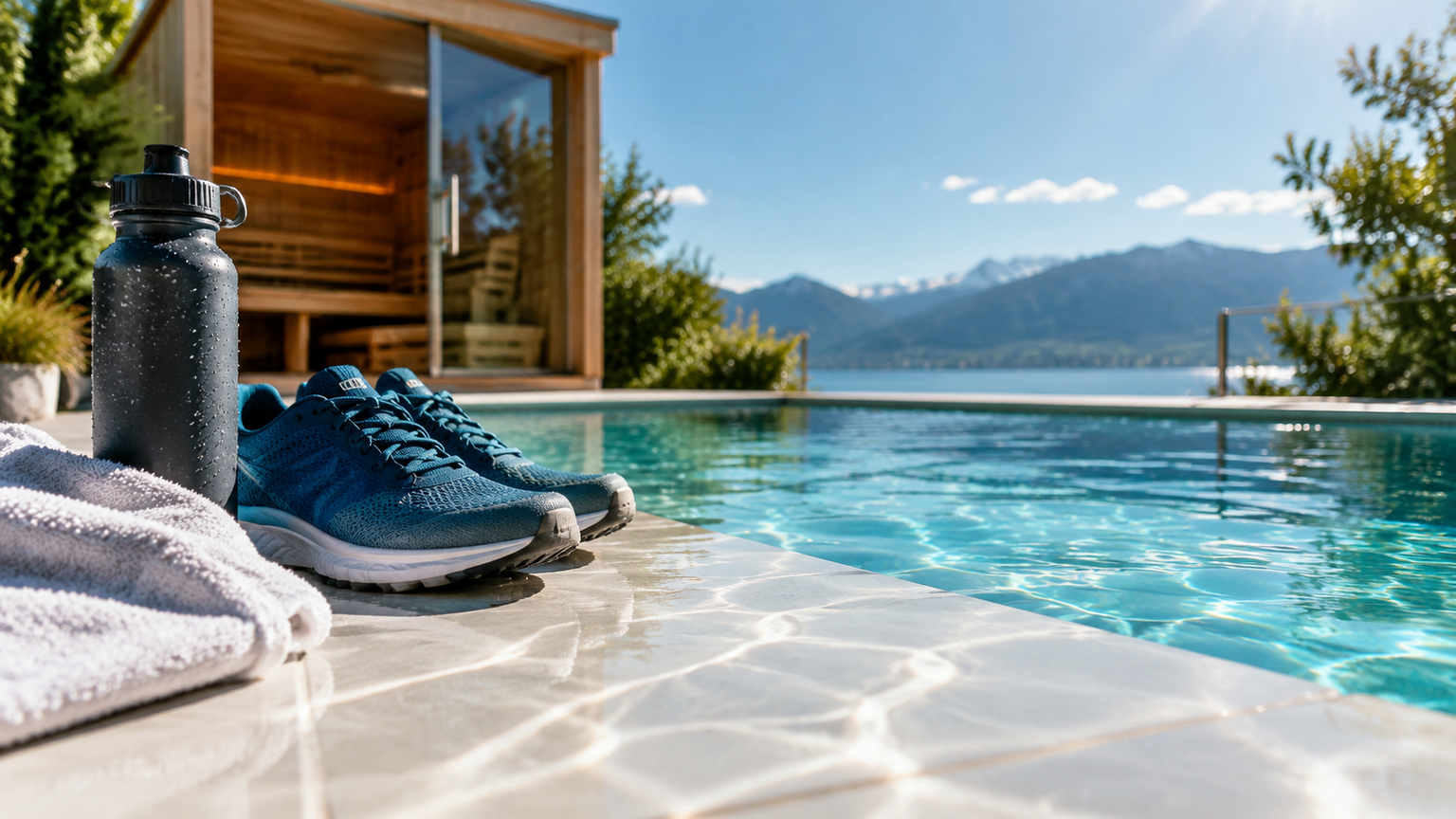
Using a sauna after exercise is a popular recovery practice among runners, strength athletes, yoga practitioners, and people who train at home. Heat exposure can feel relaxing, may temporarily improve the sense of muscle looseness, and can fit well into a broader recovery routine. However, the benefits of sauna after workout for muscle recovery are often overstated. A sauna is not a replacement for sleep, adequate nutrition, hydration, sensible training progression, or medical care after an injury.
The strongest evidence for sauna use relates to relaxation, heat exposure, and some aspects of cardiovascular or heat-acclimation training. Evidence specifically showing that a post-workout sauna repairs damaged muscle or accelerates recovery is more limited. The practical conclusion is that sauna may be a useful optional recovery technique for healthy adults who tolerate heat well, provided they use it conservatively and understand its limitations.
What Does Sauna Recovery Mean?
Sauna recovery means using a heated room after exercise, usually for a short, controlled period, with the goal of promoting relaxation and supporting the transition from training to rest. Traditional dry saunas commonly operate at a high temperature with relatively low humidity, while steam rooms use lower temperatures and much higher humidity. The different environments place different demands on the body, so they should not be treated as identical.
During sauna exposure, skin temperature rises and the body increases blood flow to the skin and sweating to release heat. Heart rate may also increase. These responses are normal parts of thermoregulation, but they also mean that sauna use adds physiological stress after the stress of exercise. The heat itself does not directly flush lactic acid from muscles, and sweating is not proof that toxins or muscle damage are being removed.
Potential Benefits After Exercise

Relaxation and perceived recovery
The most dependable short-term benefit may be subjective. Sitting quietly in a warm environment can help an athlete shift from an intense workout into a calmer state. Relaxation may reduce the perception of stiffness or stress, especially after demanding strength training, running, or interval work. That does not necessarily mean that microscopic muscle damage has been repaired, but feeling more comfortable can make the overall recovery process easier to manage.
Relaxation may also support sleep when sauna use is scheduled early enough to allow the body to cool afterward. Sleep is one of the most important foundations of muscle recovery, immune function, sports psychology, and training consistency. Sauna should be viewed as a possible way to support a bedtime routine, rather than as a substitute for sufficient sleep.
Temporary relief from stiffness
Heat can increase tissue temperature and may make movement feel easier for a short time. A gentle mobility session after cooling down may therefore feel more comfortable after a workout. This can be relevant to people who experience normal post-exercise tightness or who combine strength training with yoga and flexibility work.
Temporary comfort should not be confused with treatment. Heat can worsen swelling from a new injury, and it may mask pain that would otherwise signal a need to stop. If pain is sharp, localized, associated with a pop, or accompanied by significant swelling, bruising, weakness, numbness, or loss of function, sauna is not an appropriate first response.
Possible support for heat acclimation
Repeated exposure to heat after exercise has been studied as a way to increase heat stress and potentially support heat acclimation. This is most relevant to athletes preparing for endurance events in hot conditions. The goal is different from ordinary muscle recovery: the athlete is deliberately adding a manageable thermal challenge to influence heat tolerance over time.
Heat-acclimation protocols require careful planning, gradual progression, and attention to hydration. A casual sauna session after a workout should not be described as equivalent to a formal acclimation program. Athletes who train for hot-weather races should coordinate heat exposure with their coach, sports physician, or qualified exercise professional.
Support for a consistent recovery routine
Recovery is partly behavioral. A sauna session can create a structured pause in which an athlete hydrates, eats an appropriate meal, performs gentle mobility, and evaluates how the body feels. This routine may be especially useful for people doing home workouts who otherwise move quickly from exercise back to work or household tasks.
The benefit comes from the complete routine, not from heat alone. If sauna use causes dehydration, dizziness, poor sleep, or skipped meals, it may undermine recovery rather than improve it.
What the Evidence Actually Shows
Research on sauna bathing is broader than research on sauna use specifically after resistance training or endurance exercise. A review by Hussain and Cohen, published in Evidence-Based Complementary and Alternative Medicine in 2018, describes potential health effects of sauna exposure while also noting the need for stronger research. Observational work by Laukkanen and colleagues in JAMA Internal Medicine in 2015 associated frequent sauna bathing with lower risks of some cardiovascular outcomes in a Finnish population, but those findings do not prove that sauna caused the outcomes and do not directly establish faster muscle recovery.
Research on post-exercise sauna use has also examined heat acclimation and endurance performance. For example, work by Scoon and colleagues in the Journal of Science and Medicine in Sport examined sauna exposure after training in endurance athletes. Such studies can be useful when considering heat adaptation, but they should not be interpreted as proof that sauna repairs muscle tissue after every type of workout.
The comparison method is important: controlled exercise studies can evaluate performance or physiological changes under defined conditions, while observational sauna studies can identify associations but cannot reliably separate sauna from lifestyle, income, diet, fitness, healthcare access, or other factors. Reviews summarize available evidence but inherit the limitations of the studies they include. For muscle recovery, outcomes such as soreness, strength restoration, range of motion, biochemical markers, and return to normal training do not always change together.
Overall, sauna has a plausible role in relaxation and heat exposure, but the evidence is not strong enough to present it as a primary muscle-repair treatment.
How to Use a Sauna After a Workout
1. Finish the workout gradually
Do not move directly from an all-out sprint, maximal lifting session, or hard interval workout into extreme heat. Complete a normal cool-down with easy walking or gentle movement, then allow breathing and heart rate to settle. If you feel faint, unusually short of breath, nauseated, confused, or unwell, skip the sauna.
2. Rehydrate before entering
Drink fluids according to thirst and the amount of sweat lost during exercise. The American College of Sports Medicine position stand on exercise and fluid replacement emphasizes individualized fluid planning because sweat rates vary widely. For long or very sweaty sessions, a meal or drink containing sodium and carbohydrates may be useful, especially when it supports the rest of the day’s nutrition plan. Avoid treating sauna use as a reason to force excessive water intake.
3. Keep the first session short
A conservative starting point is a brief session, often around five to ten minutes, followed by a cool-down outside the sauna. Tolerance varies with temperature, humidity, body size, acclimation, fitness, medication, and recent exercise load. More time is not automatically better. Beginners should not copy the longest session used by experienced sauna users.
4. Leave at the first sign of trouble
Exit immediately if you experience dizziness, weakness, headache, nausea, palpitations, chest discomfort, confusion, unusual breathlessness, or a feeling that you may faint. Sit or lie down in a cool area and seek medical assistance when symptoms are severe, persistent, or associated with collapse.
5. Cool down normally
Allow your body to cool gradually. A normal shower and comfortable room-temperature rest are reasonable for most people. Sudden cold-water immersion can create an additional cardiovascular challenge, particularly for people with heart conditions or other medical risks. It should not be assumed to be necessary for recovery.
6. Eat and sleep adequately
After training, prioritize a balanced meal or snack containing enough carbohydrate, protein, and fluids for your goals. Nutrition for athletes should match the exercise demand, body size, schedule, and overall energy needs. Then protect the sleep window that allows the nervous system and muscles to recover. Sauna is an accessory to these habits, not their foundation.
Sauna After Different Types of Training
Running and cardio fitness
After an easy or moderate run, a short sauna session may feel relaxing. After a long run, race, or hard interval workout, the combined heat and exercise load may be excessive. Dehydration and low energy availability increase the risk of feeling unwell. Replenish fluids and food first, and consider skipping heat when the session was unusually demanding.
Strength training
Resistance training creates a recovery demand involving muscle tissue, connective tissue, the nervous system, and energy stores. Sauna may reduce the subjective feeling of stiffness, but it has not been established as a replacement for progressive programming, protein and carbohydrate intake, or rest between hard sessions. Avoid using heat to push through joint pain or an acute lifting injury.
Yoga and flexibility sessions
Heat can make range of motion feel greater, which may be useful for gentle mobility. It can also encourage someone to move farther than their tissues can safely control. After hot yoga or a heavily heated class, additional sauna exposure may increase fluid loss and thermal strain. Extra heat is usually unnecessary in that situation.
Home workouts
People training at home may use a sauna without professional supervision. Keep the session conservative, ensure that another person knows where you are when appropriate, and avoid using heat when ill, sleep-deprived, intoxicated, or recovering from a very demanding workout. A quiet cool-down, hydration, food, and sleep may provide more useful recovery than adding heat.
Neutral Pros and Cons
Potential advantages:
- May promote relaxation after exercise.
- May temporarily reduce the perception of stiffness.
- Can be incorporated into a structured recovery routine.
- May have a role in carefully planned heat-acclimation programs.
- May support a calming evening routine for some people.
Potential disadvantages:
- Adds heat and cardiovascular stress after exercise.
- Can increase fluid and electrolyte losses through sweating.
- May worsen dizziness, fatigue, or dehydration.
- Can obscure pain that should be evaluated.
- May be inappropriate for people with certain medical conditions or medication-related risks.
- Does not replace sleep, nutrition, rehabilitation, or a well-designed training plan.
Who Should Be Cautious?
Ask a healthcare professional before using a sauna if you have cardiovascular disease, uncontrolled blood pressure, a history of fainting, kidney disease, diabetes with complications, a condition affecting sweating, or another illness that affects heat tolerance. Professional guidance is also important during pregnancy and when taking medicines that influence blood pressure, fluid balance, alertness, or sweating.
Do not use a sauna while intoxicated or when you are acutely ill. Children and adolescents should use sauna only under appropriate adult and medical guidance. Anyone with symptoms of heat illness needs prompt cooling and medical evaluation rather than additional heat exposure.
Limitations and Practical Conclusion
Sauna research differs substantially in temperature, humidity, session length, timing, participant fitness, and outcome measurement. Many studies are small, short-term, observational, or focused on heat adaptation rather than muscle repair. Individual responses also vary. These limitations make it inappropriate to promise a specific reduction in soreness or a fixed improvement in recovery time.
The most defensible conclusion is that a short, comfortable sauna session may complement recovery by encouraging relaxation and, in selected training plans, contributing to heat exposure. It is not a proven cure for delayed-onset muscle soreness, injury, or overtraining. Build recovery around training load management, adequate food and fluids, sleep, gentle movement, and appropriate clinical care. Use sauna only when it leaves you feeling better, not more depleted.
Quick Q&A
Does sauna remove lactic acid from muscles?
No. The body clears lactate naturally after exercise, and sweating does not function as a special detoxification pathway for muscle recovery.
How long should I stay in a sauna after working out?
Start with a brief session, such as five to ten minutes, and leave sooner if you feel uncomfortable. There is no universally proven ideal duration.
Is sauna good for sore muscles?
It may temporarily make soreness or stiffness feel less noticeable, but evidence that it speeds actual muscle repair is limited. Persistent or severe pain needs assessment.
Should I drink electrolytes after sauna use?
That depends on your workout duration, sweat loss, diet, and medical needs. Water and a normal meal may be sufficient for some people, while prolonged heavy sweating may require sodium and carbohydrate replacement.
Can I use a sauna after hot yoga?
Usually, extra heat is unnecessary after a heated class and may increase dehydration or overheating risk. Rehydrate and cool down first.
Safety disclaimer: This article is for general information and does not diagnose, treat, or prevent disease. Consult a qualified healthcare professional before sauna use if you have a medical condition, take medication, are pregnant, or have experienced fainting, chest symptoms, or heat-related illness.