







The importance of nutrition for athletes comes down to three jobs: provide enough energy for training, supply nutrients for repair, and help the body arrive at the next session ready to work. A sound food plan does not need to be expensive, restrictive, or built around supplements. It needs to match the athlete, the sport, the training day, and the recovery window.
Food will not replace practice, sleep, coaching, or sensible programming. It does, however, influence how well an athlete can complete the work those things require. Underfueling often appears as flat sessions, slow recovery, recurrent illness, irritability, poor concentration, or a training plateau that seems to have no clear cause. Athletes do not need perfect meals. They need repeatable habits that cover energy, carbohydrate, protein, fluids, and micronutrients.
“Training creates the request. Nutrition is how the body pays the bill.”
What is the importance of nutrition for athletes?
Nutrition matters because exercise raises the body’s demand for fuel and rebuilding materials. Muscles use glycogen, the stored form of carbohydrate, during hard running, team sport, lifting, cycling, and repeated sprint efforts. Protein supports the ongoing repair and remodeling of muscle tissue. Fat contributes energy, supports hormones, and helps the body absorb vitamins A, D, E, and K. Fluids and electrolytes help maintain circulation, temperature control, and nerve and muscle function.
The important point is timing in the broad sense, not chasing a magic 30-minute rule. A hard session performed after a long gap without food can feel harder because starting fuel is low. A demanding week without enough carbohydrate and total calories can leave an athlete unable to hit the intended pace or load. Consistently low protein can make recovery less efficient. A practical plan supports the whole day, then pays closer attention before and after longer or harder work.
Stand-alone definition: energy availability
Energy availability is the energy left for normal body functions after the energy cost of exercise is subtracted from food intake. It is not the same as body weight or calorie counting. When energy availability stays too low, the body may reduce functions it views as less urgent, which can affect bone health, hormones, recovery, mood, and performance. Athletes who suspect persistent low energy availability should speak with a sports dietitian or qualified clinician.
The four foundations of an athlete’s plate
Most athletes get better results by building meals from four foundations instead of copying a meal plan from a teammate or influencer.
| Foundation | What it does | Useful food examples | When to emphasize it |
|---|---|---|---|
| Carbohydrate | Restores glycogen and fuels moderate to hard work | Oats, rice, potatoes, pasta, fruit, bread, beans | Before and after endurance, intervals, matches, and double sessions |
| Protein | Supports repair, adaptation, and satiety | Eggs, yogurt, fish, poultry, tofu, lentils, milk | At meals throughout the day and after training |
| Fats | Provides energy and supports health and vitamin absorption | Olive oil, nuts, seeds, avocado, oily fish | Regular meals, especially away from a sensitive stomach before exercise |
| Fluids and minerals | Supports temperature regulation and muscle function | Water, milk, soups, fruit, salted meals, sports drink when appropriate | Across the day, with extra attention in heat and long sessions |
Carbohydrate is often the first item to adjust when training volume changes. An athlete doing a light mobility day has a different need from an athlete completing a 90-minute ride plus strength work. That does not mean carbohydrate is only for endurance athletes. A field-sport player, lifter, or court athlete also uses carbohydrate during demanding work and benefits from replenishing it.
“Fuel the session you are doing, not the session you wish you had done last month.”
How to eat around training
Pre-training food should be familiar, digestible, and sized for the time available. Two to four hours before a major session, many athletes do well with a meal that includes carbohydrate, a moderate protein portion, and limited very high-fat or high-fiber foods if those cause stomach trouble. Examples include rice with chicken and vegetables, oatmeal with yogurt and berries, or a turkey sandwich with fruit.
When time is short, simplify. Thirty to 60 minutes before a session, a banana, toast with jam, a small cereal bowl, or a sports drink can be easier to tolerate than a full meal. Individual tolerance matters. Practice race-day or match-day food during ordinary training, not at the event.
During long or intense exercise
For activity lasting under about an hour at an easy or moderate effort, water and normal meals are often enough. Longer sessions, hot conditions, or high-intensity work can change the picture. Carbohydrate taken during long endurance exercise can help preserve work rate, and a drink with sodium can be useful when sweat losses are substantial. The exact amount depends on duration, pace, body size, weather, and gut tolerance. Start conservatively, test one change at a time, and use the approach that lets you finish strong without stomach distress.
After training: recover without overcomplicating it
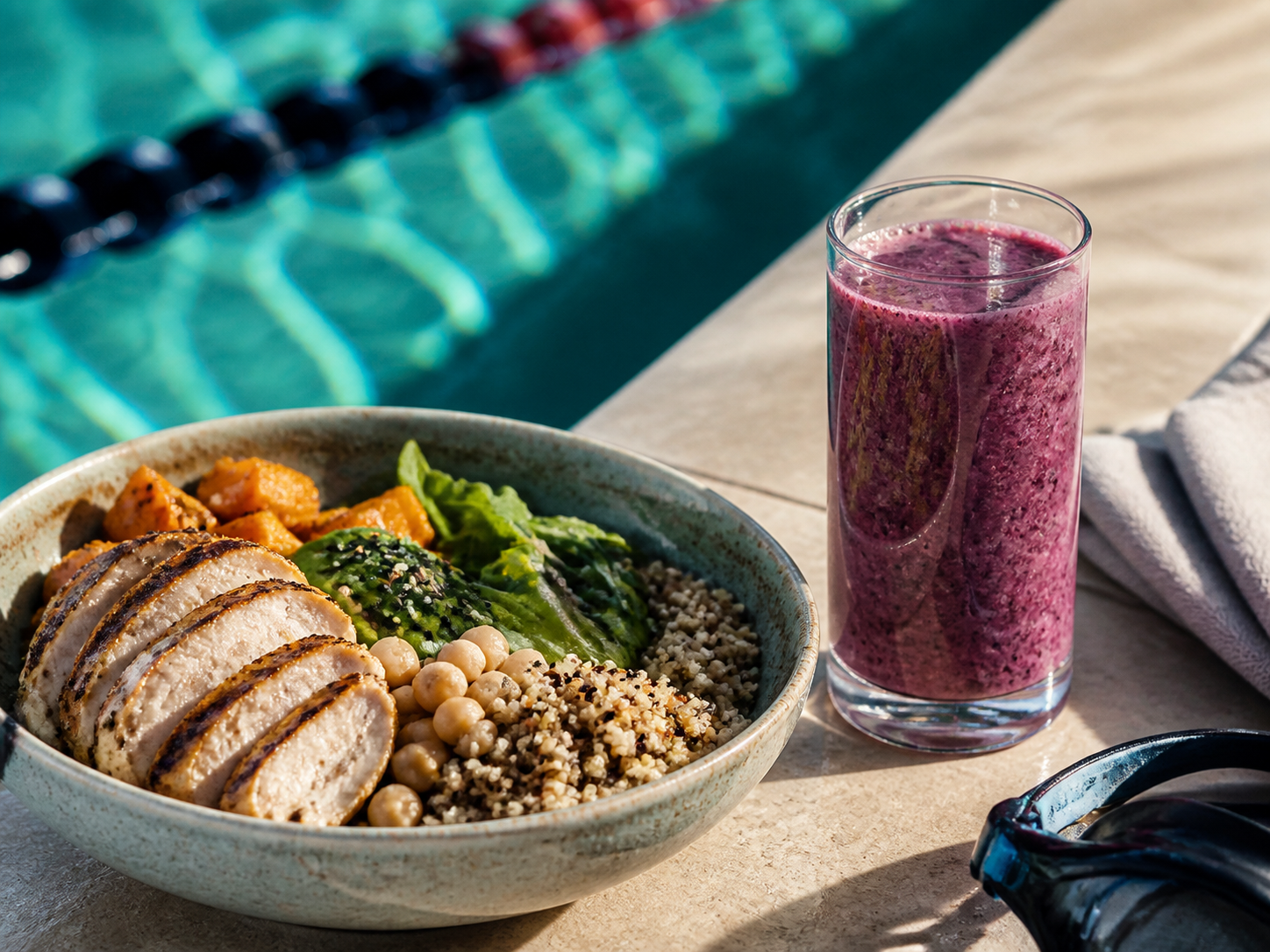
After a normal one-hour workout, a balanced meal within the next few hours is usually effective. After a long, hard, or twice-daily session, move that meal closer and include both carbohydrate and protein. Greek yogurt with fruit and cereal, a chicken burrito bowl, tofu stir-fry with rice, or a milk-based smoothie plus a sandwich all work because they are food, not because they have a perfect marketing label.
A useful protein target for many training athletes is roughly 1.2 to 2.0 grams per kilogram of body weight per day, with the appropriate level depending on sport, total energy intake, age, and goals. Spread protein across three to five eating occasions rather than treating dinner as the only protein meal. For individualized targets, particularly for adolescents, pregnant athletes, people with medical conditions, or athletes making weight, consult a credentialed sports dietitian.
Hydration: make it personal and practical
Dehydration can raise perceived effort and make heat management harder. Yet drinking to a rigid schedule without regard to thirst, conditions, or sweat rate can also be unhelpful. Begin by arriving at training normally hydrated: urine that is pale yellow most of the time is a simple, imperfect field check. Drink with meals and carry a bottle for long practices.
For athletes who train in heat or for more than about 90 minutes, a simple sweat-rate check can guide planning. Weigh yourself with minimal clothing before and after a typical session, account for fluid consumed, and compare the difference. Do this only as a rough coaching tool, not as a reason to chase an exact number. Large or recurring weight losses, dizziness, cramps, or headaches merit a closer look at fluid, sodium, workload, and medical factors.
“The best hydration plan is one you can repeat in the weather and pace you actually train in.”
Micronutrients athletes should not ignore
Calories and macros get attention, but vitamins and minerals help run the systems behind performance. Iron supports oxygen transport; low iron status can contribute to fatigue and poor endurance. Calcium and vitamin D matter for bone health. B vitamins participate in energy metabolism. Potassium, sodium, magnesium, and other minerals contribute to normal fluid balance and muscle function.
Food-first habits usually cover more ground than an unplanned supplement stack. Eat a range of colorful produce, protein foods, whole grains or fortified alternatives, and calcium-rich foods as appropriate for your diet. Athletes at higher risk of low iron, including many menstruating athletes, distance runners, and athletes limiting meat, should not self-prescribe high-dose iron. Ask a clinician about testing and treatment.
Common nutrition mistakes I see in training
- Saving all food for the evening: this often leaves morning and afternoon sessions underfueled.
- Treating carbohydrates as a problem: hard training commonly needs more carbohydrate, not less.
- Using supplements to cover skipped meals: powder can be convenient, but it cannot replace a varied diet.
- Trying new foods on event day: test foods, gels, and drinks in training first.
- Cutting calories while raising training load: this can impair recovery and increase injury risk.
- Copying another athlete’s plan: body size, schedule, preferences, budget, and sport demands differ.
A simple one-day framework
For a morning training athlete, start with a light carbohydrate snack if a full meal does not sit well. Follow the session with breakfast that includes protein and carbohydrate. At lunch and dinner, use the plate as a guide: a carbohydrate base matched to the day’s workload, a substantial protein source, vegetables or fruit, and fats that fit the meal. Add a snack before an afternoon session rather than entering it hungry. On rest days, keep protein, produce, and fluids steady while scaling carbohydrate to appetite and activity.
Consistency beats dramatic swings. The athlete who meets basic needs on most days usually outperforms the athlete who has one perfect meal and five days of improvisation.
Questions athletes ask
Do athletes need supplements?
Not automatically. Some supplements have evidence for specific uses, but food, sleep, and training structure come first. Check products for third-party testing when drug testing is relevant, and discuss supplements with a sports dietitian or clinician before use.
Is protein the most important nutrient for athletes?
Protein is important, but it is not the only priority. Athletes need enough total energy, carbohydrate for demanding work, fats for health, fluids, and micronutrients. A protein-focused diet that underfuels training is not a performance diet.
How do I know whether I am underfueling?
Warning signs can include declining performance, persistent fatigue, frequent illness, poor sleep, unusual mood changes, recurring injuries, missed menstrual cycles, or strong preoccupation with food. These signs have multiple possible causes, so seek assessment from a qualified health professional rather than trying to diagnose yourself.
The coach’s takeaway
The importance of nutrition for athletes is not about eating perfectly or earning food through exercise. It is about giving training a fair chance to work. Start with regular meals, enough carbohydrate for hard days, protein distributed across the day, fluids matched to conditions, and a varied diet. Track how you feel, perform, recover, and sleep for two weeks. Then change one variable at a time. That is how athletes turn nutrition from a source of confusion into a reliable part of their training.