



Learning how yoga poses work is about finding a stable, comfortable position and breathing steadily, not copying a shape. A well-chosen pose can help you practice balance, mobility, strength, or relaxation. The right version is one you can control without sharp pain or forced breathing, not necessarily the deepest or most impressive-looking version.
This guide explains how to choose and perform foundational poses, build a simple home workout, and adapt your practice around running, strength training, cardio fitness, and recovery. Yoga is not a substitute for medical care, and no single pose prevents injury. Use these steps as general information, adjust them to your abilities, and seek qualified guidance if you have an injury, health condition, or concerns about safe movement.
What Does “How to Yoga Poses” Mean?
“How to yoga poses” is a search for practical instructions on entering, holding, modifying, and leaving yoga postures. A yoga pose, often called an asana, is a body position practiced with attention to alignment, balance, strength, mobility, and breath. Some poses are dynamic transitions; others are held for several breaths. They can be practiced individually or as part of a sequence.
Yoga styles differ in pace and emphasis. A flowing class may link movement to breathing, while a slower class may spend more time in each position. A restorative practice uses support and comfortable positions to encourage rest. The style name alone does not guarantee a particular intensity, so check what a class involves before joining, especially if you are new to exercise.
Before You Begin
Set up a manageable space
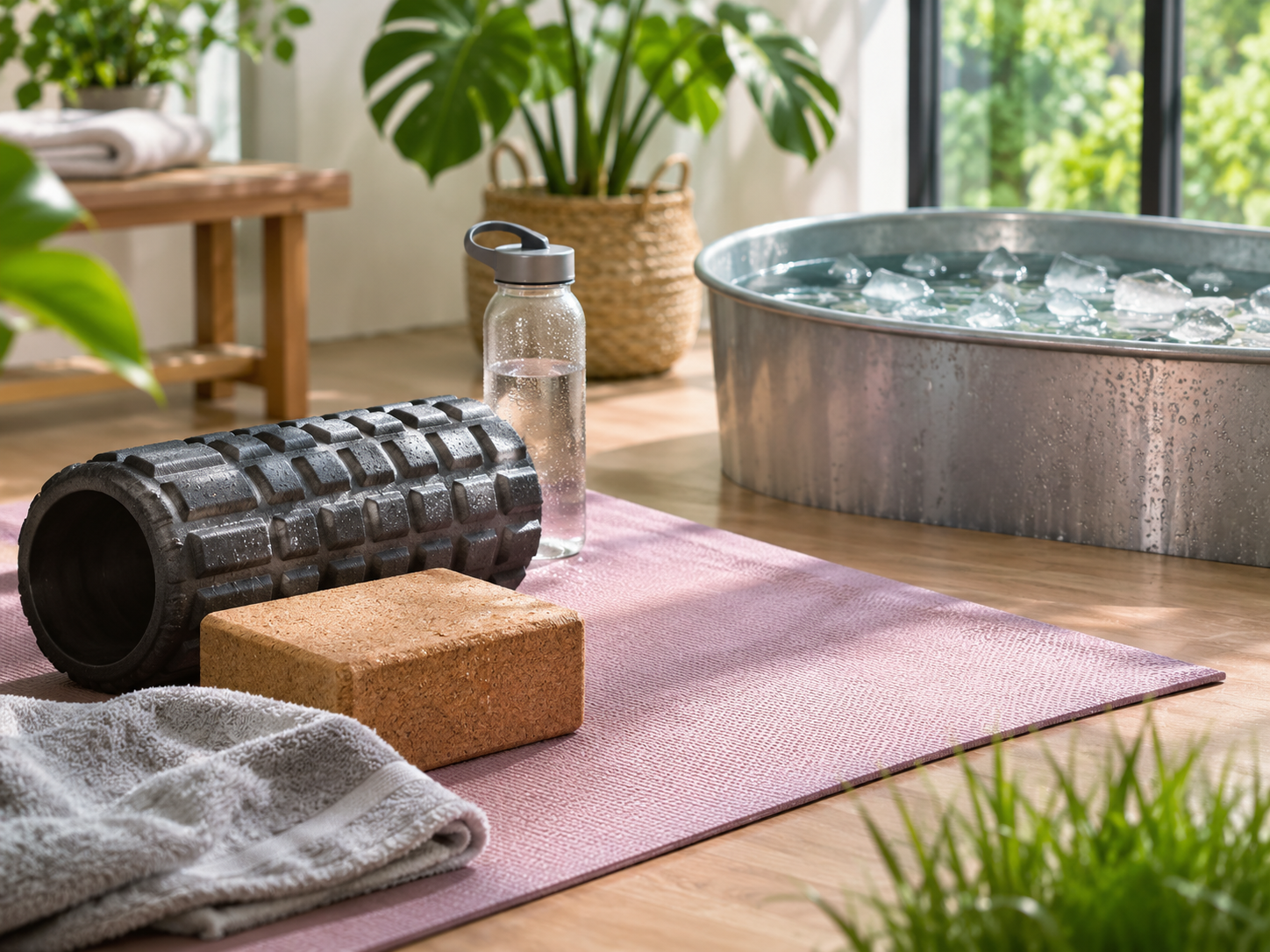
Choose a flat, clear surface with enough room to extend your arms and legs. A yoga mat can reduce slipping, but it is not essential if your floor is stable and you have a non-slip surface. Keep a folded blanket or firm cushion nearby to support your knees or sit bones. A sturdy chair or wall can help with balance. Avoid practicing on a surface that slides or beside furniture with sharp edges.
Use a simple effort check
Move slowly enough to notice your balance, joint position, and breathing. Mild muscular effort or a gentle stretch can be normal; sharp, sudden, electrical, or increasing pain is a reason to stop or change the pose. You should be able to breathe without straining. Reduce your range, use support, or rest if you cannot. Do not force a joint to match a picture or another person’s position.
Warm up with a few minutes of easy movement, such as walking around the room, shoulder circles, or gentle knee bends. If you have just finished a hard run or strength session, let your breathing settle before starting. Yoga can complement training, but it does not replace sport-specific warm-ups, progressive strength work, sleep, or an individualized rehabilitation plan.
How to Do Five Foundational Yoga Poses
1. Mountain Pose (Tadasana)
Purpose: Practice upright posture, foot awareness, and balance.
- Stand with your feet about hip-width apart, or use a slightly wider stance if that feels steadier.
- Spread your weight across your feet without gripping your toes. Keep your knees relaxed rather than locked.
- Let your arms rest by your sides. Lengthen through the crown of your head while keeping your ribs comfortably over your pelvis.
- Take several calm breaths. Notice whether you are leaning forward, backward, or to one side, and make a small adjustment if needed.
Modify: Stand near a wall or hold the back of a stable chair. This is a standing position, not a requirement to pull your shoulders back or flatten the natural curves of your spine.
2. Cat-Cow (Marjaryasana-Bitilasana)
Purpose: Explore comfortable spinal movement and coordinate movement with breath.
- Start on hands and knees, with hands under shoulders and knees under hips. Place padding under your knees if needed.
- As you breathe in, gently tip your pelvis and let your chest move forward without forcing your lower back to dip.
- As you breathe out, gently round your back and let your head follow the movement without pulling your chin forcefully to your chest.
- Repeat at a slow pace for a few cycles, using a smaller range if any part of your back or neck feels uncomfortable.
Modify: Do the same gentle pelvic and upper-back movement seated in a chair. Keep your hands on your thighs and avoid pushing into the ends of your range.
3. Low Lunge
Purpose: Practice a supported split stance and a gentle stretch at the front of the rear hip.
- From hands and knees, step one foot forward between your hands. If the foot does not reach easily, use your hand to help position it.
- Keep the front foot planted and the front knee generally pointing in the same direction as the toes. Place the rear knee on a folded blanket.
- Bring your hands to blocks, a chair, or your front thigh. Stay upright enough to breathe comfortably.
- Shift your hips forward only a little until you notice a mild stretch at the front of the rear hip. Hold for a few breaths, then switch sides.
Modify: Keep your hands higher and make the stance shorter. If kneeling is uncomfortable, stand in a split stance and hold a wall or chair while gently bending the front knee.
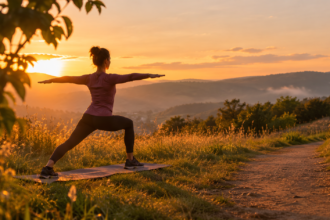
4. Warrior II (Virabhadrasana II)
Purpose: Build standing balance and leg endurance while practicing a wide stance.
- Stand with your feet wide apart. Turn one foot outward and angle the other foot slightly inward.
- Bend the front knee only as far as you can while keeping the foot grounded and the knee comfortable. Keep your torso upright.
- Extend your arms at a comfortable height, or rest your hands on your hips. Look forward only if that does not strain your neck.
- Take a few steady breaths, then straighten the front leg and turn your feet to change sides.
Modify: Narrow your stance, reduce the knee bend, or hold a chair. The front knee does not need to reach a particular angle; avoid forcing it toward the ankle or letting it collapse inward.
5. Bridge Pose (Setu Bandha Sarvangasana)
Purpose: Practice a controlled hip lift and gentle engagement of the back of the body.
- Lie on your back with knees bent and feet on the floor about hip-width apart. Let your arms rest by your sides.
- Press through your feet and lift your hips a small amount, keeping the movement comfortable and controlled.
- Pause for a breath or two without holding your breath or pushing your lower back into discomfort.
- Lower slowly. Repeat only if the position still feels comfortable.
Modify: Lift only a few centimetres, or skip the lift and practice comfortable breathing while lying down. Do not turn your head while your hips are raised.
Build a Short Home Practice
A useful beginner sequence does not need to be long. Begin with a few minutes of easy movement, then practice Cat-Cow, Mountain Pose, a supported Low Lunge on each side, Warrior II on each side, and Bridge Pose. Finish by lying or sitting comfortably for a few quiet breaths. Treat this as a menu, not a test: skip any pose that does not suit your body that day.
Move between positions deliberately. For example, come out of a lunge by placing your hands on support, stepping back carefully, and standing only when balanced. Rest between sides if needed. A brief session done with control can be more useful than rushing through a longer sequence while fatigued. If you follow a video, choose one that clearly demonstrates modifications and gives you enough time to transition.
Progress gradually
First, aim to remember the setup and move without pain. Later, you might spend more time in a comfortable pose, add another round, or choose a slightly more challenging balance. Change one element at a time so you can tell how your body responds. Longer holds and deeper ranges are not automatically better, and flexibility should not be forced.
Using Yoga Alongside Other Training
Running and cardio fitness
Runners may use gentle yoga to practice balance, body awareness, and comfortable movement through the hips, ankles, and upper back. It can be a lower-intensity activity, but a demanding flow still counts as exercise and may add to training fatigue. After a hard run, prefer easy movements and do not treat deep stretches as a way to erase soreness. Yoga does not replace gradual running progression, appropriate footwear, or rest.
Strength training and home workouts
Yoga can add bodyweight movements, balance practice, and mobility work to a home routine. Some poses challenge the legs, shoulders, or trunk, but they do not necessarily provide the same progressive loading as a structured strength program. If strength is a goal, keep resistance training that matches your needs, and account for demanding yoga sessions when planning recovery.
Recovery, flexibility, and sports psychology
Slow, comfortable practice can provide a quiet period to notice breathing and physical tension. That may feel useful as part of a recovery routine, but results differ from person to person. A pose is not a treatment for an injury, and stretching is not guaranteed to prevent one. For sports psychology, some people find that paying attention to breathing helps them settle before or after training; it is not a substitute for professional mental health support when that is needed.
Nutrition for athletes
Yoga does not replace adequate food and fluids. Athletes’ nutrition needs depend on the person, sport, training load, and health. For a gentle, short session, ordinary meals and hydration habits may be enough; a long or strenuous workout may require planning suited to the individual. Do not rely on yoga claims or restrictive eating rules as sports-nutrition advice. A registered dietitian with sports experience can help with specific needs.
Neutral Pros and Cons
Potential advantages: Yoga offers a structured way to practice movement, balance, body awareness, and breathing. It can be adapted for a home setting and may fit alongside running or strength training when the intensity is appropriate. A pose can be modified with a chair, wall, or cushion, making many versions accessible to different abilities.
Limitations: Benefits depend on the style, instruction, consistency, and individual. Yoga is not a guaranteed way to prevent injury, improve athletic performance, or treat pain. Some poses may be unsuitable for particular injuries, pregnancy-related needs, balance limitations, or medical conditions. A class or online video cannot assess your individual health, and a posture that works for one person may not work for another.
For general background, the U.S. National Center for Complementary and Integrative Health’s overview of yoga effectiveness and safety discusses evidence and cautions in plain language. The NHS guidance on strength and flexibility exercises offers a public-health perspective on exercise options. These sources provide general context, not a personalized evaluation of any pose or training plan.
Common Mistakes to Avoid
- Chasing the deepest stretch: Use a range you can control and breathe through.
- Copying another person’s alignment: Limb proportions, mobility, balance, and comfort differ.
- Holding your breath: Reduce effort or come out of the pose if breathing becomes strained.
- Ignoring symptoms: Stop for sharp, worsening, or unusual pain, dizziness, numbness, or loss of balance.
- Making every session intense: Recovery days and easier sessions are part of a balanced workout routine.
- Assuming a pose treats an injury: Get an appropriate assessment for persistent pain or reduced function.
Concise Q&A
How long should a beginner hold a yoga pose?
Start with a few comfortable breaths, then come out while you can still control the position. The suitable hold depends on the pose, your experience, and how you feel that day.
Can I do yoga at home without equipment?
Yes. A clear, non-slip surface is the main requirement. A wall, stable chair, or folded blanket can make some poses easier to adapt, but specialized equipment is not necessary for this basic sequence.
Should yoga hurt?
No pose should require you to push through sharp or increasing pain. Stop or modify the movement. Seek medical advice for persistent symptoms or concerns about an injury.
Is yoga enough for strength and cardio fitness?
That depends on the style and your goals. Some forms are physically demanding, but a gentle sequence may not provide enough cardiovascular or progressive strength stimulus by itself. Keep activities suited to your fitness goals.
Safety and Information Disclaimer
This article is for general educational purposes and is not medical advice or an individualized exercise prescription. Consult a qualified health professional before starting or changing exercise if you have a medical condition, are recovering from an injury, are pregnant, or have concerns about balance or pain. Stop if you experience concerning symptoms and seek appropriate care.